
Colombian Independence Day Parade Shifts to Santa Marta, Celebrating 500 Years of Heritage
 Aime Summary
Colombian Independence Day is marked by the celebration of its initial struggle against colonial rule, commemorating the events of July 20, 1810. This day symbolizes the start of Colombia's fight for autonomy from the Spanish Crown. On July 20, 1810, under the colonial rule of Spain, simmering discontent among the Creoles—a social class of Latin Americans descended from Europeans—set the stage for a revolt. These Creoles, inspired by the long-sought ideal of self-governance, were acutely resentful of their exclusion from significant economic and political decisions that affected their lives. The broader influence of international movements such as the French Revolution and American independence served to fan these flames. The geopolitical landscape was further shifted by Napoleon Bonaparte’s conquest of Spain, which markedly weakened Spanish grip on its colonies.
On this pivotal day, strategic planning led to the incident of the "Llorente Flower Vase" in Bogota, effectively triggering a popular uprising. The vase incident, orchestrated by influential Creoles like Antonio Nariño, Camilo Torres, and Francisco de Paula SantanderSAN--, involved a calculated affront intended to stoke public anger. When Spanish merchant Jose Gonzalez Llorente refused to lend Luis Rubio a vase, as predicted, it sparked not just an argument, but a groundswell of revolutionary fervor. The resultant street demonstration forced colonial authorities to establish an autonomous Board of Governors, including Creoles and marking the official start of Colombia’s quest for independence.
Recognizing the significance of this foundational event, Colombia celebrates July 20 not only for its historical impact but as a reaffirmation of a sovereign identity that evolved through tumultuous decades. Following the initial declaration of independence, Colombia’s path forward was fraught with challenges. The years between 1810 and 1816—termed “Patria Boba” or “Foolish Fatherland”—saw initial attempts to forge a sovereign nation marred by internal conflict. Divided between centralist visions advocating for a unified, authoritative government and federalist calls for regional autonomy, these ideological factions weakened the independence movement. Centralists, headed by Antonio Nariño, and federalists, led by Camilo Torres, could not reconcile their divergent aims, leading to fractious and recurrent clashes, notably between the provinces of Cundinamarca and Tunja.
By 1816, the Spanish forces, under Pablo Morillo, once again asserted control, capitalizing on the disarray among independence proponents and ushering in an era of brutal reprisals—dubbed the “era of terror.” Repression was rampant, with numerous independence figures such as Camilo Torres and Francisco Jose de Caldas being executed, remembered as martyrs for their cause. Though efforts to extinguish the desire for sovereignty persisted, these authoritarian crackdowns could not erase the vision of freedom that had taken root.
It was not until August 7, 1819, during the Battle of Boyaca, that Colombia triumphantly achieved independence, as Francisco de Paula Santander led forces to a decisive victory against Spanish rule. This culmination built upon the initial aspirations sparked on July 20, 1810.
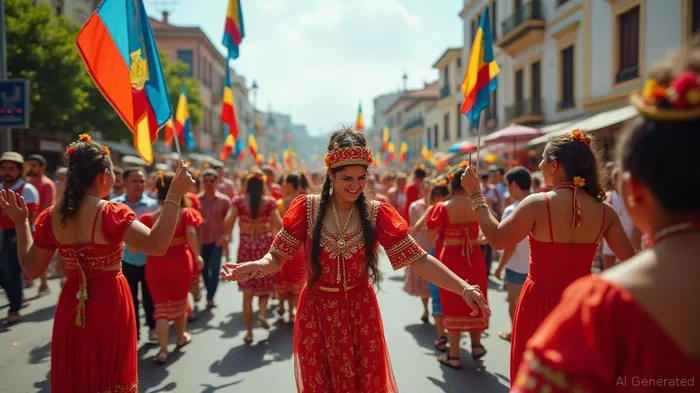
In contemporary times, July 20 is celebrated nationwide with events reflecting Colombia’s rich heritage and identity. Uniquely, this year's official Independence Day military parade was set away from the capital city of Bogota, showing stage for the first time in Santa Marta, the oldest surviving city in Colombia. The decision to host the parade in Santa Marta, as announced by Colombia’s Minister of Defense Pedro Sanchez, aligns with the city’s 500th anniversary and serves to honor its historical significance in the wider narrative of Colombian independence. President Gustavo Petro and key national figures participated in the day's festivities, which included not just military displays but also cultural performances and community-led events across various districts.
Santa Marta holds importance not only as the foundational resting place of Simon Bolivar but as an emblem of Colombia's history, making its selection for the Independence Day parade poignant. The celebration featured a combination of military strength and civic unity, as delegates from the Armed Forces, National Police, and local civic groups presented a united front despite shifting the traditional location of observance.
The parade and associated activities in Santa Marta emphasized Colombia's storied past and ongoing commitment to embodying the ideals of freedom rooted in its historical journey. Celebrations were broadly supported by extensive logistical arrangements from the Ministry of Defense, with personnel ensuring security and smooth operations throughout the event. Cultural components complemented the festivities, as the "Festival Casa por la Paz" showcased artistic excellence with performances and grassroots economic projects aimed at fostering national pride through local talent and diversity.
The lead-up to Independence Day included the International Aeronautics and Space Fair (F-AIR Colombia) held in Rionegro, Antioquia. This fair brought together aerospace experts, defense companies, and international delegations for exhibitions highlighting Colombia’s burgeoning role in the aerospace industry—a modern reflection of its independence journey. Displays of aerial artistry added to the charged atmosphere, featuring parachute teams performing acrobatic formations that dazzled audiences with their coordination and colorful spectacles. Through strategic demonstrations, these events underscored Colombia's technological prowess and international partnerships in the sector.
As Colombia embraces its multifaceted identity on Independence Day, the celebrations symbolize both historic achievements and aspirations for unity and prosperity in the years ahead.

Stay ahead of the market.
Get curated U.S. market news, insights and key dates delivered to your inbox.


AInvest
PRO
AInvest
PRO



Comments
No comments yet