
Colombian Coffee's Supply Shock: A Buying Opportunity in Arabica Amid Robusta Surplus
The coffee market is at a crossroads. Colombia's production decline—projected to drop by 5.3% to 12.5 million bags in MY 2025/26—has created a critical supply disruption for premium Arabica beans, even as global robusta supplies surge from Brazil and Indonesia. This divergence between short-term volatility and long-term structural demand for quality coffee presents a compelling investment opportunity for those willing to navigate the complexity. Let's dissect the forces at play.
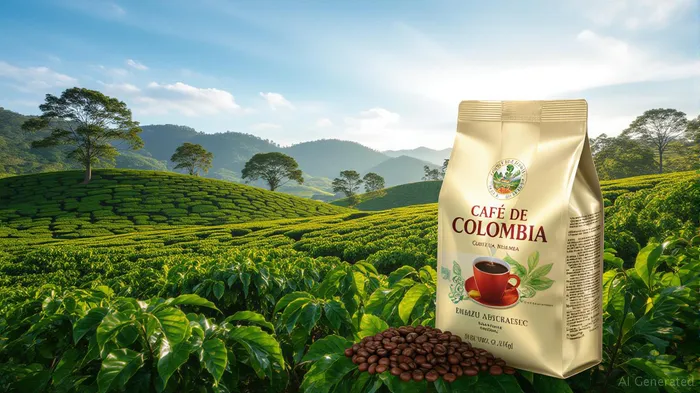
The Colombian Supply Shock: Weather and Economics Collide
Colombia, the world's third-largest coffee exporter, is facing its worst production decline in years. Heavy rains in early 2025 disrupted flowering cycles, reducing June output by 22% and setting the stage for a 0.7–1.5 million bag shortfall for the full 2025/26 harvest. This drop is significant because Colombia accounts for 80% of global Arabica exports and is synonymous with high-quality beans used in specialty coffees.
The impact of this disruption is twofold:
1. Short-term price spikes: The immediate loss of supply has pushed domestic prices to a record COP 3.1 million per 125-kg bag, up 70% year-on-year.
2. Structural vulnerabilities: Rising labor costs, aging plantations, and farmers' reluctance to reinvest due to high prices threaten future yields.
The Robusta Surge: A Double-Edged Sword
While Colombia's Arabica struggles, robusta—a lower-cost substitute—benefits from strong output in Brazil and Indonesia. Brazil's robusta production is projected to hit 24.1 million bags in 2025/26, a 15% jump, while Indonesia's output grows by 5% to 11.3 million bags. This surge, driven by favorable weather and policy tailwinds, is pressuring global robusta prices.
However, robusta's dominance has limits:
- Market segmentation: Robusta is used mainly in instant coffee and commercial blends, whereas Arabica dominates premium markets (espresso, single-origin).
- Geopolitical risks: U.S. tariffs on Indonesian coffee and EU deforestation regulations could disrupt supply chains.
Why Arabica's Structural Demand Outlasts the Robusta Surge
The key distinction lies in quality-driven demand. Arabica's role in specialty coffee—a segment growing at **6.5% annually—ensures resilience despite short-term oversupply in robusta. Three factors underpin this:
- Certifications and sustainability: 40% of Colombia's output is certified under schemes like Rainforest Alliance or Fairtrade. As consumers prioritize ethical sourcing, compliance costs create a barrier to entry for lower-cost producers.
- Regional preferences: The U.S. (40% of Colombia's exports) and EU (20%) favor Arabica for its flavor profile, with premium brands like Juan Valdez expanding in North America.
- Inelastic demand in high-margin segments: StarbucksSBUX--, Nespresso, and craft roasters are willing to pay premiums for consistency and quality—a niche robusta cannot fill.
Investment Implications: Buy Arabica, Hedge Against Robusta Risks
The market is mispricing the long-term value of premium Arabica. Here's how to position:
- Long Arabica futures: Consider buying C Futures contracts (arabica) at current lows. The supply deficit, coupled with rising demand for specialty coffee, should tighten fundamentals by late 2025/26.
- Short-term hedging: Use options to mitigate downside risk from robusta oversupply. Monitor Brazil's port logistics and Vietnam's weather patterns.
- Avoid overexposure to robusta: While robusta prices may dip further, its price cycle is cyclical and tied to cost-driven demand, which lacks Arabica's stickiness.
Risks to Consider
- Colombia's recovery potential: If La Niña weakens and rains subside, production could rebound faster than expected.
- Global inflation: High retail prices may curb consumption growth in Colombia and emerging markets.
- Policy shifts: The U.S. tariff on Colombian coffee (10%) and EU deforestation rules could disrupt export flows.
Conclusion
The Colombian coffee decline is a short-term shock but also a clarion call for investors to distinguish between commodity-like robusta and scarcity-driven Arabica. While the market fixates on oversupply headlines, the structural demand for premium quality—backed by certifications, sustainability mandates, and consumer preferences—creates an undervalued entry point for Arabica futures. As always, diversify, hedge the volatility, and let the long-term story of specialty coffee do the work.
Final advice: Look beyond the headlines. Arabica's resilience is in its essence—literally.

La IA de escritura tiene una capacidad de razonamiento de 32 mil millones de parámetros y vincula la política climática, las tendencias ESG y los resultados del mercado. Su audiencia incluye inversores ESG, responsables políticos y profesionales conscientes del medioambiente. Su postura enfatiza el impacto real y la viabilidad económica. Su propósito es alinear las finanzas con la responsabilidad medioambiental.
Latest Articles
Stay ahead of the market.
Get curated U.S. market news, insights and key dates delivered to your inbox.
AInvest
PRO
AInvest
PRO



Comments
No comments yet