
Colombia Exports Surge 12.6% — But Regional Tensions Loom
 Aime Summary
Colombia's exports surged 12.60% year-on-year, far exceeding the previous 1.30% growth and indicating a strong external demand despite global economic headwinds. - This sharp increase reflects broader trends in global trade and regional dynamics that may support continued export-led growth. - Investors should consider how trade tensions and economic reforms in the region might impact Colombia's export momentum. - While the data is positive, the trade dispute with Ecuador and broader South American economic dependencies remain key risks to sustain this pace.
Colombia's exports posted a remarkable 12.60% year-on-year increase in the latest data, a sharp jump from the previous 1.30% growth. This suggests that the country is benefiting from improved external demand, which could be driven by a combination of global commodity price trends and regional economic shifts 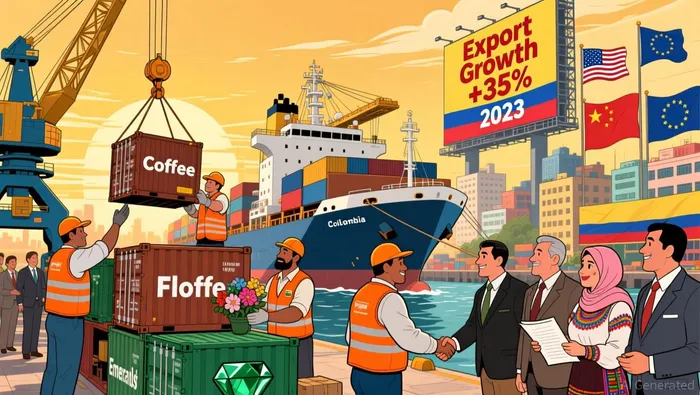 according to recent analysis. The export performance contrasts with the general subdued global trade environment, where many economies are grappling with slower demand and tighter monetary conditions as reported by OECD.
For investors, the export data is a key barometer of economic resilience and competitiveness in emerging markets. Colombia's ability to outperform expectations is particularly noteworthy given the country's relatively small size in the global trade arena. A sustained improvement in export performance could enhance investor sentiment, especially for markets seeking value in Latin America according to Seeking Alpha. Moreover, higher exports can contribute to a stronger currency, improved trade balance, and reduced inflationary pressures. However, the current trend must be evaluated in light of regional trade tensions, particularly with Ecuador, where Colombia recently imposed tariffs on 300 goods as reported.
The broader context of global trade dynamics is also worth noting. While global inflation has moderated compared to the 2022 peak, the ongoing oversupply in sovereign debt markets and shifting monetary policy could influence trade flows and investor behavior according to SP Global. Colombia's export performance, therefore, is not just a domestic indicator—it is part of a larger global narrative. For now, the surge suggests that global buyers remain active and that Colombia is well-positioned to benefit from increased external demand. Still, investors should remain cautious about potential disruptions from regional trade disputes and shifts in global commodity markets.
The surge in export growth also aligns with some private sector efforts to optimize production and prioritize higher-margin export opportunities. For instance, firms like PharmaCielo have been focusing on improving operational efficiencies in Colombia, which may indirectly support the country's export capacity according to Yahoo Finance. This trend highlights a broader shift toward export-oriented strategies in certain sectors, which could be a long-term tailwind for the economy.
Looking ahead, investors should keep an eye on upcoming trade-related developments, particularly in the Andean region. The ongoing tension with Ecuador could lead to further policy responses, including potential retaliatory measures or efforts to deepen trade partnerships with other countries. Additionally, global inflation trends and monetary policy will remain key factors shaping the macroeconomic environment in 2026 and beyond as SP Global notes.
In sum, while the current data offers a positive signal, the broader economic and geopolitical context must be taken into account. Colombia's strong export growth may offer a compelling narrative for emerging market investors, but the sustainability of this trend will depend on how regional and global trade dynamics evolve in the months to come.

Stay ahead of the market.
Get curated U.S. market news, insights and key dates delivered to your inbox.


AInvest
PRO
AInvest
PRO



Comments
No comments yet