
Colombia Exports Cool to 7%, Signaling Weaker Global Demand
 Aime Summary
- Colombia's exports rose 7% year-over-year in July 2026, a notable deceleration from the 19.2% expansion recorded in the previous period.
- The slowdown suggests weakening global demand for key commodities, particularly coal and oil, which dominate the country's trade balance.
- While non-traditional exports remain resilient, the divergence highlights vulnerabilities in the commodity-dependent economy.
- Investors are watching the trend closely for implications on the Colombian peso (COP) and potential shifts in central bank policy.
Colombia's export performance in July 2026 paints a picture of an economy navigating headwinds from both global and domestic factors. The 7% year-over-year growth in exports, while positive, marks a significant cooling from the 19.2% surge seen in the prior month. This deceleration is not merely a statistical fluctuation but a signal of broader economic dynamics at play. For investors, the divergence between the current reading and the previous high raises questions about the sustainability of the country's trade surplus and its impact on the Colombian peso (COP).
The slowdown is largely driven by a pullback in the performance of traditional export pillars, particularly coal and oil. Coal exports, which have been a major contributor to Colombia's trade balance, are facing pressure from shifting global energy trends and reduced demand from key markets like China and India. Similarly, oil exports are grappling with lower global prices and production challenges, including logistical bottlenecks and security concerns in key producing regions. These factors have collectively weighed on the overall export growth rate, underscoring the country's reliance on commodity cycles.
What Does The 7% Export Growth Signal For Colombia's Economy?
The 7% growth rate in exports, while lower than the previous period, still indicates that Colombia's trade sector is expanding, albeit at a slower pace. This moderation is significant because it reflects the delicate balance between global demand and domestic supply constraints. For the Colombian economy, which is heavily reliant on commodity exports, such fluctuations can have profound implications for GDP growth, fiscal revenues, and currency stability. The deceleration suggests that while the country's export sector remains resilient, it is not immune to global economic slowdowns and shifting trade patterns.
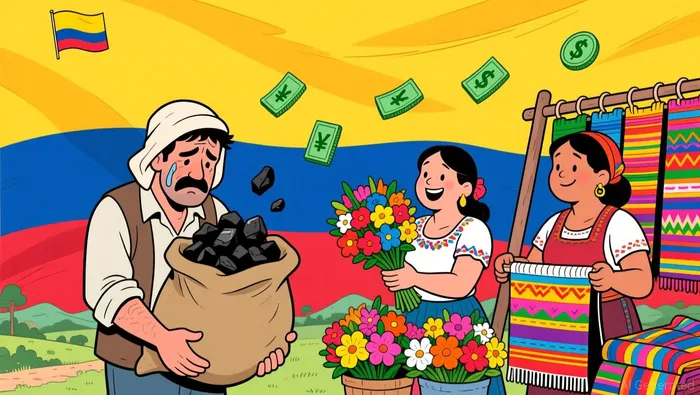
Moreover, the slowdown highlights the importance of diversification in Colombia's export basket. Non-traditional exports, such as flowers, textiles, and coffee, have shown relative resilience, providing a buffer against the volatility in commodity prices. However, these sectors alone are not sufficient to offset the decline in coal and oil exports. This underscores the need for Colombia to continue fostering growth in non-traditional sectors to reduce its vulnerability to commodity price swings. For investors, this dynamic presents both risks and opportunities, particularly in sectors that are less correlated with global commodity cycles.
Why Are Investors Watching Colombia's Export Data Now?
Investors are closely monitoring Colombia's export data because it serves as a key indicator of the country's economic health and its impact on the Colombian peso (COP). A slowdown in export growth can lead to a widening trade deficit, which, in turn, can put downward pressure on the currency. The COP has already shown signs of volatility in recent months, reflecting broader concerns about global growth and commodity prices. For foreign investors, the export data provides insights into the country's ability to generate foreign exchange, which is crucial for servicing external debt and maintaining macroeconomic stability.
Additionally, the export data has implications for monetary policy. The Colombian central bank, Bancolombia, has been navigating a complex environment of global rate cuts and domestic inflation pressures. Slower export growth could reduce inflationary pressures by lowering the cost of imported goods, potentially giving the central bank more room to cut interest rates. However, if the slowdown is driven by a collapse in global demand, it could signal a broader economic downturn, prompting the central bank to adopt a more cautious approach. For investors, this creates a nuanced policy environment that requires careful monitoring of both domestic and global economic indicators.
What Should Investors Watch Next In Colombia's Trade Data?
Looking ahead, investors should focus on several key factors that could influence Colombia's export performance and broader economic outlook. First, global demand for coal and oil will remain a critical driver of export growth. Any shifts in energy policies, particularly in major economies like China and the United States, could have significant implications for Colombia's trade balance. Second, domestic logistical challenges, including infrastructure bottlenecks and security issues in producing regions, need to be addressed to ensure a steady supply of commodities.
Furthermore, the performance of non-traditional exports will be a key area of interest. Sectors such as flowers, textiles, and coffee have shown resilience, and their ability to continue growing will be crucial for offsetting the decline in commodity exports. Investors should also monitor the Colombian peso (COP) for signs of further volatility, as currency movements can impact the competitiveness of Colombian exports and the overall investment climate. Finally, any changes in global trade policies, including tariffs and trade agreements, could reshape Colombia's export landscape, making it essential for investors to stay informed about international developments.

Stay ahead of the market.
Get curated U.S. market news, insights and key dates delivered to your inbox.


AInvest
PRO
AInvest
PRO




Comments
No comments yet