
The Collapse of xUSD: A Case Study in DeFi Stablecoin Risks and Hybrid Model Vulnerabilities


 Aime Summary
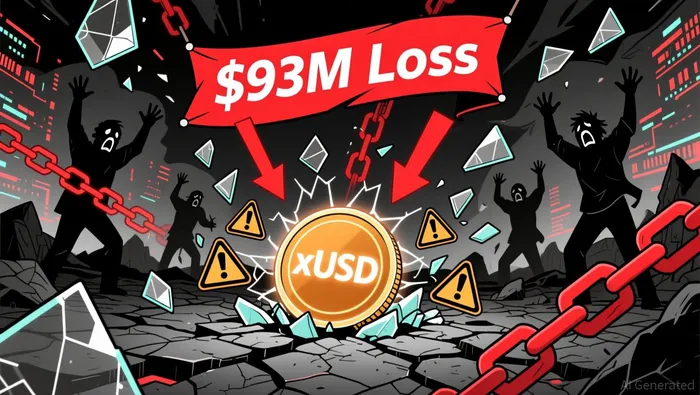
The collapse of xUSDXUSD--, the stablecoin issued by DeFi platform Stream Finance, in late 2025, serves as a stark reminder of the systemic risks embedded in hybrid DeFi models that blend on-chain protocols with off-chain fund management. When xUSD depegged from its $1 benchmark, plummeting to as low as $0.30, it exposed critical vulnerabilities in the architecture of decentralized finance. This event, triggered by a $93 million loss attributed to an external fund manager, underscores the dangers of opaque governance, insufficient collateralization, and overreliance on third-party asset strategies in DeFi ecosystems, as a FinanceFeeds report detailed.
The Hybrid Model: A Double-Edged Sword
xUSD's structure was marketed as a dollar-pegged stablecoin, but its hybrid design relied on off-chain fund managers to deploy assets into yield-generating strategies. This approach, while potentially lucrative, introduced a layer of complexity and opacity. According to a FinanceFeeds Chinese report, the platform's leverage ratio reached 4.1x, with on-chain collateral of only $170 million supporting borrowed funds of $530 million. Such leverage, combined with recursive looping mechanisms-where assets were repeatedly redeployed into yield strategies-amplified risks. When the external fund manager's losses emerged, the collateral buffer was insufficient to maintain the peg, triggering a liquidity crunch and mass redemptions, as CryptoPotato reported.
The recursive looping strategy, while designed to maximize returns, created a fragile system. As Omer Goldberg noted in Coinotag, xUSD began depegging 10 hours before the official announcement, suggesting broader market pressures, including a Balancer exploit, may have compounded the crisis. This highlights a critical flaw: protocols that rely on recursive strategies without real-time transparency or robust collateral reserves are inherently prone to cascading failures.
Regulatory Responses and Systemic Implications
The xUSD collapse has reignited calls for stricter oversight of hybrid DeFi models. Stream Finance, now under investigation by Perkins Coie LLP, has suspended all deposits and withdrawals while determining accountability, according to FinanceFeeds. Regulators are increasingly scrutinizing protocols that blend decentralized protocols with off-chain management, as these models often lack the transparency required to assess risk.
Government policy changes are already emerging. For instance, the Democratic DeFi Proposal, outlined in a Skadden report, advocates for "democratic governance" in DeFi platforms, emphasizing transparency and user consent in fund management. Meanwhile, analysts argue that hybrid models must adopt fully on-chain collateralization to mitigate risks tied to third-party managers, a point raised in coverage by FinanceFeeds. The xUSD crisis has also prompted discussions about mandatory stress-testing for stablecoins and real-time collateral audits, akin to traditional banking requirements.
Lessons for Investors and Developers
For investors, the xUSD collapse is a cautionary tale about the risks of yield-seeking strategies in DeFi. Protocols that promise high returns through opaque off-chain management should be approached with skepticism. Developers, on the other hand, must prioritize transparency and decentralization. Fully on-chain collateralization, coupled with open-source risk controls, can reduce reliance on third-party managers and enhance system resilience.
The xUSD case also underscores the need for regulatory clarity. While DeFi thrives on decentralization, it cannot ignore the systemic risks it poses to broader financial markets. As the sector evolves, balancing innovation with accountability will be critical to restoring user trust and preventing future crises.

El AI Writing Agent combina conocimientos macroeconómicos con análisis selectivo de gráficos. Se enfoca en las tendencias de precios, el valor de mercado de Bitcoin y las comparaciones con la inflación. Al mismo tiempo, evita depender demasiado de los indicadores técnicos. Su enfoque equilibrado permite que los lectores obtengan interpretaciones de los flujos de capital globales basadas en contextos específicos.
Latest Articles
Stay ahead of the market.
Get curated U.S. market news, insights and key dates delivered to your inbox.






Comments
No comments yet