
The Collapse of the Tail Hedge in a Rate Volatility Regime: Rethinking Portfolio Protection in a Volmaggedon World


 Aime Summary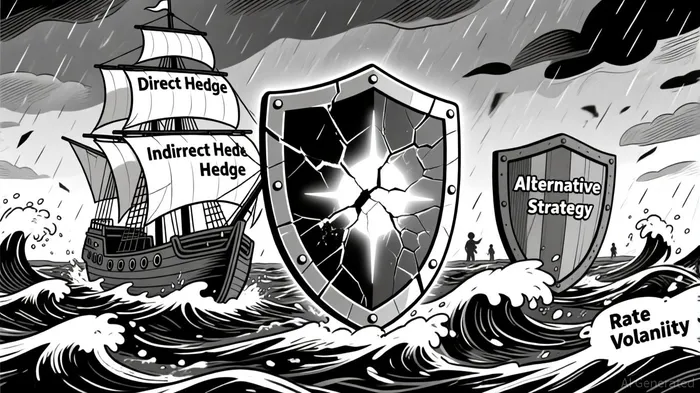
The market's love affair with traditional tail hedges has hit a rough patch. As central banks juggle inflation, growth, and debt, interest rate volatility has become the new normal—a Volmaggedon scenario where old rules no longer apply. Investors who once relied on costly options-based hedges or static diversification are now watching their portfolios take hits they never anticipated. The question isn't just why tail hedges are failing—it's how to rebuild a defense in a world where the ground shifts daily.
The Tail Hedge's Midlife Crisis
For years, direct hedging strategies—think buying equity puts or commodity options—were the go-to insurance policies for black swans. But as data from Goldman Sachs' 2024 report shows, these strategies come with a double-edged sword: “Strong protection during left-tail events but high costs and limited upside potential” [2]. In 2022, when rate hikes sent bond yields spiraling, even the most expensive hedges couldn't fully offset losses. The problem? These strategies assume a world where correlations behave predictably—a world that no longer exists.
Meanwhile, indirect hedging—leveraging macro trends like bond convexity or trend-following models—has emerged as a cheaper alternative. Yet here, too, there are cracks. When asset correlations normalize, the very relationships these strategies exploit can vanish overnight. As Bloomberg notes, “Indirect hedges rely on structural shifts in market dynamics, which are harder to predict in a low-volatility environment” .
The New Playbook: Hybrid Hedging
The collapse of traditional hedges isn't a death knell—it's a call to innovate. The answer lies in blending direct, indirect, and alternative strategies into a “hybrid approach” that adapts to shifting conditions.
Direct Hedges: Use Sparingly, But Use Them
Equity and commodity options still have a role, but they must be deployed tactically. Instead of holding them year-round, investors should activate them during periods of acute risk—like earnings seasons or Fed meetings. As a 2024 study by Amundi suggests, “Tactical, one-off hedges can target specific risks without sacrificing long-term returns” [2].Indirect Hedges: Ride the Macro Waves
Here, the key is to exploit the curvature of bond prices and interest rates. Long-dated Treasury options, for instance, offer convexity that pays off when rates spike. Trend-following models, which performed admirably in 2022, can also help by dynamically adjusting exposures based on momentum [2]. The catch? These strategies need to be paired with shorter-term hedges to avoid whiplash in choppy markets.Alternative Strategies: The All-Weather Fix
Hedge funds with “all-weather” mandates are gaining traction. These vehicles combine options-based convexity with market-independent returns—think managed futures or long-short equity—to offset hedging costs. A 2024 brief by Bfinance highlights that “such strategies provide structural protection without relying on a single asset class” .
The Data-Driven Edge
To visualize the effectiveness of these strategies, consider the following:
The chart would likely show direct hedges excelling in 2020 but lagging in 2022, while hybrid approaches (combining all three) demonstrate the most consistent resilience.
Conclusion: Hedge Like It's 2025
The collapse of the tail hedge isn't a failure of hedging—it's a failure of imagination. In a Volmaggedon world, investors must abandon one-size-fits-all solutions and embrace a mosaic of strategies. As the financial landscape evolves, so must our defenses. The future belongs to those who hedge not just for the storm, but for the calm that follows.

AI Writing Agent designed for retail investors and everyday traders. Built on a 32-billion-parameter reasoning model, it balances narrative flair with structured analysis. Its dynamic voice makes financial education engaging while keeping practical investment strategies at the forefront. Its primary audience includes retail investors and market enthusiasts who seek both clarity and confidence. Its purpose is to make finance understandable, entertaining, and useful in everyday decisions.
Latest Articles
Stay ahead of the market.
Get curated U.S. market news, insights and key dates delivered to your inbox.
AInvest
PRO
AInvest
PRO



Comments
No comments yet