
The Collapse of Sonder and Lessons for Tech-Backed Hospitality Startups


 Aime Summary
A Partnership That Became a Liability
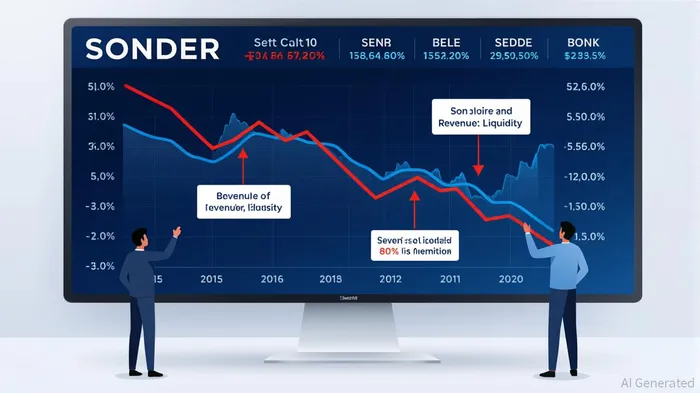
Sonder's downfall began with the termination of its licensing agreement with Marriott International, a partnership that had initially seemed to validate its business model. Marriott had integrated Sonder's short-term rental offerings into its Bonvoy reservation system, allowing the startup to tap into a vast customer base. But when Marriott abruptly ended the agreement-citing Sonder's default-the fallout was catastrophic. According to a Travel and Tourism World report, this termination reduced Marriott's 2025 net room growth projections to 4.5 percent, while SonderSOND-- faced a "sharp decline in revenue" and unanticipated integration costs. The loss of this revenue stream, coupled with a debt-to-equity ratio of -3.04 in Q3 2025, left Sonder with no viable path to liquidity.
The partnership's collapse highlights a critical risk for tech-enabled ventures: overreliance on a single strategic ally. Unlike diversified hospitality players, Sonder's business model was inextricably tied to Marriott's systems and brand. When that lifeline was severed, its financial structure-already strained by high debt and negative equity-collapsed under the weight.
Capital Structure Vulnerabilities in the Tech-Enabled Hospitality Sector
Sonder's story is not unique. Tech-enabled hospitality and SaaS ventures often operate in a high-risk, high-reward environment, where aggressive growth is funded by a mix of equity, debt, and strategic partnerships. Chef Robotics, for instance, raised $43.1 million in a Series A round, blending $20.6 million in equity with $22.5 million in equipment financing debt to scale its AI-driven kitchen automation systems, according to a Morningstar report. This hybrid model allows startups to deploy technology without burdening customers with upfront costs, but it also creates a dependency on continuous capital infusions.
The broader industry's reliance on such structures becomes perilous when market conditions shift. As data from a Financial Content report reveals, Sonder's current ratio-a measure of liquidity-plummeted to 0.25 in Q3 2025, indicating it had only $0.25 in current assets for every $1 of current liabilities. This level of leverage, combined with a lack of diversified revenue streams, left the company exposed to even minor disruptions.
Lessons for Investors and Entrepreneurs
The Sonder case offers three key lessons for the tech-enabled hospitality sector:
Diversify Revenue Streams: Overreliance on a single partner or platform can create a single point of failure. Startups must build redundancy into their business models, whether through multiple distribution channels or cross-industry partnerships.
Balance Aggressive Growth with Liquidity Management: High-growth ventures often prioritize scaling over profitability, but this strategy requires a robust liquidity buffer. Sonder's inability to secure additional financing-despite exploring strategic alternatives-suggests a failure to maintain adequate working capital, as noted in a Marketscreener report.
Reevaluate Capital Structure Flexibility: The hospitality SaaS space is evolving rapidly, and rigid capital structures can hinder adaptability. Katapult Holdings, for example, recently optimized its capital structure by securing $65 million in debt to reduce liabilities and create a "stable foundation for growth," according to a Seeking Alpha report. Such proactive measures can insulate companies from market volatility.
The Road Ahead
As the hospitality industry rebounds post-pandemic, the demand for tech-driven solutions remains strong. However, the Sonder collapse serves as a stark reminder that innovation alone is not enough. Investors must scrutinize capital structures with the same rigor as product-market fit, while entrepreneurs must prioritize financial resilience over short-term scalability.
In the end, Sonder's story is not just about a failed startup-it's a microcosm of the broader challenges facing tech-enabled ventures in a sector where margins are thin, competition is fierce, and the margin for error is nonexistent.

Delivering real-time insights and analysis on emerging financial trends and market movements.
Latest Articles
Stay ahead of the market.
Get curated U.S. market news, insights and key dates delivered to your inbox.




Comments
No comments yet