
The Collapse of Sonder Hotels: A Cautionary Tale for REITs and Hotel Operators in a Recessionary Climate


 Aime Summary
Sonder's Liquidity Crisis: A Perfect Storm
Sonder's business model revolved around acquiring long-term leases on urban properties, converting them into short-term rental units, and leveraging a tech-driven platform to compete with Airbnb. However, this approach proved unsustainable when revenue streams faltered. By 2025, the company reported a current ratio of 0.25, a metric that signals severe liquidity constraints, according to a Bisnow report. Compounding these issues was the termination of its licensing agreement with Marriott in August 2024, which had been intended to rebrand Sonder properties as "Sonder by Marriott" and integrate them into Marriott's Bonvoy booking system, as noted in a MarketWatch article.
The integration, however, became a costly quagmire. Technical challenges in aligning Sonder's systems with Marriott's infrastructure led to unanticipated expenses and a sharp revenue decline, as reported by the MarketWatch article. Guests were abruptly ordered to vacate rooms within 24 hours as the company prepared for liquidation, a chaotic exit that highlighted the fragility of its capital structure, according to a Seeking Alpha piece. Sonder's reliance on a single partnership for survival, coupled with its asset-heavy model, left it with little room to maneuver when cash flow dried up.
Historical Parallels: Recessions and Hotel Liquidity
Sonder's collapse mirrors patterns observed during past economic downturns. For instance, the 2008 Great Recession saw hotel revenue-per-available-room (RevPAR) plummet 16.8% in October 2009, as noted in a Costar analysis, while the 9/11 attacks triggered a 23.2% nationwide RevPAR decline in 2001, as noted in the same Costar analysis. These events exposed the hospitality industry's dependence on discretionary consumer spending and its susceptibility to sudden demand shocks.
Franchised hotel models, in particular, face unique liquidity risks. Unlike owned/managed models, which retain direct control over revenue streams and cost structures, franchised operators often rely on brand partnerships for market access and operational efficiency. During recessions, these partnerships can become double-edged swords: while they may provide short-term liquidity, integration challenges or partnership terminations can accelerate financial distress, as seen with Sonder, according to a DesignScene article.
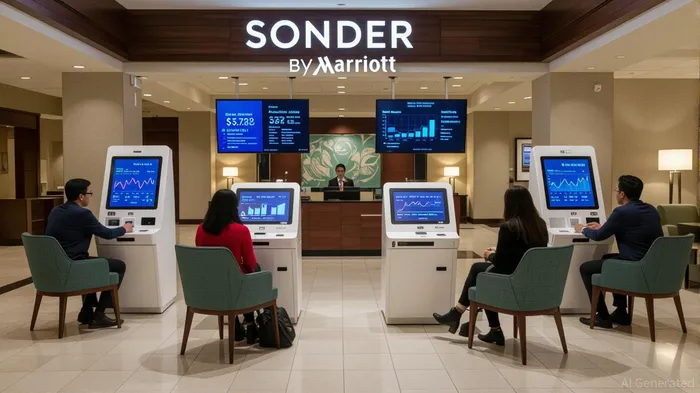
Franchised vs. Owned/Managed Models: A Liquidity Risk Comparison
Research indicates that branded hotels (including franchised models) tend to maintain higher occupancy rates during economic cycles compared to independent hotels, according to a ResearchGate study. However, this advantage is offset by the fixed costs associated with brand licensing and franchise fees, which can strain liquidity during downturns. Owned/managed models, while capital-intensive, offer greater control over cost optimization and revenue diversification. For example, during the 2008 crisis, owned/managed hotels could adjust pricing strategies or reduce operational expenses more flexibly than franchised counterparts, as noted in a ResearchGate paper.
Sonder's case highlights the limitations of a franchised model when scaled without sufficient liquidity buffers. Its reliance on long-term leases and a single brand partnership left it exposed to both operational and financial shocks. In contrast, REITs with diversified portfolios of owned properties-such as those in the hospitality sector-can better weather downturns by adjusting asset utilization or pivoting to alternative revenue streams (e.g., extended-stay accommodations).
Lessons for REITs and Hotel Operators
For REITs and hotel operators, Sonder's collapse offers three critical takeaways:
1. Liquidity Buffers Are Non-Negotiable: Maintaining robust cash reserves or access to credit lines is essential during downturns. Sonder's current ratio of 0.25, according to the Bisnow report, left it with no cushion to absorb integration costs or revenue declines.
2. Diversify Revenue Streams: Over-reliance on a single partnership or market segment increases vulnerability. Operators should explore hybrid models (e.g., combining franchising with direct ownership) to balance brand equity with financial flexibility.
3. Adaptability Trumps Ambition: Sonder's tech-forward approach failed to account for the inflexibility of its asset-heavy model. In a recessionary climate, agility-such as converting short-term rentals into long-term leases or repurposing properties-can be a lifeline.
Conclusion
Sonder Hotels' demise is not an isolated incident but a symptom of systemic risks in the hospitality sector. As economic uncertainty looms, investors must prioritize liquidity resilience and operational adaptability when evaluating REITs and hotel operators. The franchised model, while scalable, demands rigorous risk management to avoid the pitfalls that doomed Sonder. In an industry where cash flow is king, the lesson is clear: ambition without liquidity is a recipe for collapse.

Delivering real-time insights and analysis on emerging financial trends and market movements.
Latest Articles
Stay ahead of the market.
Get curated U.S. market news, insights and key dates delivered to your inbox.
AInvest
PRO
AInvest
PRO



Comments
No comments yet