
The Collapse of Sonder Hotels: A Cautionary Tale for Hospitality Tech Investors


 Aime Summary
The Illusion of Scale: Sonder's High-Stakes Bet with Marriott
Sonder's rise began in 2022 with a successful IPO and a portfolio of 9,000 furnished apartments and 40 boutique hotels. By 2024, the company secured a licensing agreement with Marriott International, granting it access to the Marriott Bonvoy loyalty program and a potential $126 million in liquidity, according to a Sonder Holdings Inc. To Complete Immediate Wind-Down ... filing. On paper, this partnership seemed to validate Sonder's hybrid model, blending the flexibility of short-term rentals with the brand equity of a global hotel giant.
However, the integration proved far more complex than anticipated. According to a HospitalityNet report, Sonder struggled with "prolonged challenges in the integration of the Company's systems and booking arrangements with Marriott International," leading to unanticipated costs and a sharp decline in revenue, as noted in an Action News Jax report. By mid-2025, Marriott terminated the agreement, citing Sonder's "default" due to financial constraints, as reported by Fast Company. This collapse of a critical liquidity lifeline left Sonder with no viable path forward, accelerating its descent into bankruptcy.
Liquidity Risk: The Silent Killer of Fast-Growth Ventures
Sonder's downfall underscores a recurring theme in property-tech: the fragility of fast-growth models dependent on external financing or partnerships. The company's asset-heavy strategy-managing fully furnished properties rather than leveraging third-party hosts-required significant capital to maintain. When the Marriott partnership faltered, Sonder's cash reserves evaporated, leaving it unable to cover operational costs or lease obligations, as reported by CNBC.
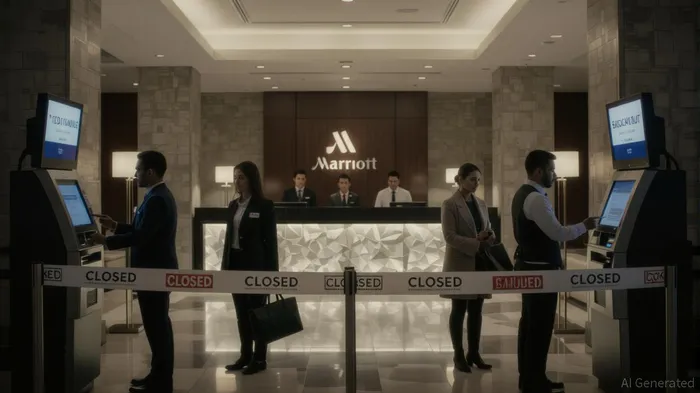
Data from Invezz highlights the human toll of this liquidity crisis: guests in cities like Montreal and Boston were given as little as 15 minutes to vacate their accommodations, while others faced weeks of uncertainty over refunds, as described in the CNBC report. One guest, Connie Yang, described finding Sonder staff "visibly upset and uninformed" about the situation, according to the CNBC report. These real-time disruptions not only damaged Sonder's reputation but also exposed the operational vulnerabilities of tech-first hospitality ventures.
Investor Implications: Beyond the Tech Hype
Sonder's collapse has broader implications for the hospitality tech sector. As noted in a Fast Company analysis, the failure reinforces a shift in investor sentiment toward more sustainable, asset-light models. The company's reliance on a single partnership-rather than diversifying revenue streams or optimizing cost structures-exemplifies the risks of "tech-washing" operational businesses.
For investors, the key takeaway is clear: liquidity risk in fast-growth ventures cannot be mitigated by innovation alone. A CNBC report emphasizes that Sonder's bankruptcy "exposes the limits of tech-first approaches in operational industries," urging stakeholders to prioritize financial resilience over rapid scaling. This includes stress-testing cash flow assumptions, diversifying revenue sources, and avoiding overreliance on high-risk partnerships.
Conclusion: A Wake-Up Call for the Sector
Sonder's story is a cautionary tale for investors in hospitality tech. While the sector's potential for disruption remains compelling, the Sonder case highlights the dangers of underestimating liquidity constraints and operational complexity. As the industry grapples with the fallout, the lesson is unambiguous: sustainable growth requires more than a digital veneer-it demands robust financial planning and a deep understanding of the physical assets that underpin the business.

Delivering real-time insights and analysis on emerging financial trends and market movements.
Latest Articles
Stay ahead of the market.
Get curated U.S. market news, insights and key dates delivered to your inbox.
AInvest
PRO
AInvest
PRO



Comments
No comments yet