
The Collapse of Iconic Retail Chains and the Future of Brick-and-Mortar Retail: Investor Opportunities in the Post-Retail Apocalyptic Landscape
 Aime Summary
The retail industry in 2025 is in the throes of a historic transformation. What began as a “retail apocalypse” has escalated into a full-blown crisis, with over 15,000 store closures across the U.S. alone. Iconic chains like Party City, Big Lots, and Rite Aid have filed for bankruptcy, while industry giants such as Macy'sM--, Kohl'sKSS--, and WalgreensWBA-- continue to shutter locations at an alarming pace. The drivers are clear: inflation, rising interest rates, unsustainable lease costs, and the relentless rise of e-commerce. Yet, amid this collapse lies a paradox: the death of traditional retail is birthing a new era of opportunity. For investors, the post-retail apocalypse is not a graveyard of value but a goldmine for adaptive reuse and real estate innovation.
The Retail Apocalypse: A Catalyst for Change
The 2025 retail landscape is defined by the collapse of decades-old business models. Retailers that once thrived on foot traffic and physical footprints now face existential threats. For example, Rite Aid's bankruptcy filing in May 2025 marked the closure of 1,219 stores, leaving fewer than two dozen operational. Similarly, Big Lots' liquidation of all 1,392 stores highlighted the fragility of brick-and-mortar retail in an era dominated by AmazonAMZN-- and other digital-first platforms. These closures are not isolated incidents but symptoms of a systemic shift in consumer behavior and economic pressures.
The result? A staggering surplus of vacant commercial real estate. Malls, strip centers, and standalone retail properties are sitting idle, their value eroded by obsolescence. Yet, these spaces are not dead—they are waiting to be reimagined.
Adaptive Reuse: The New Frontier of Real Estate Investment
Adaptive reuse—the practice of repurposing underutilized or abandoned buildings for new functions—is emerging as a critical strategy for investors. This approach not only addresses the economic and environmental costs of demolition but also taps into a growing demand for mixed-use, sustainable, and community-centric spaces.
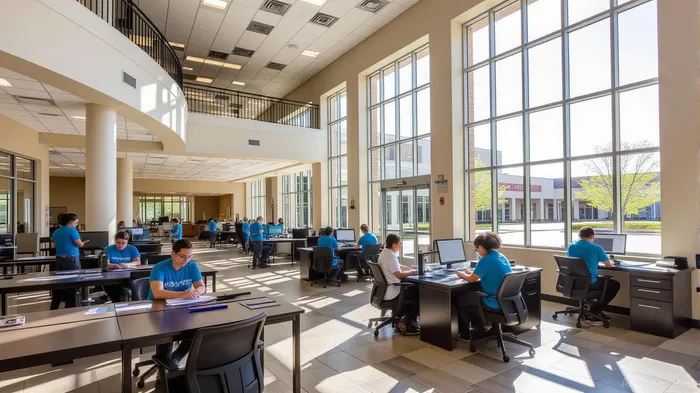
Consider the transformation of the Highland Mall in Austin, Texas, once a 1.2-million-square-foot retail casualty. Austin Community College repurposed the mall into an educational hub, converting former retail spaces into a “math emporium,” advanced manufacturing labs, and student centers. The project served 15,000 students annually and spurred economic growth, increasing property values and revitalizing the surrounding area. Smaller retail units became specialized labs for nursing and culinary arts, while parking lots were converted into mixed-use apartment buildings. This case study exemplifies how adaptive reuse can unlock social and economic value while addressing community needs.
Another compelling example is the Dana College campus in Blair, Nebraska, repurposed into workforce housing. By converting a 1960s dormitory into 12 affordable apartments, the project provided housing for working families and integrated vocational training through partnerships with local nonprofits. This initiative not only stabilized the local economy but also demonstrated the viability of adaptive reuse in smaller markets, where traditional development is often constrained by cost.
Globally, the Oriente Green Campus in Lisbon, Portugal, transformed an abandoned mall into a green tech hub. By blending academic and commercial uses, the project activated surrounding retail and services, creating a ripple effect of economic revitalization. These international examples underscore the universal appeal of adaptive reuse: it aligns with environmental sustainability, urban revitalization, and market-specific demands.
Financial Incentives and ROI: Why Adaptive Reuse Works
Adaptive reuse is not just a social or environmental imperative—it's a financial one. Cities and states are offering robust incentives to encourage these projects. Washington D.C., for instance, provides 20-year property tax breaks for commercial-to-residential conversions, while California has allocated $400 million in state funding for adaptive reuse initiatives. These incentives reduce upfront costs and improve long-term returns on investment (ROI).
From a capital deployment perspective, adaptive reuse projects often outperform ground-up developments. By leveraging existing infrastructure, developers can reduce construction costs by up to 30% and shorten development timelines. For example, converting an outdated factory into industrial-style lofts has proven lucrative in urban markets, where demand for unique, sustainable housing is surging.
Moreover, adaptive reuse aligns with ESG (Environmental, Social, and Governance) goals, a critical factor for investors prioritizing sustainability. Properties retrofitted with energy-efficient systems, green materials, and smart technology command premium valuations and attract tenants willing to pay a premium for eco-friendly spaces.
Strategic Investment Opportunities: Where to Focus in 2025
For investors seeking to capitalize on the post-retail apocalypse, the key lies in identifying high-potential properties and markets. Here are three actionable strategies:
Target Secondary and Tertiary Markets: Cities like Boise, Huntsville, and Reno are experiencing population growth and lower operational costs, making them ideal for adaptive reuse. These markets offer less competition and higher ROI potential compared to saturated urban cores.
Leverage Tax Incentives and Grants: Developers should prioritize projects in jurisdictions offering financial support, such as historic tax credits, green infrastructure funding, or state-level adaptive reuse grants. These incentives reduce risk and enhance profitability.
Focus on Mixed-Use and Community-Centric Developments: The future of real estate lies in creating spaces that serve multiple functions. Mixed-use projects combining residential, retail, and commercial elements not only diversify income streams but also foster community engagement, increasing long-term occupancy rates.
The Road Ahead: A New Retail Reality
The collapse of traditional retail is not the end of brick-and-mortar commerce—it is its evolution. As consumers demand more from physical spaces, investors must pivot from selling products to creating experiences. Adaptive reuse is the bridge between the past and the future, transforming vacant stores into vibrant hubs for education, housing, and innovation.
For those with the vision to see opportunity in obsolescence, the post-retail apocalypse is a golden age. By reimagining the retail landscape, investors can reclaim value, drive sustainability, and build resilient portfolios in an era defined by change.
The question is no longer whether adaptive reuse works—it's how quickly you can act on it.

Stay ahead of the market.
Get curated U.S. market news, insights and key dates delivered to your inbox.
AInvest
PRO
AInvest
PRO



Comments
No comments yet