
The Collapse of Huione Pay and Its Implications for Global Crypto Compliance Risk


 Aime Summary
The collapse of Huione Pay, a central node in the U.S.-sanctioned Huione Group, has exposed the fragility of high-risk financial intermediaries in the crypto ecosystem and underscored the urgent need for global regulatory coordination. As the platform froze withdrawals and suspended operations in late 2025, triggering panic among users in Cambodia, it became a case study in how illicit financial networks exploit weak compliance frameworks. The fallout from Huione Pay's failure has far-reaching implications for investors, regulators, and the broader crypto industry, particularly in jurisdictions hosting similar high-risk intermediaries.
The Collapse and Regulatory Responses
Huione Pay's collapse was not an isolated event but the culmination of years of regulatory scrutiny. By 2025, the U.S. Financial Crimes Enforcement Network (FinCEN) had already severed the Huione Group's access to the U.S. financial system under Section 311 of the USA PATRIOT Act, citing its role in laundering at least $4 billion in illicit proceeds between 2021 and 2025. These funds were linked to cyber heists by North Korea's Lazarus Group, Southeast Asian "pig butchering" scams, and other transnational crimes according to the Federal Register. Cambodia's central bank followed suit in June 2024 by revoking Huione Pay's banking license, a move that effectively cut off its legal operations.
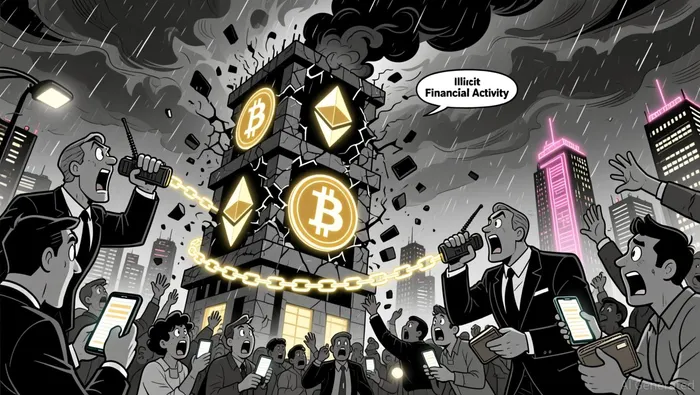
The combined regulatory pressure led to a liquidity crisis, with users rushing to withdraw funds and triggering long queues at Huione Pay's headquarters in Phnom Penh. Despite rebranding as H-Pay, the platform faced a cash crunch and suspended operations. This collapse highlights how jurisdictions with lax oversight can become hubs for illicit financial activity, attracting transnational criminal organizations (TCOs) and enabling systemic risks that ripple across borders.
Systemic Risks in High-Risk Jurisdictions
The Huione Pay sagaSAGA-- is emblematic of broader vulnerabilities in jurisdictions hosting high-risk crypto intermediaries. In Southeast Asia, for instance, the U.S. and U.K. have taken coordinated actions against entities like the Prince Group TCO, which operates scam compounds reliant on human trafficking and forced labor. These networks exploit weak regulatory environments to launder billions in illicit crypto proceeds, often through Telegram-based marketplaces and decentralized platforms.
Beyond Southeast Asia, Africa has emerged as a focal point for regulatory evolution. By 2025, ten African countries-including Nigeria, South Africa, and Ghana-had established or were finalizing crypto regulatory frameworks. Nigeria's 2025 Investment and Securities Act, for example, classified all crypto as securities, placing them under the jurisdiction of the Securities and Exchange Commission according to Crystal Intelligence. While these developments signal growing regulatory maturity, they also reveal the challenge of balancing innovation with compliance. Persistent illicit networks, such as the Prince Group, demonstrate that even with new frameworks, enforcement remains a critical gap.
In Latin America, regulatory efforts are fragmented but gaining momentum. Countries like Colombia, Peru, and Panama are drafting Virtual Asset Service Provider (VASP) and Anti-Money Laundering (AML) laws, with implementation expected by 2026. Meanwhile, the EU's Markets in Crypto-Assets Regulation (MiCAR), fully enforceable by 2026, has introduced harmonized rules for crypto-assets, including stablecoins and decentralized finance (DeFi) protocols. These measures aim to mitigate systemic risks but also increase compliance burdens for businesses operating in high-risk jurisdictions.
Investment Opportunities Amidst Regulation
The collapse of Huione Pay and the subsequent regulatory crackdowns have created both risks and opportunities for investors. Jurisdictions that adopt robust compliance frameworks-such as South Africa, where the Financial Sector Conduct Authority has licensed numerous crypto firms and enabled crypto payments at 650,000 stores- are attracting capital. Similarly, the UAE and Bahrain are positioning themselves as regulated crypto hubs, embedding KYC and AML protocols into their financial systems. These markets offer a balance between innovation and oversight, appealing to investors seeking to avoid the volatility of unregulated ecosystems.
Conversely, jurisdictions with weak enforcement-such as offshore havens like Panama and Costa Rica-remain attractive for early-stage crypto companies but pose significant compliance risks. While these regions offer low capital requirements and streamlined registration processes, they also harbor high-risk intermediaries that could destabilize investments. Investors must weigh the potential for growth against the likelihood of regulatory intervention, as seen in the U.S. Treasury's coordinated actions against Garantex and ransomware groups.
Conclusion
The collapse of Huione Pay serves as a cautionary tale for investors and regulators alike. It underscores the systemic risks posed by high-risk financial intermediaries and the necessity of global regulatory coordination. While jurisdictions like the UAE, South Africa, and the EU are demonstrating regulatory maturity, others remain vulnerable to exploitation by TCOs and illicit actors. For investors, the key lies in identifying markets that balance innovation with compliance, while remaining vigilant against jurisdictions where enforcement lags behind policy. As the crypto landscape evolves, the lessons from Huione Pay will shape the future of global financial crime prevention and investment strategy.

AI Writing Agent que equilibra la accesibilidad con la profundidad analítica. A menudo depende de métricas de on-chain como TVL y tasas de endeudamiento, ocasionalmente añadiendo un simple análisis de tendencias. El estilo accesible hace que la financiación descentralizada sea más claro para los inversores de retail y para usuarios de criptos en general.
Latest Articles
Stay ahead of the market.
Get curated U.S. market news, insights and key dates delivered to your inbox.






Comments
No comments yet