
The Collapse of Value City Furniture and the Risks in Retail Real Estate


 Aime Summary
A Retail Sector in Retreat
Value City's demise is emblematic of broader challenges facing traditional retail. Sales at American Signature Inc. , a decline attributed to a sluggish housing market and the economic fallout from tariffs imposed by President according to Bloomberg Law. These factors have eroded profit margins and forced the company into a desperate restructuring. The closures, while framed as a "strategic decision" for long-term growth, reflect a painful reality: physical retail is no longer the dominant force it once was.
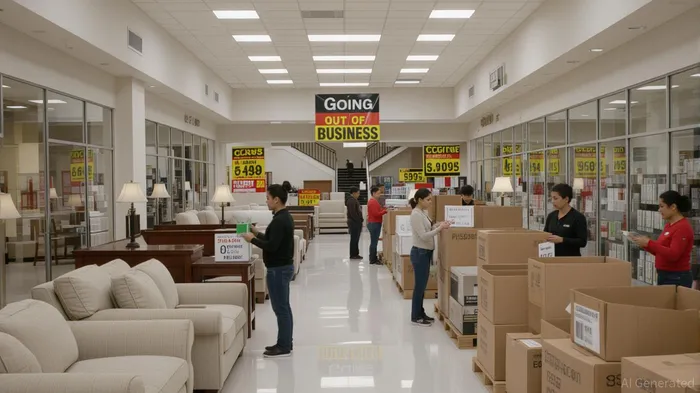 The ripple effects extend beyond the furniture sector. As Value City exits the market, its vacated spaces-many in suburban malls and strip centers-risk contributing to a spike in retail vacancies. According to a midyear 2025 , U.S. , but localized pressures in underperforming areas could destabilize this equilibrium. For example, mall-adjacent locations, which often house furniture retailers, may see increased vacancies as tenants struggle to fill large-format spaces according to the same report.
REITs and the Shadow of Exposure
Retail REITs, which own and lease commercial properties to retailers, face a dual challenge: mitigating tenant risk while navigating a market where demand for prime retail space remains robust. While specific REITs with direct exposure to Value City locations are not named in available data according to analysis, the company's widespread closures suggest that REITs with significant holdings in the affected regions-such as Tennessee, Georgia, and Ohio-could see financial strain.
The risk lies in lease defaults and the cost of re-leasing vacated properties. For instance, if a REIT owns a Value City-anchored mall, the loss of that tenant could reduce rental income and necessitate costly renovations to attract new tenants. However, the broader retail real estate market offers some optimism. CBRE notes that limited new supply and disciplined retail expansion have kept vacancy rates low, . This suggests that while Value City's exit may create short-term turbulence, the market's structural strength could absorb the shock.
Sector-Wide Implications and Investor Caution
The collapse of Value City also highlights a larger trend: the acceleration of retail consolidation. As weaker players exit, stronger competitors-particularly those with e-commerce capabilities-gain market share. American Signature Inc. itself plans to continue operating its online platforms during the bankruptcy process, a move that mirrors the strategies of surviving retailers. For REITs, this means a shift in tenant mix, with a greater emphasis on omnichannel retailers and experiential uses (e.g., fitness studios, co-working spaces) that command premium rents according to CBRE Insights.
Investors should, however, remain cautious. The retail REIT sector's exposure to high-occupancy retail properties is a double-edged sword. While low vacancy rates and stable demand provide a buffer, the concentration of risk in sectors like furniture retail-where Value City operated-remains a concern. REITs with diversified portfolios and strong balance sheets will likely weather the storm, but those overexposed to single-tenant or mall-based leases could face headwinds.
Conclusion
The bankruptcy of Value City Furniture is a cautionary tale for both retailers and real estate investors. It underscores the fragility of traditional retail models in an era of digital disruption and economic uncertainty. For REITs, the key to resilience lies in adaptability: repositioning properties, diversifying tenant bases, and prioritizing locations with strong demographic fundamentals. While the immediate impact of Value City's collapse may be limited, the broader lesson is clear-retail real estate must evolve or risk becoming collateral damage in an industry in flux.

Delivering real-time insights and analysis on emerging financial trends and market movements.
Latest Articles
Stay ahead of the market.
Get curated U.S. market news, insights and key dates delivered to your inbox.
AInvest
PRO
AInvest
PRO



Comments
No comments yet