
The Collapse of K&W Cafeterias: A Microcosm of Struggling Brick-and-Mortar Retail


 Aime Summary
Early Warning Signs of Systemic Fragility
K&W's business model was inherently susceptible to macroeconomic and demographic shifts. At its core, the chain relied on an older demographic that valued in-person dining, scratch-made meals, and a communal atmosphere. While this model thrived for decades, it became increasingly misaligned with broader trends. By the 2020s, younger consumers prioritized convenience, speed, and digital integration-needs that K&W struggled to meet despite late attempts to adopt online ordering and delivery.
The pandemic acted as a catalyst, exposing preexisting weaknesses. Sales plummeted by 80% at the crisis's peak, forcing the closure of six locations in the Triangle area alone. Financially, the company's reliance on a $6.7 million PPP loan-a significant portion of its $22 million liabilities-highlighted its precarious liquidity position. This dependence on government aid, rather than organic revenue streams, signaled a lack of resilience in its operational structure.
Broader industry trends further contextualize K&W's decline. The cafeteria-style dining sector, once a cornerstone of the food-away-from-home (FAFH) market, faced long-term erosion from fast food and casual dining chains starting in the 1960s. By 2020, the sector's inability to adapt to convenience-driven consumer preferences left it vulnerable to sudden disruptions. 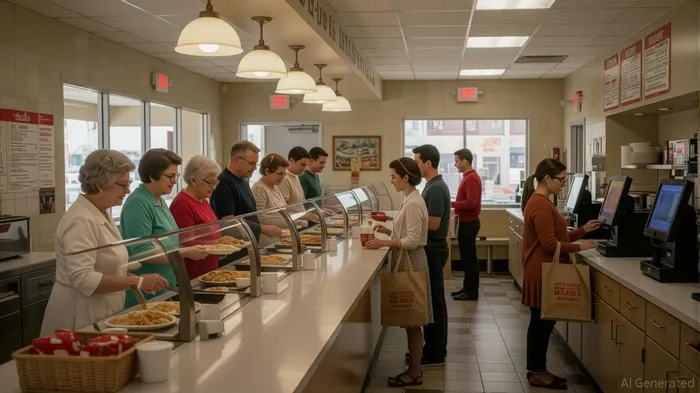
Systemic Sector Challenges and Investment Implications
K&W's story is emblematic of a larger struggle in brick-and-mortar retail: the clash between legacy business models and modern consumer expectations. According to data from the USDA Economic Research Service, while the FAFH market grew overall, segments like cafeterias lagged behind fast-casual and delivery-focused chains in capturing market share. This divergence reflects a critical misalignment between traditional operators and evolving demand.
For investors, the collapse of K&W underscores the importance of monitoring operational flexibility and digital integration. Businesses that fail to invest in omnichannel capabilities-such as robust delivery systems, mobile ordering, and data-driven customer insights-risk obsolescence. K&W's half-hearted modernization efforts, which arrived too late to offset pandemic-driven declines, exemplify this risk.
Opportunities in Value-Creation Plays
Despite these challenges, the sector's struggles present opportunities for investors willing to identify and support adaptive strategies. Value creation in struggling retail sectors often hinges on three pillars: technology integration, niché market repositioning, and operational agility.
- Technology-Driven Turnarounds: Chains that successfully pivot to digital-first models-such as leveraging AI for inventory management or partnering with third-party delivery platforms-can unlock new revenue streams. For example, post-pandemic, some cafeteria-style chains have survived by rebranding as "ghost kitchens" or hybrid dine-in/delivery hubs. According to restaurant industry analysis, such pivots have proven effective in sustaining operations.
- Niche Market Relevance: Businesses that double down on their unique cultural or culinary identity-while modernizing delivery channels-can retain loyal customer bases. K&W's pre-pandemic strength lay in its family-centric brand and Southern comfort food; a reimagined version of this model, tailored to multigenerational households or heritage-conscious consumers, could thrive. As local culture advocates note, such heritage-based positioning remains valuable.
- Operational Restructuring: Bankruptcy filings like K&W's often precede creative restructurings. Investors with capital and operational expertise can acquire distressed assets at a discount and implement leaner, tech-enabled models. For instance, K&W's Chapter 11 filing included plans to close a third of its locations, a move that, if paired with strategic reinvestment in surviving units, could create a more viable business. This restructuring strategy has been cited as a successful model in similar cases.
Conclusion
The collapse of K&W Cafeterias is not an isolated event but a symptom of deeper systemic fragility in brick-and-mortar retail. Early warning signs-such as demographic misalignment, operational rigidity, and overreliance on vulnerable revenue streams-serve as red flags for investors. Yet, within this fragility lies opportunity. By identifying businesses capable of pivoting to digital-first models, repositioning for niche markets, or restructuring operations, investors can transform sector challenges into value-creation plays. The key lies in recognizing the warning signs early and acting decisively to reimagine legacy models for a modern economy.

Delivering real-time insights and analysis on emerging financial trends and market movements.
Latest Articles
Stay ahead of the market.
Get curated U.S. market news, insights and key dates delivered to your inbox.






Comments
No comments yet