
The Collapse of K&W Cafeterias: A Case Study in Restaurant Industry Vulnerability
 Aime Summary
Pandemic's Accelerating Impact on a Traditional Model
The pandemic exposed critical weaknesses in K&W's business model. Its reliance on an older demographic-many of whom were hesitant to adopt digital tools-and a self-service format ill-suited for contactless interactions left it vulnerable to the crisis according to analysis. While the company secured a $6.73 million Paycheck Protection Program loan to preserve 500 jobs, its sales plummeted by 80% at the pandemic's peak. This decline highlights a broader trend: legacy brands with rigid operational structures struggled to pivot to new revenue streams like delivery or curbside pickup, which became lifelines for more agile competitors according to industry reports.
Retail Resilience: How the Industry Adapted
In contrast, the broader restaurant industry demonstrated remarkable resilience by embracing digital transformation. By 2023, the sector surpassed pre-pandemic sales levels, generating $981 billion in revenue. Operators leveraged QR code menus, cloud-based management systems, and automation to streamline operations and reduce labor costs according to industry experts. For instance, chains like McDonald's and Panera Bread invested heavily in self-service kiosks and mobile ordering, aligning with consumer demands for convenience and speed. These adaptations not 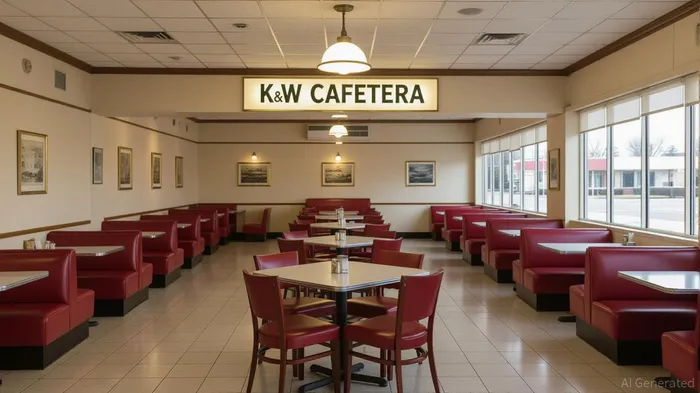 only mitigated pandemic-related losses but also positioned brands to thrive in a post-crisis landscape.
K&W's failure to adopt similar strategies left it lagging behind. Unlike fast-casual competitors, it lacked the infrastructure to support delivery or online ordering, further alienating younger customers who prioritized digital-first experiences. This disconnect between K&W's traditional model and evolving consumer expectations exemplifies a classic value trap-where a brand's perceived affordability and nostalgia fail to offset declining relevance according to restaurant industry analysis.
Value Traps in Legacy Brands: A Systemic Challenge
The collapse of K&W is part of a larger pattern affecting legacy consumer brands. Chains like Red Lobster and Howard Johnson's faced similar fates in 2024, as they failed to modernize their offerings or address sustainability concerns central to younger demographics. These brands became relics of a bygone era, unable to compete with digital-native competitors that prioritized personalization, eco-conscious practices, and experiential dining.
For small, family-owned businesses, the challenges were even more acute. A 2025 analysis revealed that Black, Indigenous, and minority-owned restaurants faced disproportionate financial strain due to rising costs and reduced consumer spending, compounding the effects of the affordability crisis. K&W, though family-operated, was acquired by Falcon Holdings LLC in its final years-a move that underscored its inability to sustain itself independently. This acquisition, rather than a revival, signaled the end of its legacy.
Lessons for Investors
The K&W case offers critical insights for investors evaluating legacy brands. First, resilience in the restaurant industry hinges on adaptability: brands that invested in digital tools, flexible labor models, and customer-centric innovations outperformed those clinging to traditional formats. Second, value traps are not limited to small businesses; even well-established chains risk obsolescence if they fail to align with modern consumer values. Investors must scrutinize a brand's capacity for reinvention, particularly in sectors where technological disruption is inevitable.
For K&W, the absence of a coherent digital strategy and its inability to attract younger patrons proved fatal. As one customer lamented, "It was a place where generations of families gathered-now it's just gone" according to the report. This emotional loss underscores the human cost of business failure but also serves as a cautionary tale for investors: in an era of rapid change, nostalgia alone cannot sustain a brand.
Conclusion
The collapse of K&W Cafeterias is a microcosm of the broader challenges facing legacy consumer brands. While the restaurant industry as a whole demonstrated resilience through innovation, K&W's adherence to a traditional model left it exposed to the dual pressures of digital disruption and shifting demographics. For investors, the lesson is clear: longevity in the retail sector requires more than heritage-it demands continuous reinvention.

Delivering real-time insights and analysis on emerging financial trends and market movements.
Latest Articles
Stay ahead of the market.
Get curated U.S. market news, insights and key dates delivered to your inbox.






Comments
No comments yet