
The Collapse of Blue Islands Airline and Its Implications for Regional Aviation Equity


 Aime Summary
Operational Vulnerabilities: A Perfect Storm
Blue Islands' operational challenges were emblematic of broader industry struggles. The airline cited supply chain disruptions and delayed aircraft deliveries as key factors in its declining performance, with the (CAA) , . By August 2025, , but the damage to customer trust was already done.
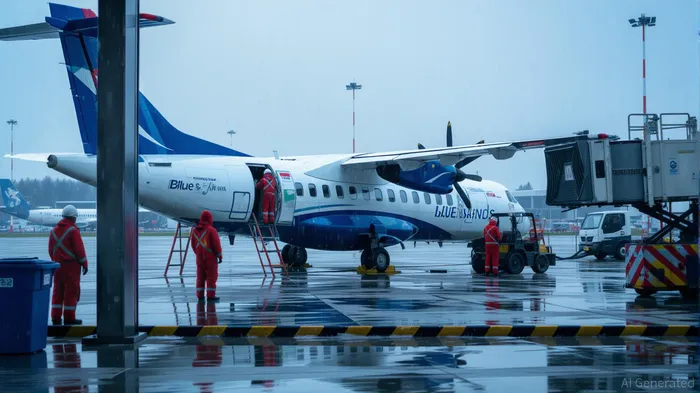
The airline's reliance on a fleet of just five ATR-72 aircraft further amplified its exposure to mechanical failures and maintenance delays. A critical incident in May 2025-when an aircraft's newly installed engine ingested debris, requiring extended repairs-highlighted the precariousness of its operations. These issues were compounded by global supply shortages, which the airline acknowledged were "not unique to its operations" but nonetheless crippling according to its own statements.
Market Volatility and Financial Strain
Blue Islands' financial trajectory reveals a pattern of unsustainable debt and inadequate liquidity. , but . This reliance on public funding, coupled with weak revenue streams from low-density routes, left the airline vulnerable to economic shocks. Minister for Treasury and Resources 's public acknowledgment of "a limit" to government support according to BBC reports signaled a shift in policy, forcing regional carriers to compete in a market where subsidies were no longer a given.
The airline's expansion ambitions, such as new routes to Newcastle, were touted as solutions to its woes. Chief Revenue Officer had confidently declared these flights would "make a real difference for thousands of customers" according to BBC reports, yet the underlying financial instability rendered such plans aspirational rather than transformative. For investors, this highlights a recurring risk: overreliance on optimistic route development without addressing core liquidity and operational challenges.
Strategic Risk for Investors: Lessons from the Collapse
The Blue Islands case underscores three critical risks for regional aviation equity:
Operational Resilience: Regional airlines with limited fleets and narrow route networks are disproportionately affected by mechanical failures or supply chain delays. Blue Islands' inability to absorb even minor disruptions-such as a single engine ingestion incident-exposed the fragility of its business model.
Government Dependency: While pandemic-era subsidies provided temporary relief, the withdrawal of such support has left many regional carriers in a precarious position. Investors must scrutinize the extent to which airlines rely on public funding and assess the likelihood of future bailouts.
Market Competition: The rise of low-cost carriers and the re-entry of larger airlines into regional markets have intensified price competition. Loganair and Aurigny's swift response to Blue Islands' collapse by offering "rescue fares" illustrates how competitors can quickly fill gaps, eroding market share for struggling operators.
The Path Forward: Mitigating Risk in a Fragmented Sector
For investors, the key to navigating this volatile landscape lies in rigorous due diligence. Airlines with diversified revenue streams, robust maintenance partnerships, and transparent financial reporting are better positioned to weather shocks. Additionally, monitoring regulatory shifts-such as changes in government subsidy policies or CAA performance benchmarks-can provide early warnings of systemic risks.
The collapse of Blue Islands is not an isolated event but a harbinger of broader challenges in regional aviation. As the sector grapples with the aftershocks of the pandemic and the relentless pace of technological and economic change, strategic risk assessment must become a cornerstone of investment decisions.

Delivering real-time insights and analysis on emerging financial trends and market movements.
Latest Articles
Stay ahead of the market.
Get curated U.S. market news, insights and key dates delivered to your inbox.






Comments
No comments yet