
The Collapse of American Signature: A Warning Sign for Brick-and-Mortar Retail?


 Aime Summary
American Signature's Financial Descent: A Case Study in Retail Resilience and Fragility
American Signature's financial trajectory over the past three years reveals a company caught in a tug-of-war between strategic adaptation and structural challenges. By early 2022, the company had reduced its default probability to 22.5%, reflecting optimism in the post-pandemic recovery. However, this optimism proved fleeting. By early 2023, its credit risk spiked to 47.2%, prompting a downgrade to a B4 rating. While a partial recovery was observed by March 2024 (B2 rating), the default probability had risen again to 26.4% by mid-2025.
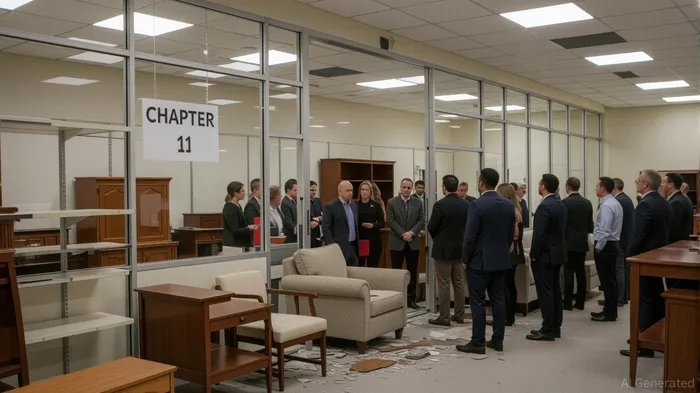
The company's attempts to stabilize its operations included exiting underperforming markets, such as Nashville, to realign its store footprint. Yet, these measures were insufficient to counteract broader macroeconomic forces. Inflation, a strong U.S. dollar (which increased operational costs), and supply chain bottlenecks all exacerbated its financial strain. American Signature's credit spread, while lower than peers like Mattress Firm and HavertysHVT--, remained a red flag for investors, highlighting the sector's precarious credit environment.
The Post-Pandemic Retail Sector: A Perfect Storm of Challenges
American Signature's collapse is emblematic of a sector-wide crisis. The post-pandemic retail landscape has been reshaped by a shift from a "mass" to a "micro" model, where hyper-personalization and data-driven strategies are now table stakes. Retailers face a trifecta of challenges:
1. High transitional costs: Modernizing legacy systems to meet consumer expectations for omnichannel experiences has proven prohibitively expensive for many.
2. Fragmented consumer demand: Post-pandemic spending patterns are increasingly unpredictable, with consumers prioritizing value over convenience.
3. Technology debt: Over 60% of North American retailers struggle to keep pace with rapid technological advancements, and nearly half cannot quantify the ROI of their in-store tech investments.
The rise of generative AI has introduced both opportunities and uncertainties. While early adopters reported a 15% improvement in Black Friday conversion rates and better inventory forecasting, many retailers remain skeptical about the quality and consistency of AI tools. Meanwhile, the sector's compound annual growth rate has stagnated at 1.5–3.5%, with margins squeezed by competition and rising operational costs(https://www.deloitte.com/us/en/insights/industry/retail-distribution/retail-distribution-industry-outlook.html).
Investor Implications: Navigating a Sector in Transition
For investors, the collapse of American Signature and similar retailers signals a need for caution and strategic reevaluation. Key considerations include:
- Debt management: Retailers with high leverage and slow asset turnover are particularly vulnerable. American Signature's debt burden, combined with its exposure to interest rate hikes, exemplifies this risk.
- Technology adoption: Retailers that fail to integrate AI and automation risk falling further behind. However, investors must balance optimism with skepticism, as many companies struggle to demonstrate tangible returns on these investments.
- Diversification of revenue streams: The sector's pivot toward retail media networks and data monetization offers a lifeline, but success depends on execution. American Signature's inability to pivot effectively contrasts with companies like Walmart and Target, which have leveraged their digital ecosystems to offset declining foot traffic.
The broader retail sector is also grappling with the rise of e-commerce disruptors like Shein and Temu, which have captured market share with low-cost, fast-fashion models. Meanwhile, macroeconomic headwinds-including a weak housing market and depleted consumer savings-threaten to prolong the sector's downturn.
Conclusion: A Sector at a Crossroads
American Signature's Chapter 11 filing is not an anomaly but a symptom of a sector in existential crisis. The post-pandemic retail environment demands agility, technological sophistication, and a willingness to reinvent business models. For investors, the lesson is clear: traditional brick-and-mortar retailers must either adapt rapidly or face obsolescence. While some companies may survive through strategic pivots and capital restructuring, the path forward is fraught with uncertainty. American Signature's collapse serves as a cautionary tale-a reminder that in today's retail landscape, even well-established brands are not immune to disruption.

Delivering real-time insights and analysis on emerging financial trends and market movements.
Latest Articles
Stay ahead of the market.
Get curated U.S. market news, insights and key dates delivered to your inbox.
AInvest
PRO
AInvest
PRO



Comments
No comments yet