
The Collapse of American Signature: What It Reveals About Retail Resilience and Consumer Shifts


 Aime Summary
A Cautionary Tale of Financial Irregularities
American Signature's Chapter 11 filing in 2025 followed a six-month investigation into inventory financing practices at its subsidiary, 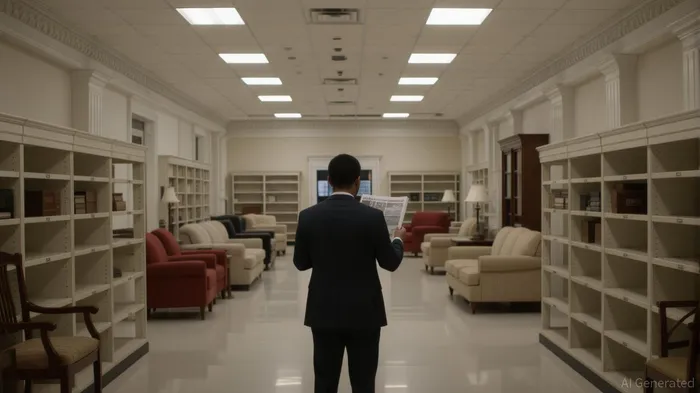 Lugano. According to CEO Elias Sabo, the collapse was attributed to a "sophisticated financial and accounting fraud" conducted by former leadership, which necessitated a complex financial restatement. This internal turmoil, coupled with liquidity challenges, exposed systemic weaknesses in the company's operational model. While the parent company has provided debtor-in-possession financing and extended forbearance agreements, the filing highlights how opaque governance and misaligned incentives can erode even long-standing retail brands.
Broader Sector Vulnerabilities
The collapse of American Signature is not an isolated incident. A 77-year-old furniture chain filing for bankruptcy signals deeper vulnerabilities in the retail sector. According to a report by , declining sales and liquidity issues have been exacerbated by a downturn in the residential real estate market, which directly impacts consumer demand for home furnishings. This trend reflects a broader pattern: as housing markets contract, discretionary spending on large-ticket items like furniture wanes, disproportionately affecting traditional retailers according to .
Restructuring and Workforce Impacts
While specific details on American Signature's WARN notice-such as employee layoffs or store closures-remain elusive, the retail sector's restructuring efforts are evident elsewhere. For instance, Starbucks recently announced the closure of 500 underperforming stores and the layoff of 900 corporate employees as part of a $1 billion restructuring plan. Such moves, though painful, underscore the sector's need to reallocate resources to high-performing channels and digital capabilities. Investors must recognize that these adjustments are not merely cost-cutting exercises but strategic responses to shifting consumer expectations.
The E-Commerce Acceleration
Retail analysts in 2025 have sounded a clear message: e-commerce is no longer a disruptive force but a foundational pillar of retail. , while overall holiday spending is expected to decline by 5% compared to 2024, e-commerce sales are projected to grow by 7–9%, reaching $305 billion to $310.7 billion. Mobile commerce, in particular, is gaining traction, accounting for 56.5% of U.S. holiday e-commerce sales. This shift reflects a generational pivot toward convenience and price transparency, with consumers increasingly favoring seamless digital experiences over in-store friction according to .
Implications for Investors
For investors, the collapse of American Signature and the broader sector trends present a dual challenge. Brick-and-mortar retailers face mounting pressure to innovate, yet their capital-intensive models make rapid adaptation difficult. Meanwhile, e-commerce players-while benefiting from scale and data-driven personalization-must navigate margin pressures and logistical bottlenecks. The key lies in identifying companies that can harmonize physical and digital ecosystems, leveraging the strengths of both channels according to .
The retail sector's future hinges on its ability to balance cost discipline with customer-centric innovation. As American Signature's demise illustrates, failure to adapt to evolving consumer preferences and technological shifts will leave even established brands vulnerable. For investors, the lesson is clear: prioritize agility over legacy models, and scrutinize retailers' digital transformation strategies as rigorously as their balance sheets.

Delivering real-time insights and analysis on emerging financial trends and market movements.
Latest Articles
Stay ahead of the market.
Get curated U.S. market news, insights and key dates delivered to your inbox.
AInvest
PRO
AInvest
PRO



Comments
No comments yet