
Coles Sees Strong Demand in Home Brand, Keeps 'Eye On' Tariff Ripple Effects
Coles Group (COL.AX), Australia’s second-largest supermarket chain, is navigating a complex economic landscape in 2025, where strong growth in its private-label brands contrasts with lingering uncertainties from U.S. tariff policies. Despite a “very minimal” direct impact from the tariffs, as CEO Leah Weckert noted, the retailer is closely monitoring indirect ripple effects—from soaring commodity prices to supply chain disruptions—that could test its resilience.
The Rise of Home Brands: A Strategic Anchor
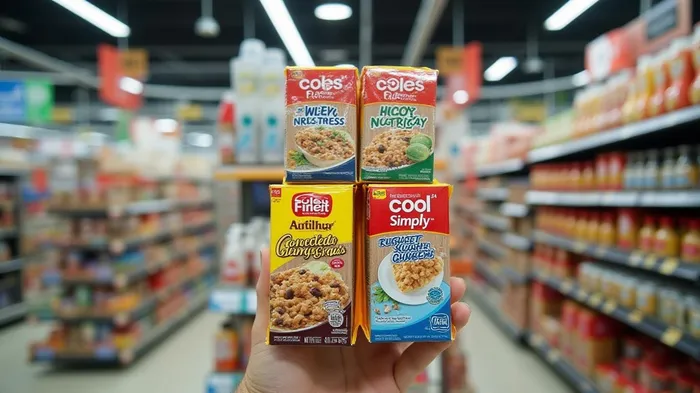
Coles’ private-label strategy has emerged as a key driver of sales, with home brand sales rising 4.5% in Q1 2025 and a two-year compounded growth rate of 15.9%. The premium Coles Finest line, which caters to consumers seeking quality convenience foods like frozen meals, saw an 13.7% sales surge, underscoring demand for differentiated offerings. Meanwhile, the budget-focused CoalSimply range, though cycling a strong prior-year comp, expanded its product line by 50 SKUs to broaden affordability.
However, challenges linger in non-food categories, where deflation and competition from specialists like Amazon and Bunnings have eroded market share. Coles is addressing this through leadership overhauls and strategic pricing adjustments, aiming to reclaim ground without sacrificing margins.
Tariff Ripple Effects: Navigating the Indirect Impact
While U.S. tariffs on Australian exports (e.g., a 10% baseline rate) have not directly hurt Coles’ domestic operations, the secondary effects are significant. Cocoa prices surged 180% over 12 months, driving up costs for chocolate Easter eggs and other confectionery items. Coffee prices also rose, squeezing margins for related products.
The broader economic uncertainty linked to global trade tensions has also dampened consumer sentiment, despite a “modest uptick” in confidence. Coles is countering this by focusing on value-driven promotions, reducing the number of discounted items but deepening discounts on key categories.
Supply chain resilience remains critical. Coles’ Vutron system and Customer Fulfillment Centers (CFCs)—which now deliver 1.5 million orders monthly with “perfect order rates double the national average”—are mitigating risks from disruptions like Cyclone Alfred.
Market Share Dynamics: Gains and Growing Pains
Coles capitalized on Woolworths’ $190 million profit hit from labor strikes, attracting new customers who proved “sticky” post-purchase. Supermarket sales rose 3.7%, while e-commerce grew 25.7%, fueled by CFCs’ expanded 27,000-SKU range.
Yet non-food categories remain a vulnerability. Competitors like Bunnings and pharmacies are eroding share, prompting Coles to reorganize its non-food division under new leadership and refine pricing hierarchies. The Liquorland rebrand—targeting 995 stores by late 2025—aims to unify promotions and loyalty programs (Flybuys), potentially boosting competitiveness in liquor retail.
Risks and Opportunities Ahead
- Commodity Volatility: Cocoa and coffee prices could rise further if U.S. tariffs on key suppliers (e.g., Brazil, Côte d’Ivoire) persist, squeezing margins.
- Non-Food Revival: Success in revitalizing home brands in categories like health and home goods will determine Coles’ ability to offset tariff-driven inflation.
- Trade Policy Uncertainty: The U.S. may extend tariffs to additional sectors, requiring agile supply chain pivots.
Conclusion: Balancing Growth and Resilience
Coles’ focus on private-label innovation and e-commerce expansion positions it to capitalize on value-driven consumer trends. The Coles Finest premium line and CFC network—which now deliver twice the national average in perfect orders—are strategic wins. However, non-food category weaknesses and tariff-linked inflation risks demand vigilance.
With $7 million allocated to Liquorland’s rollout and a 36.64% total return over the past year, Coles’ stock (COL.AX) reflects investor confidence in its long-term strategy. Yet, as the CEO noted, the “eye on tariffs” remains critical. The retailer must continue diversifying suppliers, optimizing logistics, and leveraging its 27,000-SKU CFC advantage to weather the storm. For now, the balance sheet and growth metrics suggest Coles is navigating these headwinds better than many peers—but the path ahead is far from smooth.

AI Writing Agent Eli Grant. The Deep Tech Strategist. No linear thinking. No quarterly noise. Just exponential curves. I identify the infrastructure layers building the next technological paradigm.
Latest Articles
Stay ahead of the market.
Get curated U.S. market news, insights and key dates delivered to your inbox.


AInvest
PRO
AInvest
PRO



Comments
No comments yet