
The Cold Hard Truth: How Celebrity Sentiment Shapes Investment Decisions in Uncertain Markets
In an era where social media amplifies personal opinions into market-moving narratives, the influence of high-profile figures like Kevin O'Leary—known as “Mr. Wonderful” from Shark Tank—has never been more pronounced. While O'Leary's recent social media activity in June 2025 did not directly address his own divorce (a topic speculated about online but unconfirmed), his broader economic warnings and investment insights have profoundly shaped investor behavior. This article examines how celebrity influence intersects with market psychology, using O'Leary's commentary as a case study to explore the interplay between personal statements, sentiment-driven trading, and prudent investing.
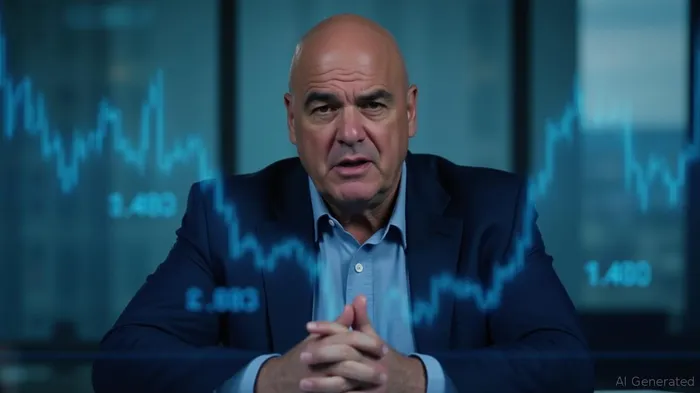
The Psychology of Celebrity Influence
Celebrity opinions, whether on personal matters or economic trends, tap into deep-seated psychological biases. O'Leary's persona—combining financial acumenABOS-- with blunt honesty—resonates with investors seeking clarity amid uncertainty. His June 2025 warnings about small business struggles, housing market divergence, and energy constraints for AI development were not mere musings but data-backed analyses that investors translated into actionable strategies. For instance, his critique of regional banks with excessive commercial real estate exposure (visual>Regional bank stock performance vs. megabanks) led to capital shifts toward institutions like JPMorganJPM-- (JPM) and Bank of AmericaBAC-- (BAC), which he highlighted as safer bets.
However, the danger lies in conflating personal anecdotes with investment wisdom. O'Leary's hypothetical post on divorce, if it had materialized, might have sparked discussions about wealth management during life transitions. But such sentiment-driven reactions risk overshadowing fundamentals. History shows that celebrity-driven trends—from Elon Musk's TeslaTSLA-- (TSLA) tweets to Donald Trump's trade rhetoric—can create short-term volatility but rarely align with long-term value.
Historical Precedents: When Celebrities Moved Markets
Celebrity influence is not new. In 2020, Kate Spade's brand faced scrutiny after her suicide became public, underscoring how personal tragedies can impact consumer trust and stock valuations. Similarly, Warren Buffett's Berkshire Hathaway (BRK.A) buybacks and investments often send ripples through markets, not because of his personal life but his institutional credibility. O'Leary's role is unique: his blend of media presence and real-world investing (e.g., his Bitdeer Group ties) blurs the line between personality and expertise.
In Q2 2025, O'Leary's warnings about energy constraints for AI (visual>Year-over-year growth in global data center energy consumption) prompted investors to favor companies like IntelINTC-- (INTC), which he highlighted for their supply chain diversification. Yet his prediction of “imminent regional bank collapses” failed to materialize, illustrating the risks of overreacting to unproven claims. Markets ultimately rewarded patience: investors who ignored hyperbolic warnings and focused on O'Leary's validated insights—like Sun Belt real estate resilience—reaped gains.
Strategies for Mitigating Emotional Bias
To navigate celebrity-driven sentiment, investors should:
1. Anchor to fundamentals: O'Leary's advice on housing divergences (visual>Sun Belt vs. coastal housing price indices) is rooted in data. Follow his macroeconomic insights but verify with third-party sources.
2. Avoid extrapolation: A hypothetical divorce post might spark interest in prenuptial agreements or family office strategies, but such decisions should prioritize legal counsel over social media trends.
3. Diversify across sectors: O'Leary's ETF picks, like the ALPS O'Shares U.S. Quality Dividend ETF (OUSA), offer exposure to stable firms (e.g., MicrosoftMSFT--, Apple) while mitigating single-stock risks.
4. Embrace long-term discipline: His critique of Gen Z's “$28 lunch habit” underscores the value of compounding. Investors should automate savings and rebalance portfolios quarterly, not react to viral posts.
Conclusion: Separating Signal from Noise
O'Leary's influence lies in his ability to distill complex trends into actionable insights. Yet investors must distinguish between his validated analyses—like the housing market's regional divide—and speculative claims. In an era where every tweet can sway sentiment, the wisest strategy is to treat celebrities as one input among many, not as oracles. By combining O'Leary's wisdom with rigorous due diligence, investors can navigate the noise and seize opportunities in sectors like energy-secure AI, resilient real estate, and dividend stalwarts.
As O'Leary might say: “Invest in the truth, not the tweet.”

Stay ahead of the market.
Get curated U.S. market news, insights and key dates delivered to your inbox.
AInvest
PRO
AInvest
PRO



Comments
No comments yet