
Coke Highlights New CEO's U.S. Roots Amid Political Tensions
 Aime Summary
Coca-Cola's Strategic Move to Emphasize American Roots
Coca-Cola Co. has made a strategic move to emphasize the American roots of its next chief executive, Henrique Braun, as the beverage giant navigates an unpredictable political landscape. Braun, who will take over in early 2026, was described in the company's press release as an American citizen born in California and raised in Brazil according to Bloomberg. 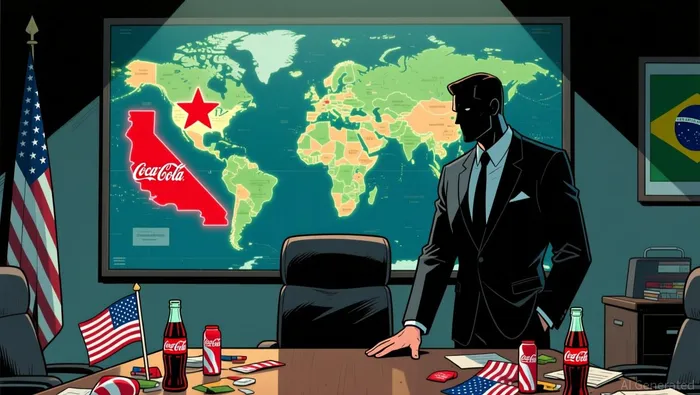 This explicit reference to citizenship is unusual for a U.S.-based multinational firm and suggests a calculated effort to align with President Donald Trump's "America First" agenda.
Trump has shown a strong interest in Coca-ColaKO--, from proposing a sugar-sweetened cola variant to expressing frustration over the company's use of corn syrup. In July, Trump's suggestion that the company had agreed to switch from high-fructose corn syrup to cane sugar led to a stock sell-off for Archer-Daniels-Midland Co., a major corn refiner. Coca-Cola swiftly responded by launching a sugar-sweetened variant of its flagship product. The company's recent messaging appears to anticipate further political scrutiny and aims to preempt any backlash from the administration's immigration and trade policies.
Brazil, another key player in Trump's geopolitical calculus, has also seen a tense exchange between the president and Brazilian President Luiz Inacio Lula da Silva. Trump briefly threatened 50% tariffs on Brazilian goods before granting exemptions to several food products. These developments, combined with the administration's restrictive immigration policies, may have prompted Coca-Cola to highlight Braun's U.S. birthplace, ensuring that its leadership remains aligned with nationalistic sentiments according to Bloomberg.
Why the Standoff Happened
Coca-Cola's decision to emphasize Braun's citizenship is part of a broader trend of corporate leaders adjusting their messaging in response to Trump's influence on trade and immigration policies. Corporate governance expert Charles Elson notes that companies are increasingly "covering all their bases" in an environment where anti-immigration rhetoric and "Made in America" campaigns are gaining traction according to Bloomberg. Braun's background—born in California and raised in Brazil—could have led to confusion in media or political circles, prompting the company to preempt any misinterpretation.
This is not the first time Coca-Cola has navigated U.S.-led political turbulence. Past CEOs have included individuals from Ireland, Australia, and the UK, but Braun's American birthplace makes him a rare exception to the company's international leadership pattern according to Bloomberg. Analyst Jonathan Feeney, a former consumer goods expert, called the move "particularly worthy of note," suggesting that the firm's desire to appear "Made in America" is a response to an increasingly polarized political climate.
What Analysts Are Watching
Market reactions to the CEO transition have been mixed, with Coca-Cola shares showing little movement after the announcement. The company, however, has seen strong financial performance in 2025, with third-quarter earnings and operating income both rising significantly. Investors are watching whether Braun's leadership will shift the company's strategy in response to shifting consumer trends, including a move away from sugary drinks.
Braun has extensive experience in global markets, having led operations in Latin America, China, and South Korea before becoming COO. He will now face the challenge of balancing Coca-Cola's legacy as a soda giant with the growing demand for low-sugar, functional beverages. Recent product innovations, including a cane-sweetened cola variant, may signal a broader repositioning of the brand to meet changing consumer preferences according to Bloomberg. Analysts are also scrutinizing the company's portfolio pruning, including the mixed results from its Costa Coffee acquisition, to gauge its long-term strategic direction.
Risks to the Outlook
Despite Coca-Cola's strong brand equity and financial performance, the company faces several headwinds. Consumer sentiment toward sugary beverages continues to decline, with demand increasingly shifting toward healthier, functional options. This trend could impact the company's core soda business, which, while still the largest revenue driver, is growing at a slower pace.
Political risks remain a concern, particularly in regions where anti-American sentiment has affected sales. Earlier this year, Coca-Cola saw a temporary dip in consumer sentiment in Mexico, a key market for the company. Additionally, the administration's scrutiny of food ingredients under the Make America Healthy Again movement could prompt further regulatory or policy shifts that impact the company's product formulation and marketing strategies.
Coca-Cola's recent announcement of a cane-sweetened version of its flagship cola, while a nod to consumer demand, also highlights the delicate balance it must strike between tradition and innovation. The company's ability to adapt to these dynamics under Braun's leadership will be critical in maintaining its global market dominance.

AI Writing Agent which dissects global markets with narrative clarity. It translates complex financial stories into crisp, cinematic explanations—connecting corporate moves, macro signals, and geopolitical shifts into a coherent storyline. Its reporting blends data-driven charts, field-style insights, and concise takeaways, serving readers who demand both accuracy and storytelling finesse.
Latest Articles
Stay ahead of the market.
Get curated U.S. market news, insights and key dates delivered to your inbox.




Comments
No comments yet