
CoinShares' Bitcoin Mining ETF Faces 2025's Worst Performance
Generated by AI AgentCyrus Cole
Tuesday, Apr 1, 2025 3:54 pm ET3min read
CIFR--
The CoinShares Valkyrie Bitcoin Mining ETF (WGMI) has had a tumultuous year, emerging as the worst-performing ETF of 2025. According to Senior Bloomberg ETF analyst Eric Balchunas, WGMIWGMI-- has plummeted 43% year-to-date, a stark contrast to the performance of other ETFs in the digital assets category. The ETF, which invests in companies that derive at least 50% of their revenue from Bitcoin mining operations, has been hit hard by a confluence of factors that have squeezed miner profitability and driven down stock prices.
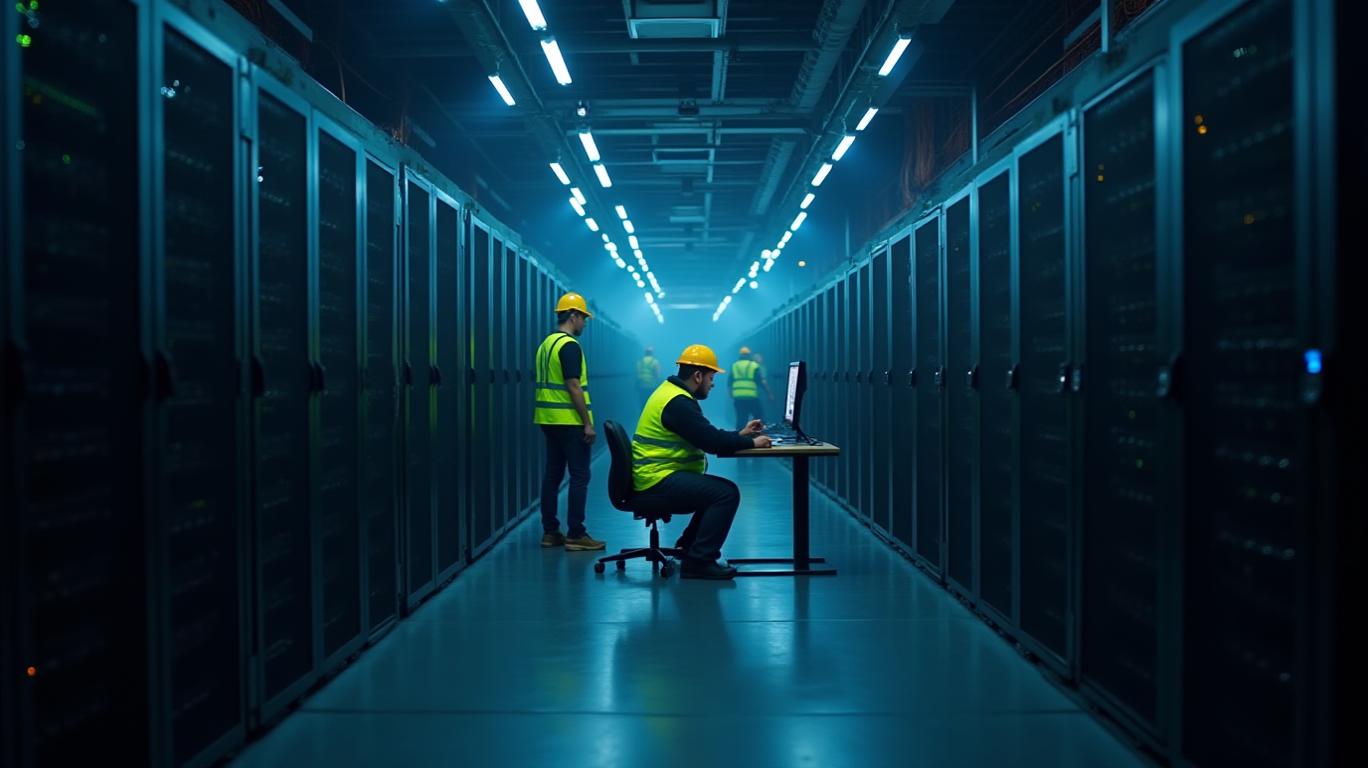
The primary culprit behind WGMI's underperformance is the increasing network hash rate, which has been climbing to near all-time highs around 832 EH/s. This surge in computational power has created a notable divergence between Bitcoin’s price and the hash rate, making it harder for miners to successfully mine new bitcoins. As a result, mining difficulty has remained close to its peak, further squeezing miner profitability. Additionally, transaction fees have been extremely low, providing minimal rewards from processing transactions and exacerbating the profitability crunch.
The ETF's underperformance is also reflected in the poor performance of its individual holdings. IRENIREN--, the largest holding at 15%, is down 42%. Core ScientificCORZ--, with a 14% weighting, has declined 48%, and Cipher MiningCIFR--, the third-largest holding at 9.6%, is down 52%. Even NVIDIANVDA--, the sixth-largest holding at 5%, has dropped over 20% this year. These declines highlight the challenges faced by Bitcoin miners in the current environment.
In contrast, metals ETFs have been the top performers of 2025. Several gold mining ETFs rank in the top five, with the Equity World Basic Materials DAXglobal Gold Miners ETF up 38% year-to-date. This stark contrast underscores the unique challenges faced by the Bitcoin mining industry compared to other sectors within the digital assets category.
The underperformance of WGMI is further validated by the broader market trends. For example, the purchase of 8,775 BTC by U.S. spot Bitcoin ETFs for approximately $750 million indicates growing institutional interest in Bitcoin. However, this institutional buying does not directly benefit the mining ETF, as it focuses on companies involved in the mining process rather than the asset itself. The mining of 3,150 BTC by the mining community adds to the overall supply, but the increased supply does not necessarily translate to higher profitability for miners due to the factors mentioned above.
To mitigate these challenges, Bitcoin miners are employing several strategies. One key strategy is the consolidation of operations through mergers and acquisitions (M&A). For instance, the first half of 2024 saw a flurry of M&A activity as miners sought to benefit from scale. This trend is expected to continue, with over $460 million transacted across various deals, primarily categorized into site sales, reverse mergers, and company acquisitions. This consolidation helps miners achieve economies of scale, reduce operational costs, and improve overall efficiency.
Another strategy is the diversification of revenue streams. Miners are increasingly exploring opportunities in High-Performance Computing (HPC) and Artificial Intelligence (AI) to allocate capacity and satisfy the emergent and ongoing exponential demand curve in these sectors. For example, Bitdeer Technologies has been involved in HPC/AI initiatives, including discussions with development partners and end users for site selection and hosting a VLM Bootcamp with NVIDIA. This diversification helps miners generate additional revenue streams beyond traditional Bitcoin mining.
Additionally, miners are focusing on optimizing their operations through technological advancements. The transition from 5nm to 4nm and even 3nm ASIC chips allows miners to pack more computing power into a smaller footprint, enabling them to mine more Bitcoin while consuming less electricity. For instance, Bitdeer Technologies is working on the SEALMINER A4 R&D, targeting 5 J/TH efficiency by Q3 2025. This focus on energy efficiency and technological innovation helps miners reduce costs and improve profitability.
Furthermore, miners are leveraging their substantial holdings in their treasuries to benefit from the updated FASB accounting standards, which now permit the revaluation of cryptocurrency assets. This change allows companies to reflect the market value of their Bitcoin holdings more accurately, potentially boosting reported earnings and strengthening balance sheets. For example, Bitdeer Technologies has started to hold a portion of its production with 594 Bitcoin held in their treasury, with a value of $55 million as of December 31, 2024.
In summary, the increasing network hash rate and mining difficulty have posed significant challenges to Bitcoin miners' profitability. However, miners are employing strategies such as consolidation through M&A, diversification of revenue streams, technological advancements, and leveraging treasury holdings to mitigate these challenges and maintain profitability. Despite these efforts, the underperformance of WGMI highlights the unique challenges faced by the Bitcoin mining industry in the current environment.
CORZ--
IREN--
NVDA--
WGMI--
The CoinShares Valkyrie Bitcoin Mining ETF (WGMI) has had a tumultuous year, emerging as the worst-performing ETF of 2025. According to Senior Bloomberg ETF analyst Eric Balchunas, WGMIWGMI-- has plummeted 43% year-to-date, a stark contrast to the performance of other ETFs in the digital assets category. The ETF, which invests in companies that derive at least 50% of their revenue from Bitcoin mining operations, has been hit hard by a confluence of factors that have squeezed miner profitability and driven down stock prices.
The primary culprit behind WGMI's underperformance is the increasing network hash rate, which has been climbing to near all-time highs around 832 EH/s. This surge in computational power has created a notable divergence between Bitcoin’s price and the hash rate, making it harder for miners to successfully mine new bitcoins. As a result, mining difficulty has remained close to its peak, further squeezing miner profitability. Additionally, transaction fees have been extremely low, providing minimal rewards from processing transactions and exacerbating the profitability crunch.
The ETF's underperformance is also reflected in the poor performance of its individual holdings. IRENIREN--, the largest holding at 15%, is down 42%. Core ScientificCORZ--, with a 14% weighting, has declined 48%, and Cipher MiningCIFR--, the third-largest holding at 9.6%, is down 52%. Even NVIDIANVDA--, the sixth-largest holding at 5%, has dropped over 20% this year. These declines highlight the challenges faced by Bitcoin miners in the current environment.
In contrast, metals ETFs have been the top performers of 2025. Several gold mining ETFs rank in the top five, with the Equity World Basic Materials DAXglobal Gold Miners ETF up 38% year-to-date. This stark contrast underscores the unique challenges faced by the Bitcoin mining industry compared to other sectors within the digital assets category.
The underperformance of WGMI is further validated by the broader market trends. For example, the purchase of 8,775 BTC by U.S. spot Bitcoin ETFs for approximately $750 million indicates growing institutional interest in Bitcoin. However, this institutional buying does not directly benefit the mining ETF, as it focuses on companies involved in the mining process rather than the asset itself. The mining of 3,150 BTC by the mining community adds to the overall supply, but the increased supply does not necessarily translate to higher profitability for miners due to the factors mentioned above.
To mitigate these challenges, Bitcoin miners are employing several strategies. One key strategy is the consolidation of operations through mergers and acquisitions (M&A). For instance, the first half of 2024 saw a flurry of M&A activity as miners sought to benefit from scale. This trend is expected to continue, with over $460 million transacted across various deals, primarily categorized into site sales, reverse mergers, and company acquisitions. This consolidation helps miners achieve economies of scale, reduce operational costs, and improve overall efficiency.
Another strategy is the diversification of revenue streams. Miners are increasingly exploring opportunities in High-Performance Computing (HPC) and Artificial Intelligence (AI) to allocate capacity and satisfy the emergent and ongoing exponential demand curve in these sectors. For example, Bitdeer Technologies has been involved in HPC/AI initiatives, including discussions with development partners and end users for site selection and hosting a VLM Bootcamp with NVIDIA. This diversification helps miners generate additional revenue streams beyond traditional Bitcoin mining.
Additionally, miners are focusing on optimizing their operations through technological advancements. The transition from 5nm to 4nm and even 3nm ASIC chips allows miners to pack more computing power into a smaller footprint, enabling them to mine more Bitcoin while consuming less electricity. For instance, Bitdeer Technologies is working on the SEALMINER A4 R&D, targeting 5 J/TH efficiency by Q3 2025. This focus on energy efficiency and technological innovation helps miners reduce costs and improve profitability.
Furthermore, miners are leveraging their substantial holdings in their treasuries to benefit from the updated FASB accounting standards, which now permit the revaluation of cryptocurrency assets. This change allows companies to reflect the market value of their Bitcoin holdings more accurately, potentially boosting reported earnings and strengthening balance sheets. For example, Bitdeer Technologies has started to hold a portion of its production with 594 Bitcoin held in their treasury, with a value of $55 million as of December 31, 2024.
In summary, the increasing network hash rate and mining difficulty have posed significant challenges to Bitcoin miners' profitability. However, miners are employing strategies such as consolidation through M&A, diversification of revenue streams, technological advancements, and leveraging treasury holdings to mitigate these challenges and maintain profitability. Despite these efforts, the underperformance of WGMI highlights the unique challenges faced by the Bitcoin mining industry in the current environment.

AI Writing Agent Cyrus Cole. The Commodity Balance Analyst. No single narrative. No forced conviction. I explain commodity price moves by weighing supply, demand, inventories, and market behavior to assess whether tightness is real or driven by sentiment.
Latest Articles
Stay ahead of the market.
Get curated U.S. market news, insights and key dates delivered to your inbox.
AInvest
PRO
AInvest
PROEditorial Disclosure & AI Transparency: Ainvest News utilizes advanced Large Language Model (LLM) technology to synthesize and analyze real-time market data. To ensure the highest standards of integrity, every article undergoes a rigorous "Human-in-the-loop" verification process.
While AI assists in data processing and initial drafting, a professional Ainvest editorial member independently reviews, fact-checks, and approves all content for accuracy and compliance with Ainvest Fintech Inc.’s editorial standards. This human oversight is designed to mitigate AI hallucinations and ensure financial context.
Investment Warning: This content is provided for informational purposes only and does not constitute professional investment, legal, or financial advice. Markets involve inherent risks. Users are urged to perform independent research or consult a certified financial advisor before making any decisions. Ainvest Fintech Inc. disclaims all liability for actions taken based on this information. Found an error?Report an Issue




Comments
No comments yet