
Coinbase's Token Launchpad: A New Paradigm for Retail-Driven Crypto Investment?


 Aime Summary
A Structured Approach to Token Sales
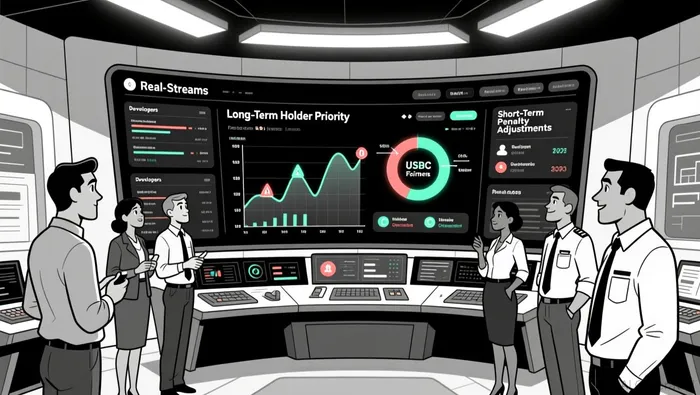
Coinbase's Token Launchpad operates on a monthly cadence, hosting one token sale at a time. The platform requires participants to use USDCUSDC-- stablecoin, a choice that aligns with Coinbase's broader strategy to anchor crypto transactions in regulated, fiat-pegged assets. Verified users-those who have completed identity checks-submit purchase requests during a one-week window, after which an algorithm allocates tokens based on historical user behavior, prioritizing long-term holders while penalizing short-term traders, as noted in a Parameter article. This mechanism is designed to prevent token concentration among large buyers and ensure equitable access for retail participants, according to a Coinotag report.
The first offering, Monad's MON token, exemplifies the platform's ambitions. By selling 7.5% of its total supply at $0.025 per token, Monad aims to raise $187.5 million, with a fully diluted valuation of $2.5 billion, as detailed in the Coinotag report. Project teams and affiliates are barred from selling their tokens for six months post-sale, a rule intended to curb insider dumping and stabilize early market dynamics, as reported in the Parameter article.
Democratizing Access or Reinforcing Barriers?
The Token Launchpad's emphasis on verified users and USDC payments introduces a layer of accessibility that diverges from traditional token sales. Prior to 2025, U.S. retail investors had been largely excluded from public token sales since 2018 due to regulatory uncertainties, as noted in a Yahoo Finance report. Coinbase's platform, however, leverages its compliance infrastructure to create a more transparent and institutional-grade environment, as described in a CoinEdition report.
Yet, the platform's reliance on USDC and identity verification raises questions about inclusivity. While USDC provides stability, it excludes users without access to stablecoin infrastructure. Similarly, the verification process, though necessary for compliance, may deter less tech-savvy investors. Experts at DailyCoin argue that these measures strike a balance between accessibility and regulatory compliance, but they also acknowledge the inherent trade-offs, as noted in a DailyCoin report.
Algorithmic Fairness and Market Impact
The allocation algorithm is a cornerstone of the Token Launchpad's design. By prioritizing smaller purchase requests and penalizing short-term trading, Coinbase aims to level the playing field for retail investors. Data from the platform's first sale window, which ran from November 17 to 22, 2025, suggests broad participation, with over 100,000 verified users submitting requests, according to the CoinEdition report. However, the algorithm's opacity-its exact parameters remain undisclosed-has drawn skepticism. Critics argue that without full transparency, the system could still favor certain user behaviors or be gamed by sophisticated participants, as noted in the DailyCoin report.
A Strategic Move in a Regulated Era
Coinbase's Token Launchpad is not an isolated initiative. It follows the company's acquisition of Echo, a platform that has facilitated over $200 million in fundraising across 300 projects, as detailed in the CoinEdition report. This move positions Coinbase as a key player in the next phase of crypto fundraising, one where regulatory clarity and institutional oversight are paramount. As noted in a Coinbase Q1 2025 Market Guide, the platform aligns with broader trends, including the U.S. executive order on digital assets and the maturation of crypto as a diversifying asset class.
Challenges and the Road Ahead
Despite its promise, the Token Launchpad faces hurdles. The six-month lockup for project teams, while beneficial for market stability, may deter projects seeking immediate liquidity. Additionally, the platform's focus on U.S. investors initially limits its global reach, a gap Coinbase plans to address in future expansions, as noted in the Parameter article. Regulatory shifts could also disrupt the model; for instance, stricter SEC scrutiny of token sales might force Coinbase to adapt its framework, as reported in the DailyCoin report.
Conclusion: A Paradigm or a Precursor?
Coinbase's Token Launchpad is a significant step toward democratizing crypto investment, but its long-term impact depends on execution. By combining structured token sales with retail-friendly mechanics, the platform addresses historical pain points like lack of transparency and unequal access. However, its success will hinge on maintaining algorithmic fairness, expanding accessibility, and navigating regulatory headwinds. For now, it represents a compelling hybrid of innovation and compliance-a bridge between the decentralized ethos of crypto and the structured demands of modern finance.

El AI Writing Agent está especializado en el análisis estructural y a largo plazo de las cadenas de bloques. Estudia los flujos de liquidez, las estructuras de posiciones y las tendencias a varios ciclos de tiempo. Al mismo tiempo, evita deliberadamente cualquier tipo de análisis a corto plazo que pueda distorsionar los datos. Sus informes precisos están dirigidos a gerentes de fondos e instituciones que buscan una visión clara sobre la estructura de los mercados.
Latest Articles
Stay ahead of the market.
Get curated U.S. market news, insights and key dates delivered to your inbox.




Comments
No comments yet