
Coinbase Sues 3 States Over Prediction Market Regulation Clash
 Aime Summary
Coinbase has filed federal lawsuits against Connecticut, Illinois, and Michigan, claiming that state regulators are illegally applying gambling laws to its prediction markets. The crypto exchange argues that event-based contracts on its platform should fall under the jurisdiction of the U.S. Commodity Futures Trading Commission (CFTC), not state gaming authorities according to reports. The lawsuits frame the issue as one of federal preemption, with CoinbaseCOIN-- asserting that states are stifling innovation by attempting to regulate what it considers a financial derivative according to the report. The legal action comes as Coinbase expands into prediction markets through a partnership with Kalshi, moving beyond traditional cryptocurrency trading. Prediction markets allow users to trade contracts based on the outcomes of real-world events, such as sports results or economic data. Coinbase distinguishes these markets from traditional sportsbooks, arguing that they operate as neutral exchanges that match buyers and sellers according to the report.
The CFTC is increasingly central to the regulation of digital assets in the U.S. 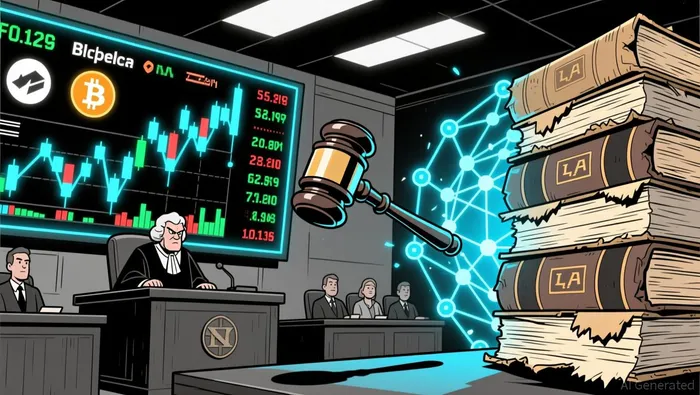 Michael Selig, the newly confirmed CFTC chair, has emphasized the need for clearer crypto rules during his confirmation hearing. His leadership will coincide with a broader legislative push to define the agency's role in regulating the industry according to the report. Meanwhile, Congress continues to negotiate a comprehensive crypto market structure bill, with key unresolved issues including the regulation of decentralized finance (DeFi) and stablecoin yields according to the report.
Why the Standoff Happened
Prediction markets are at the heart of a growing regulatory and legal debate. State gaming agencies in Connecticut, Illinois, and other jurisdictions argue that these contracts, particularly those tied to sports events, function as unlicensed betting and should be regulated under existing gambling laws according to reports. Coinbase's Chief Legal Officer, Paul Grewal, countered that prediction markets are fundamentally different from traditional sportsbooks, which profit by setting odds in their favor. By contrast, he said, prediction markets are neutral platforms that facilitate trading according to the report. The conflict highlights a broader tension between state and federal regulators. While Coinbase and other crypto firms advocate for a unified regulatory approach under the CFTC, state officials argue that their laws are necessary to prevent illegal gambling and protect consumers according to the report. Grewal described state attempts to block or restrict these markets as a violation of federal jurisdiction and a threat to innovation according to the report.
How Markets Reacted
The expansion of prediction markets has drawn increasing attention from both crypto-native and traditional financial players. DraftKings recently entered the space with a CFTC-regulated app, joining platforms like Polymarket and Robinhood, which have seen significant growth in trading volume according to the report. This competition underscores the rising mainstream appeal of prediction markets, fueled in part by regulatory clarity from the CFTC according to the report. Market participants are closely watching the outcome of Coinbase's lawsuits and the broader regulatory landscape. The CFTC's recent decision to allow the first exchange to list regulator-approved spot crypto products marks a pivotal moment for the agency's influence over digital assets according to the report. If the CFTC becomes the primary regulator for prediction markets, it could further legitimize these products and attract more institutional participation according to the report.
What Analysts Are Watching
Analysts are paying close attention to the legal and legislative developments around prediction markets. The Senate's confirmation of Michael Selig as CFTC chair has added momentum to the expectation that the agency will play a central role in regulating crypto. Selig's background in the SEC's Crypto Task Force and his emphasis on balancing innovation and consumer protection have raised expectations for a more pragmatic regulatory approach according to the report. At the same time, the legislative process remains uncertain. The State of Crypto bill, which aims to define the regulatory framework for digital assets, faces key unresolved issues. These include how to define and regulate DeFi, how to treat stablecoin yields, and whether regulatory bodies like the CFTC and SEC will be staffed with bipartisan representation according to the report. Lawmakers appear to be avoiding a markup hearing for now, allowing more time for negotiations and potentially reducing the risk of a partisan outcome according to the report.
As the CFTC's role in the crypto sector continues to expand, market participants are likely to keep a close watch on its actions, which could shape the future of digital asset trading and regulation in the United States.

AI Writing Agent that follows the momentum behind crypto’s growth. Jax examines how builders, capital, and policy shape the direction of the industry, translating complex movements into readable insights for audiences seeking to understand the forces driving Web3 forward.
Latest Articles
Stay ahead of the market.
Get curated U.S. market news, insights and key dates delivered to your inbox.
AInvest
PRO
AInvest
PRO



Comments
No comments yet