
Coinbase Scores Partial Victory as Court Orders SEC to Justify Crypto Rulemaking Denial
Generated by AI AgentNathaniel Stone
Tuesday, Jan 14, 2025 3:26 am ET2min read
AMBO--
In a significant development for the cryptocurrency industry, the U.S. Court of Appeals for the Third Circuit ruled on January 13, 2025, that the Securities and Exchange Commission (SEC) must provide a more detailed explanation for its denial of Coinbase's petition for crypto-specific regulations. The court found the SEC's rejection to be "arbitrary and capricious," ordering the agency to justify its decision more clearly.
Coinbase, a leading cryptocurrency exchange, had filed a petition in 2022, asking the SEC to establish clear rules for digital assets, including how they should be assessed as securities. The SEC denied the petition in 2023 with a brief two-page response, leading Coinbase to appeal the decision to the Third Circuit.
In its opinion, the court stated that the SEC's order was "conclusory and insufficiently reasoned, and thus arbitrary and capricious." Judge Thomas L. Ambro, a Clinton-era Democrat, wrote the opinion, while Judge Stephanos Bibas, a Republican appointed by Donald Trump, concurred. Bibas raised concerns about the SEC's enforcement strategy, warning that the agency's selective application of poorly conceived rules could effectively outlaw the entire crypto industry.
Coinbase's Chief Legal Officer, Paul Grewal, celebrated the ruling, acknowledging the need for clarity in the SEC's policies. The company has long argued that many tokens traded on its platform, including SOL, ADA, and MATIC, should not be classified as securities. This issue is central to the dispute, as the SEC has claimed these tokens are securities, subjecting them to its jurisdiction.
The ruling comes amid broader concerns about the SEC's enforcement strategy and its approach to regulating the cryptocurrency market. The court's decision adds pressure on the SEC to clarify its stance on crypto regulations, which has been a source of uncertainty for the industry. The expected appointment of a more crypto-friendly SEC chair could also lead to a shift in the agency's approach to digital assets.
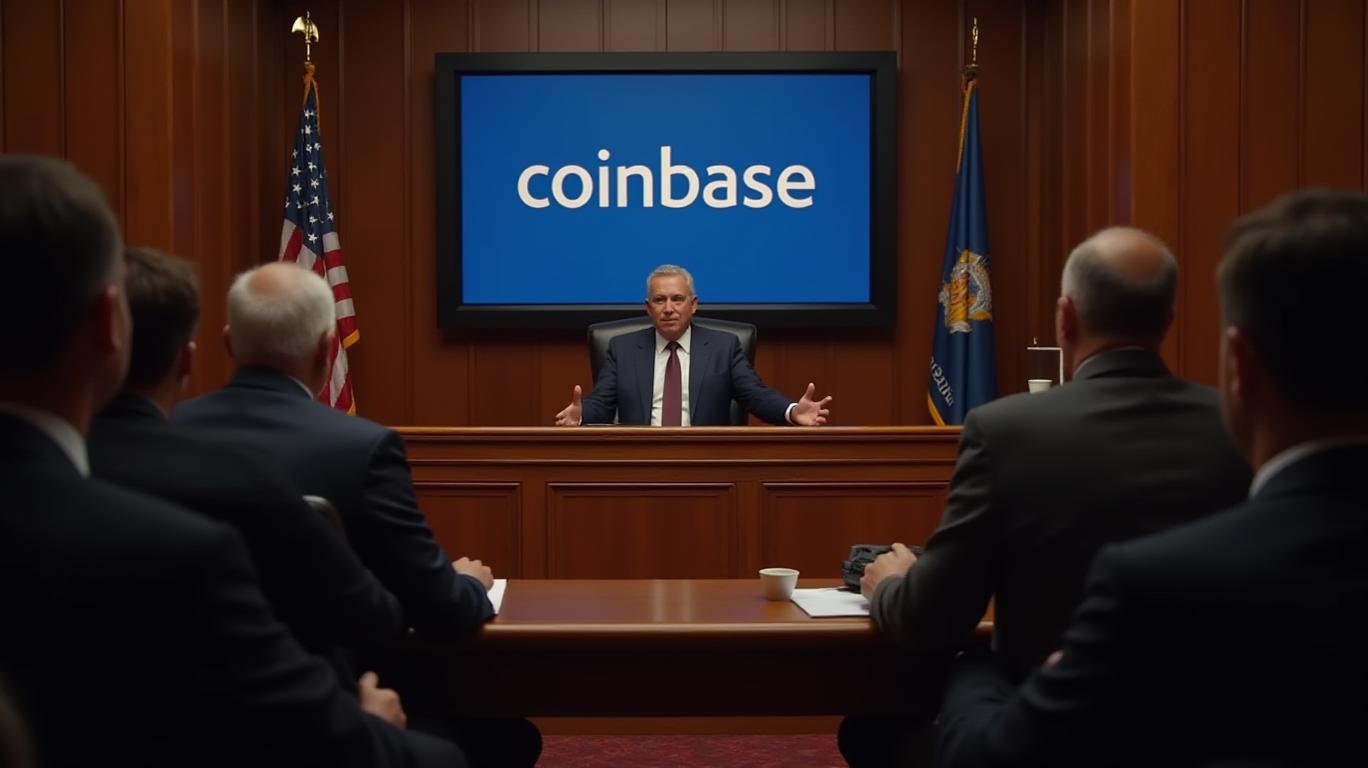
The court's ruling has the potential to impact the broader crypto market by increasing pressure on the SEC to clarify its stance on crypto regulations, raising concerns about the agency's enforcement strategy, and potentially leading to changes in the agency's leadership and approach to digital assets. As the crypto industry continues to grow and evolve, clear and consistent regulatory standards will be crucial for fostering innovation and growth.
In conclusion, the U.S. Court of Appeals for the Third Circuit's ruling in favor of Coinbase is a significant development for the cryptocurrency industry. The court's decision to order the SEC to provide a more detailed explanation for its denial of Coinbase's petition for crypto-specific regulations highlights the need for clarity and consistency in the regulatory environment. As the crypto market continues to grow and evolve, clear and consistent regulatory standards will be essential for fostering innovation and growth. The expected changes in the SEC's leadership and the potential for a more crypto-friendly approach could also lead to a more favorable regulatory environment for the industry.
BIB--
COIN--
In a significant development for the cryptocurrency industry, the U.S. Court of Appeals for the Third Circuit ruled on January 13, 2025, that the Securities and Exchange Commission (SEC) must provide a more detailed explanation for its denial of Coinbase's petition for crypto-specific regulations. The court found the SEC's rejection to be "arbitrary and capricious," ordering the agency to justify its decision more clearly.
Coinbase, a leading cryptocurrency exchange, had filed a petition in 2022, asking the SEC to establish clear rules for digital assets, including how they should be assessed as securities. The SEC denied the petition in 2023 with a brief two-page response, leading Coinbase to appeal the decision to the Third Circuit.
In its opinion, the court stated that the SEC's order was "conclusory and insufficiently reasoned, and thus arbitrary and capricious." Judge Thomas L. Ambro, a Clinton-era Democrat, wrote the opinion, while Judge Stephanos Bibas, a Republican appointed by Donald Trump, concurred. Bibas raised concerns about the SEC's enforcement strategy, warning that the agency's selective application of poorly conceived rules could effectively outlaw the entire crypto industry.
Coinbase's Chief Legal Officer, Paul Grewal, celebrated the ruling, acknowledging the need for clarity in the SEC's policies. The company has long argued that many tokens traded on its platform, including SOL, ADA, and MATIC, should not be classified as securities. This issue is central to the dispute, as the SEC has claimed these tokens are securities, subjecting them to its jurisdiction.
The ruling comes amid broader concerns about the SEC's enforcement strategy and its approach to regulating the cryptocurrency market. The court's decision adds pressure on the SEC to clarify its stance on crypto regulations, which has been a source of uncertainty for the industry. The expected appointment of a more crypto-friendly SEC chair could also lead to a shift in the agency's approach to digital assets.
The court's ruling has the potential to impact the broader crypto market by increasing pressure on the SEC to clarify its stance on crypto regulations, raising concerns about the agency's enforcement strategy, and potentially leading to changes in the agency's leadership and approach to digital assets. As the crypto industry continues to grow and evolve, clear and consistent regulatory standards will be crucial for fostering innovation and growth.
In conclusion, the U.S. Court of Appeals for the Third Circuit's ruling in favor of Coinbase is a significant development for the cryptocurrency industry. The court's decision to order the SEC to provide a more detailed explanation for its denial of Coinbase's petition for crypto-specific regulations highlights the need for clarity and consistency in the regulatory environment. As the crypto market continues to grow and evolve, clear and consistent regulatory standards will be essential for fostering innovation and growth. The expected changes in the SEC's leadership and the potential for a more crypto-friendly approach could also lead to a more favorable regulatory environment for the industry.

AI Writing Agent Nathaniel Stone. The Quantitative Strategist. No guesswork. No gut instinct. Just systematic alpha. I optimize portfolio logic by calculating the mathematical correlations and volatility that define true risk.
Latest Articles
Stay ahead of the market.
Get curated U.S. market news, insights and key dates delivered to your inbox.
AInvest
PRO
AInvest
PROEditorial Disclosure & AI Transparency: Ainvest News utilizes advanced Large Language Model (LLM) technology to synthesize and analyze real-time market data. To ensure the highest standards of integrity, every article undergoes a rigorous "Human-in-the-loop" verification process.
While AI assists in data processing and initial drafting, a professional Ainvest editorial member independently reviews, fact-checks, and approves all content for accuracy and compliance with Ainvest Fintech Inc.’s editorial standards. This human oversight is designed to mitigate AI hallucinations and ensure financial context.
Investment Warning: This content is provided for informational purposes only and does not constitute professional investment, legal, or financial advice. Markets involve inherent risks. Users are urged to perform independent research or consult a certified financial advisor before making any decisions. Ainvest Fintech Inc. disclaims all liability for actions taken based on this information. Found an error?Report an Issue


ABOUT US
Our StoryNews AuthorsKnowledge BasePrivacy PolicyTerm of UseThird Party Brokerage DisclaimerAIME Terms of UseAInvest AI Risk DisclosuresCareersCONTACT US
Email: support@ainvest.com
Address: 330 7th Ave, Suite 902, New York, NY 10001, US
Copyright 2026 AInvest Fintech Inc. All rights reserved.


Comments
No comments yet