
Coinbase Circle CEOs Attend White House Genius Act Signing
 Aime Summary
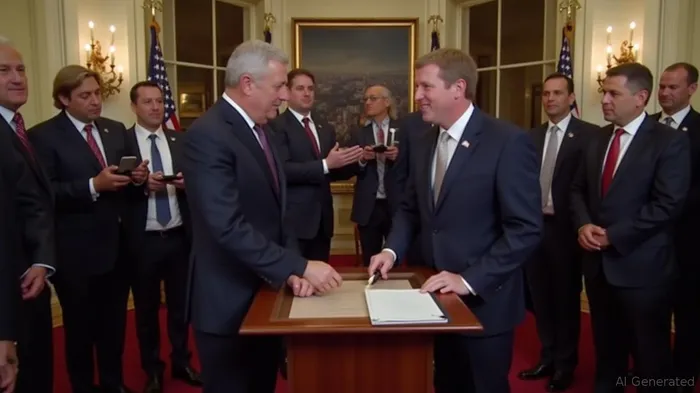
The halls of power in Washington D.C. recently witnessed a significant event in the cryptocurrency world. The attendance of Coinbase CEO Brian Armstrong and CircleCRCL-- CEO Jeremy Allaire at the White House for the signing of the ‘Genius Act’ marks a pivotal moment for the future of digital assets, particularly stablecoins. This legislation is anticipated to bring much-needed regulatory clarity to the stablecoin market, which has long been a point of contention and uncertainty.
The ‘Genius Act’ is poised to address several critical aspects of stablecoin regulation. Firstly, it aims to provide clarity and confidence for institutional investors and the general public, encouraging broader adoption of stablecoins for various financial activities. Secondly, it focuses on consumer protection by ensuring transparency in reserves and operational practices, safeguarding users from the risks associated with unstable or fraudulent stablecoin projects. Additionally, the act seeks to foster innovation by providing clear rules of engagement, allowing companies to build and grow within a predictable legal environment. Lastly, it positions the U.S. as a global leader in establishing standards for digital assets, potentially influencing other nations’ approaches to crypto regulation.
The presence of Coinbase and Circle CEOs at the White House underscores the profound impact this legislation will have on their respective businesses and the broader industry. Coinbase, as the largest cryptocurrency exchange in the U.S., has consistently advocated for clear, sensible regulations that foster innovation while protecting consumers. Brian Armstrong’s attendance signifies that the industry’s concerns and insights were considered during the legislative process, and that Coinbase is committed to operating within regulatory boundaries. This could unlock new product offerings and partnerships for Coinbase, enhancing its position in the evolving financial landscape.
Circle, the issuer of USDC, one of the world’s leading regulated stablecoins, is directly impacted by any stablecoin legislation. Jeremy Allaire’s presence highlights Circle’s core business revolves around stablecoins, and regulation directly affects how they operate, issue, and manage USDC’s reserves. Circle has been a strong proponent of responsible stablecoin regulation that ensures stability, transparency, and interoperability. Their participation suggests alignment with the bill’s objectives and could further validate USDC’s position as a trusted, regulated digital dollar, potentially increasing its adoption across various financial applications.
The Biden administration’s increasing engagement with the cryptocurrency sector is evident in this White House event. Historically, the U.S. government has approached crypto with a mix of skepticism and a desire to understand its potential. The ‘Genius Act’ signing could mark a turning point, demonstrating a commitment to fostering innovation within a regulated environment rather than stifling it. This move could set a precedent for future legislative actions concerning other areas of cryptocurrency, from DeFi to NFTs, potentially paving the way for a comprehensive digital asset framework in the United States.
The implications of the ‘Genius Act’ extend beyond stablecoins. It indicates a broader shift in how the U.S. views and intends to regulate the entire digital asset ecosystem. This could lead to increased institutional adoption, enhanced consumer trust, and the potential for reduced market volatility. The U.S. regulatory framework could influence other nations’ approaches to digital asset regulation, potentially leading to more harmonized global standards. The implementation of the ‘Genius Act’ will be closely watched, and its success could determine the pace and direction of future crypto legislation in the U.S.
In conclusion, the White House signing of the ‘Genius Act,’ with the active participation of leaders like the Coinbase CEO and Circle CEO, marks an extraordinary moment for the cryptocurrency industry. It signifies a tangible step towards clear, comprehensive stablecoin regulation, moving the digital asset space from the fringes of finance into a more integrated, regulated future. This development promises to foster innovation, enhance consumer protection, and solidify the U.S.’s position in the global digital economy. The road ahead may still have challenges, but this event undoubtedly represents a monumental leap forward for the legitimacy and widespread adoption of digital currencies.

Stay ahead of the market.
Get curated U.S. market news, insights and key dates delivered to your inbox.


AInvest
PRO
AInvest
PRO



Comments
No comments yet