
Coinbase CEO Calls on Fortune 500 to Adopt Stablecoins Post Regulation
 Aime Summary
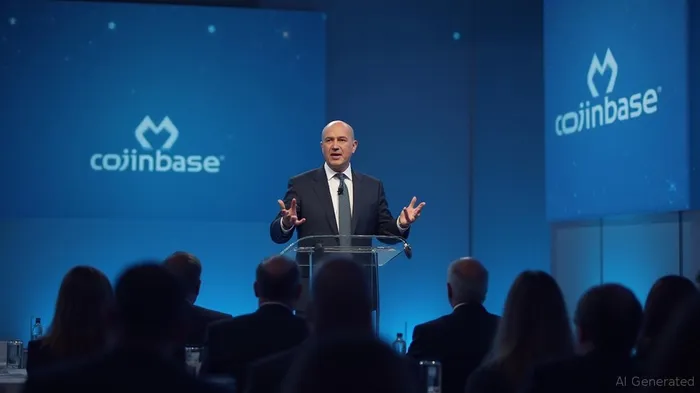
Brian Armstrong, CEO of Coinbase, has called on Fortune 500 companies to integrate stablecoins for payments, following the recent federal stablecoin regulation. This move signifies a pivotal moment for the crypto industry, as it could transform global business settlements by leveraging the U.S. regulatory framework.
Armstrong's advocacy for stablecoin adoption is part of a broader industry shift. Major financial institutionsFISI--, including CitigroupC--, JPMorganJPM--, and Charles SchwabSCHW--, are exploring or planning to launch stablecoin services. Citigroup is considering a dollar-backed stablecoin to enhance digital payments, while JPMorgan is developing a proprietary deposit token to compete with fintech rivals. Schwab, managing over $10 trillion in assets, aims to introduce a stablecoin and expand spot trading for Bitcoin and Ethereum, reflecting a growing institutional interest in digital assets.
The GENIUS Act, signed into law, sets a compliance baseline for stablecoin issuers. This regulatory milestone is expected to influence how effectively stablecoins can deliver on their promise of stable digital payments. Armstrong's call for stablecoin adoption comes as the GENIUS Act provides a regulatory framework that is expected to support this transition, although challenges remain.
The strategic responses of major financial institutions and stablecoin issuers, along with the expansion of stablecoin services by companies like PayPalPYPL--, underscore the growing importance of stablecoins in the global financial system. PayPal's expansion of its PYUSD stablecoin to the Arbitrum blockchain enhances user flexibility by integrating multiple blockchain options, leveraging Arbitrum's speed and low fees. PayPal's PYUSD, issued by Paxos, remains pegged at $1 and fully backed by USD deposits and US Treasury instruments, reflecting a commitment to stability and security.
Despite these challenges, the push for stablecoin adoption continues. Ondo Finance's acquisition of Strangelove and partnership with BNB Chain bring over 100 tokenized U.S. equities, ETFs, and funds to its users, enhancing liquidity and interoperability in tokenized capital markets. KuCoin's launch of xStocks offers tokenized equities like TeslaTSLA-- and the S&P 500 ETF via the Solana blockchain, providing flexible, borderless investing for retail traders. Kamino's integration of tokenized stocks as collateral in its decentralized lending protocol further positions tokenized equities as a viable asset class in the DeFi landscape.
This development impacts a multi-trillion-dollar market opportunity. Fortune 500 companies could see enhanced efficiencies through blockchain technology adoption. Stablecoins, with USDC at the forefront, are expected to become crucial in these businesses' financial operations, driving significant capital flows. Immediate effects involve increased corporate treasuries interest in stablecoin usage, indicating a shift in payment and settlement methods. The broader implications include a potential rise in on-chain activity and financial modernization, influenced by the recent stablecoin regulation.
Expert insights reveal the potential for serious financial and regulatory consequences stemming from this trend. Historical trends like Tesla's BTC purchase show significant market activity post-crypto adoption. Armstrong's strategy may lead to a similar transformation in stablecoin usage, affecting Ethereum and other blockchain networks.

Stay ahead of the market.
Get curated U.S. market news, insights and key dates delivered to your inbox.




Comments
No comments yet