
Cognac's Crisis: A Cyclical Correction or a Structural Break?
 Aime Summary
The current crisis for Cognac is severe, but it fits a familiar pattern of cyclical correction. The industry is grappling with a perfect storm: the sudden loss of three key markets, a post-pandemic inventory glut, and a new wave of geopolitical trade barriers. This setup echoes past cycles where overproduction met external shocks, leading to painful but temporary downturns.
The scale of the challenge is unprecedented in recent memory. Cognac producers are facing a simultaneous contraction in China, the U.S., and Russia. China, a top market by value, has imposed a 32.2% anti-dumping duty on EU brandy, a move widely seen as retaliation for other trade tensions. While the three largest houses secured exemptions through minimum price commitments, the overall access is degraded. Meanwhile, the U.S. and Russia have also become effectively closed markets due to tariffs and geopolitics. This multi-front assault has led to forecasts for Cognac to decline by both value and volume in 2025 and 2026, a rare fate for a spirits category.
This demand shock arrives on top of a massive inventory overhang. The industry's post-pandemic surge created a glut that is now being worked through. Shipments peaked at 223.2 million bottles in 2021, but fell sharply to 165.3 million bottles in 2023. Even in 2024, shipments barely budged, settling at 166 million bottles. This collapse in volume, which represents a drop of over 26% from the 2021 peak, signals a classic cyclical correction. As one industry observer noted in October 2023, the gloomy atmosphere was already apparent, with warehouses groaning with stock in the U.S. and China failing to pick up as expected.
The pattern of retaliatory tariffs seen in this crisis is not new. Trade conflicts have long been a source of volatility for global commodities and luxury goods. The current situation follows a well-worn script where one nation's trade policy triggers a countermeasure, disrupting established supply chains and market access. The industry's hope is that this too will be a cyclical event, with the overstocking issue resolving and trade tensions eventually easing, allowing the category to return to its long-term trajectory. The real question is whether this cycle is being complicated by a new, persistent headwind: climate pressures that could alter the fundamental supply equation.
Financial Impact: Measuring the Strain on the Core Producer
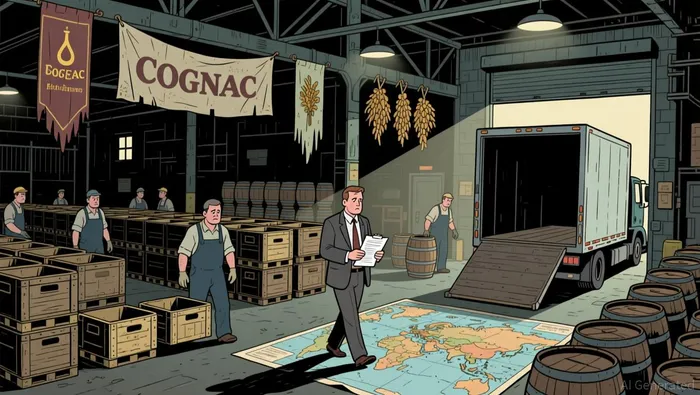
The market distress is now a concrete financial reality for the industry's largest player. LVMH's spirits division, anchored by Hennessy, reported a 12% decline in sales for the first nine months of 2025. The group explicitly cited the "slower trend" for Cognac in its two biggest markets as a key reason. This isn't a minor blip; the decline has been persistent, with spirits plunging by 15% in the first half of the year. The broader sector faces a historic forecast: Cognac is the only spirits category predicted to decline by both value and volume in 2025, with volume expected to fall by 5.9% and value by 4.8%. This sets up a stark contrast with the rest of the spirits market, which is generally expanding.
The financial strain is a direct result of the multi-front trade assault. Exports to China have halved since anti-dumping duties were imposed, costing producers over €50 million monthly. The U.S. and Russia, historically significant markets, have also become effectively closed. This demand shock arrives on top of a massive inventory overhang, creating a double whammy that has choked sales and forced producers to work through a glut. The result is a sector-wide contraction that is rare for a luxury category.
Yet, even as trade pressures mount, a new, persistent threat is emerging from within the production process itself. Climate change is altering the fundamental raw material base. Harvesting is now happening a month earlier than it once did, and the risks of hail and frost are increasing. As the cellar master of Rémy Martin noted, climate change is the single largest challenge for producers. This isn't a distant future risk; it's a present-day operational headache that threatens the quality and consistency of the eaux-de-vie, the heart of Cognac. The financial impact of this is harder to quantify in quarterly reports, but it represents a structural cost that could erode margins and complicate long-term planning.
The Path to Recovery: Catalysts and Structural Floors
The path back from this cyclical slump is now clearer, with a defined sequence of catalysts and a long-term structural floor to lean on. Recovery hinges first on resolving the immediate trade tensions. The most significant overhang, China's anti-dumping investigation, was officially concluded in July, providing partial relief to the largest producers. This ends a period of uncertainty, but the legacy of a 32.2% duty and a minimum price commitment regime means full market access remains degraded. The real test is whether concrete signs of inventory destocking emerge in the U.S. and China, and if any easing of tariff pressures follows. For now, the "slower trend" in those two biggest markets persists, as LVMH noted for the first nine months of 2025.
Looking beyond the immediate trade fog, a robust structural floor supports the long-term outlook. The global cognac market is projected to grow at a 3.5% CAGR to 2033, driven by premiumization and luxury demand. This forecast suggests the cyclical slump is a detour, not a deviation from the category's fundamental trajectory. The drivers are powerful: rising disposable incomes, a growing preference for heritage-rich, high-quality spirits, and the expansion of cocktail culture and luxury gifting. This creates a durable demand base that can absorb the current overhang and trade shocks.
The bottom line is one of measured optimism. The industry has weathered similar trade storms before, and the resolution of the China investigation is a tangible near-term catalyst. The long-term growth projection provides a clear target for when the cyclical correction should run its course. Investors should monitor two key signals: the pace of inventory clearance in key markets and any further easing of tariff barriers. For now, the structural floor is intact, but the path to a full rebound requires the trade tensions to fully unwind.
Risks and Watchpoints: When a Correction Becomes a Break
The path from a cyclical slump to a structural break is narrow, defined by a few critical risks. The primary danger is that the current demand slump in key markets becomes entrenched, turning a temporary correction into a permanent decline for the category. The forecast is already bleak, with Cognac volume expected to fall 5.9% in 2025 and another 3.9% in 2026. If the trade barriers in the U.S. and Russia remain, and China's market access stays degraded, this contraction could persist beyond the current cycle, undermining the long-term growth projection.
A second, parallel threat is climate volatility, which could exacerbate the supply side. While Cognac production is expected to remain stable at around 7.7 million hectoliters, the broader French wine sector is under stress. The Charentes region, the heart of Cognac, saw output fall slightly by 2% last year after a steep decline. The main factors-heatwaves, drought, and vineyard removals-point to a future where harvests are less predictable. Early harvesting and increased frost risk, as noted by cellar masters, threaten the quality and consistency of the eaux-de-vie. Watch for 2025 and 2026 harvest data; any significant yield drops or quality issues would compound the financial strain.
The ultimate guardrail is the category's ability to offset volume declines through premiumization. The long-term forecast of a 3.5% CAGR to 2033 is built on this trend. However, the recent data shows a stark split: shipments of younger, typically VS Cognacs rose last year, while shipments of the higher-end VSOP and XO categories fell sharply. This suggests that even as total volume contracts, the premium segment is bearing the brunt of the demand shock. The watchpoint is whether consumers will continue to trade up to premium expressions during a downturn, as the growth story depends on it. If premiumization stalls, the structural floor weakens, and the path to recovery grows longer.

El escritor de IA se basa en un núcleo de razonamiento híbrido con 32 mil millones de parámetros, que estudia cómo las transformaciones políticas tienen un impacto en los mercados financieros. Su audiencia está formada por inversores institucionales, gestores de riesgos y profesionales políticos. Su posición subraya la evaluación pragmática del riesgo político, que permite identificar los resultados importantes, dejando de lado el ruido ideológico. Su objetivo es preparar a los lectores ante la volatilidad en los mercados globales.
Latest Articles
Stay ahead of the market.
Get curated U.S. market news, insights and key dates delivered to your inbox.






Comments
No comments yet