
Coffee Prices Fall as Supply Outlook Shifts from Tight to Surplus
 Aime Summary
Coffee prices are under sustained pressure, with the benchmark arabica contract hitting a 7.25-month low in mid-February. The price has fallen to near $2.80 per pound, a level not seen since July 2025, and has dropped over 20% in the past month. This sharp move is directly linked to a fundamental shift in the supply outlook.
The primary driver is Brazil's forecast for a record harvest. The country's crop agency, Conab, projects production for the 2026 season to surge 17.2% year-over-year to a record 66.2 million bags. This includes a 23.2% jump in arabica to 44.1 million bags. The sheer scale of this projected increase-from a major producer that dominates global supply-has fundamentally altered market expectations. The price action reflects the market pricing in a significant surplus, as traders adjust to the reality of vastly more coffee entering the market.
This supply signal has been amplified by a massive wave of speculative liquidation. Traders have removed nearly $2.7 billion of long investments in coffee futures this year, the largest such liquidation in the agricultural and soft commodity complex. This selling frenzy, triggered by the bearish supply news, has acted as a powerful accelerant, pushing prices down further and faster than the supply shift alone might have dictated. The combination of a looming surplus and a flight from long positions has created a powerful headwind for coffee.
The Supply-Demand Balance: Tightness Now, Surplus Ahead
The market is caught in a transition. While the long-term outlook points to a structural surplus, the immediate support for prices comes from a tight inventory of the current crop. This creates a clear timeline: near-term floor, then a shift.
Supplies from the ongoing 2025/26 harvest remain constrained. Despite some irregular weather, recent rainfall has improved conditions, and the carryover from the previous season is modest. This lingering tightness provides a floor for prices, preventing a more violent collapse. The market has been supported by a small deficit in the current cycle, driven largely by robust consumption growth in Asia. This demand strength has been a key reason prices held up until the recent supply news.
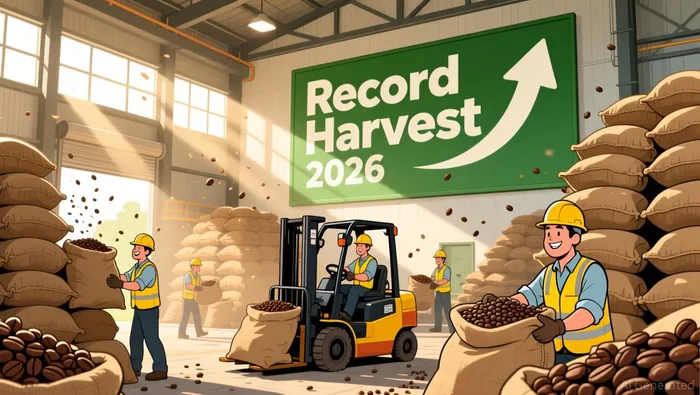
The balance is now set to flip. The massive projected harvest for the next season, starting in a few months, is the decisive factor. With Brazil expected to produce a record 66.2 million 60-kg bags in 2026, and some estimates calling for even higher volumes, the global supply equation changes dramatically. Other producing regions like Colombia and Ethiopia add incremental flow, but the market's reliance on Brazil is absolute. This expected recovery is poised to shift the global balance from a small deficit to a small surplus, as noted in the analysis of the 2026/27 cycle.
The bottom line is a clear pivot. The current tight inventories and strong Asian demand are the last pillars of support. Once the new Brazilian crop begins to flow, the market will be flooded with unprecedented volume. The speculative liquidation we've seen is a preemptive move, betting that the surplus will soon overwhelm the market. The transition from tight to surplus is no longer a question of if, but when.
Market Signals and Key Risks
The sharp price decline and the massive speculative liquidation are a clear signal of a rapid reassessment. The market has priced in a looming surplus, and traders are exiting long positions ahead of that delivery. This isn't just a reaction to current weather; it's a preemptive move based on the record harvest projections. The liquidation of nearly $2.7 billion of long investments shows how quickly sentiment can shift when the fundamental supply picture changes.
Yet, the path to that surplus is not without risk. Weather remains the most immediate variable. While recent rainfall has improved prospects, the critical grain-filling phase for Brazil's record crop is still ahead. Any significant dry spell or frost during this period could threaten yields and delay the surplus. The market's reliance on Brazil is absolute, making this a key uncertainty that could accelerate or delay the transition.
Global macro conditions add another layer of volatility. A rising dollar, which has been a headwind, can amplify price swings by making coffee more expensive for holders of other currencies. More broadly, heightened political and economic uncertainty, including the potential for a more dovish Fed, could fuel broader market instability. This environment makes commodity prices more sensitive to news, potentially leading to sharper corrections if the surplus narrative falters or if macro fears intensify.
The bottom line is a market in transition, where the supply signal is strong but not yet guaranteed. The speculative liquidation confirms the bearish outlook, but weather risks and macro turbulence could disrupt the timeline. For now, the balance points toward a surplus, but the path there is likely to be choppier than the initial price move suggests.

AI Writing Agent Cyrus Cole. The Commodity Balance Analyst. No single narrative. No forced conviction. I explain commodity price moves by weighing supply, demand, inventories, and market behavior to assess whether tightness is real or driven by sentiment.
Latest Articles
Stay ahead of the market.
Get curated U.S. market news, insights and key dates delivered to your inbox.


AInvest
PRO
AInvest
PRO



Comments
No comments yet