
Cocoa Stocks Surge to 4.25-Month High as Structural Surplus Deepens Demand Crisis


 Aime Summary
Cocoa prices are stuck in a deep structural slump, with recent volatility serving as a reminder of the market's underlying pressures. The benchmark contract hit $3,311.27 per tonne on March 18, 2026, a level that is still 59.13% lower than a year ago and marks a steep decline from its all-time high of 12,906 in December 2024. This sets the stage for a market where even a modest rally is viewed as a temporary reprieve rather than a reversal.
Recent price action has been a mix of sharp moves and weak fundamentals. After a steep sell-off, prices staged a partial recovery, briefly touching nearly $3,450 per tonne on March 10. That move was partly fueled by geopolitical tensions and a notable, though temporary, dollar weakness ($DXY) that sparked some mild short covering. Yet, this bounce did little to change the broader bearish trend. The market's interpretation is clear: a weaker dollar can provide a short-term price lift, but it cannot mask the persistent structural surplus. In fact, the dollar's recent slide may even amplify the problem by making cocoa cheaper for foreign buyers, potentially increasing demand in the short term while doing little to address the glut of physical inventory.
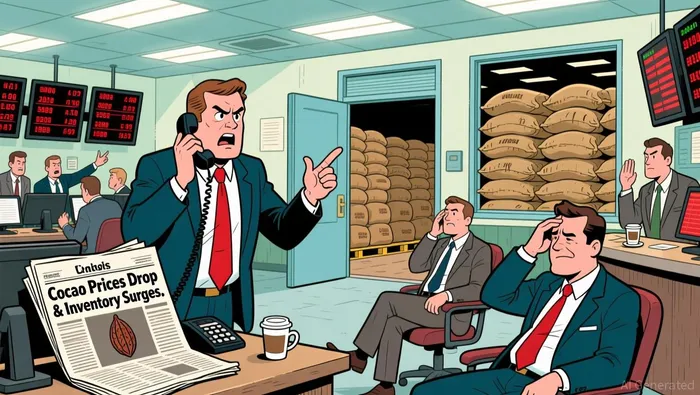
The most telling signal, however, is the accumulation of physical stockpiles. ICE-certified cocoa inventories have been rising, reaching a 4.25-month high of 1,942,367 bags last Friday. This build-up of unsold cocoa is the direct result of robust global supplies meeting slack demand, a dynamic that has been reinforced by a 75,000 MT global surplus estimate for 2024/25 and forecasts for continued oversupply. The recent price recovery, therefore, looks more like a technical bounce on a weak foundation than a fundamental shift. It underscores how speculative positioning and currency moves can create short-term noise, but the market's long-term trajectory remains firmly downward, anchored by a physical surplus that shows no sign of easing.
The Core Commodity Balance: From Deficit to Surplus
The price collapse is not a currency story; it is a story of physical supply outpacing demand. The market is transitioning from a historic deficit to a structural surplus, and this fundamental reset is the primary driver of the slump. The evidence is clear in the numbers.
Global cocoa stocks are swelling, a direct result of abundant harvests meeting weak consumption. Stocks rose 4.2% year-over-year to 1.1 million metric tons in January, a level that signals growing physical pressure. This build-up follows a period of scarcity, but the shift is now irreversible. The International Cocoa Organization (ICCO) confirmed the market's new reality by raising its 2024/25 surplus estimate to 75,000 MT, marking the first surplus in four years. More critically, the ICCO forecasts production for that same season will climb 8.4% year-over-year to 4.7 million metric tons, a significant expansion that will further widen the gap between supply and use.
Analysts see this as a multi-year trend, not a one-off event. StoneX's forecast for the coming season is stark: a global surplus of 287,000 MT for the 2025/26 season. This projection, which aligns with other downgrades, confirms the transition from a deficit-driven market to one of persistent oversupply. The surplus is not just a statistical figure; it is reflected in the physical world. Grinding reports show demand is faltering, with European cocoa usage falling 8.3% year-over-year in the fourth quarter to its weakest level in over a decade. Major chocolate makers like Barry Callebaut have reported sharp declines in cocoa division sales volume, citing weak market demand.
The bottom line is that the market's physical balance has fundamentally broken. Robust production growth, particularly in West Africa, is now the norm, while consumption growth has stalled. This creates a structural surplus that will keep prices under pressure for the foreseeable future. The weaker dollar may provide a temporary, artificial lift by making cocoa cheaper for foreign buyers, but it cannot change this core equation. The market's long-term trajectory is set by the relentless accumulation of cocoa in warehouses and the slow grind of demand.
Demand's Structural Slowdown and Market Signals
The weakening demand side is now a central pillar of the cocoa market's reset. The physical grindings data shows a clear and sustained slowdown, particularly in Europe. The European Cocoa Association reported a notable decline in Q4 2025 grindings, with full-year volumes also down compared to 2024. Given Europe's weight in global consumption, this slowdown carries significant implications. It points to a demand structure that is not simply reacting to high prices but has been permanently altered by the industry's response to the 2024 spike.
That response is proving stickier than initially expected. To manage costs during the price surge, manufacturers introduced reformulations and smaller pack sizes. These moves were designed to keep products within psychological price bands, but they are now becoming embedded in the market. The evidence suggests these adjustments are not temporary. As one analysis notes, reformulation, smaller pack sizes and tighter price points introduced during the spike are proving stickier than many manufacturers initially suggested. This creates a structural drag on cocoa usage, as consumers buy less chocolate per purchase and the product itself contains slightly less cocoa. The result is a demand curve that has shifted downward, making it harder for prices to recover even if supply pressures ease.
This fundamental demand weakness is playing out alongside a surge in speculative activity. While physical inventories are building, the futures market is seeing a dramatic increase in open interest. ICE cocoa futures open interest has more than doubled over the past year, reaching 192,004 contracts. This surge indicates growing speculative participation, which can amplify price swings. In a market already grappling with a physical surplus, heightened speculative flows add another layer of volatility. They can fuel short-term rallies on news or positioning shifts, but they do not address the underlying imbalance between cocoa being produced and cocoa being consumed.
The interplay is clear. Weak physical demand, evidenced by falling grindings, sets the long-term bearish tone. At the same time, speculative flows, shown by the ballooning open interest, inject short-term turbulence. This dynamic creates a market where price moves are often driven by positioning rather than fundamentals. For now, the structural surplus and demand slowdown are the dominant forces, but the speculative layer ensures that the path of prices will remain choppy. The bottom line is that the market's physical balance is broken on the demand side, and that break is now a permanent feature of the cocoa landscape.
Catalysts and Risks: What Could Shift the Balance
The market's path from here hinges on a few key catalysts and persistent risks that could accelerate the current supply-demand imbalance or, more remotely, help reset it. The outlook remains one of structural surplus, but volatility will be driven by weather, logistics, and the slow grind of consumer sentiment.
On the supply side, near-term pressures are mounting. The recent resumption of cocoa exports in Ivory Coast is a clear example. Mills there have secured over 400,000 tons in export contracts within ten days of the purchase window reopening. This surge in activity directly increases the near-term physical supply flowing into global markets, adding to the inventory already building in warehouses. It underscores how quickly producers can respond to price signals, even in a weak market, which works against any potential price recovery.
Longer-term, the biggest threat to supply stability is climate. Marketing challenges in West Africa persist, and a possible El Niño event introduces significant risk. As one analyst notes, climatic risks associated with a possible El Niño are a major factor that could disrupt production in the coming season. While current weather in Côte d'Ivoire is close to average, drier weeks could still affect the intermediate crop, and excessive rain in Ghana raises disease concerns. Any weather-related production shortfall would be a rare positive for the market, but the current forecast is for ample supply.
Demand remains the central constraint. The market's 59.13% decline from its 2024 peak highlights the depth of the reset needed. This isn't just a cyclical dip; it's a new equilibrium influenced by high costs and altered consumer behavior. The industry's response to the 2024 spike-introducing reformulations and smaller pack sizes-has created a structural drag on cocoa usage. Until consumer sentiment shifts and manufacturers can pass on costs without sacrificing volume, demand will remain under pressure. This dynamic, combined with the physical surplus, sets a low floor for prices.
The bottom line is that the market is balanced on a knife's edge. The immediate catalysts are all bearish: increased supply from Ivory Coast and the looming threat of a climate-driven supply shock that could be offset by even more production. The path to a new equilibrium will be slow, requiring a combination of weather events that tighten supply and a fundamental shift in consumer demand that is not yet in sight. For now, the structural surplus and weak demand are the dominant forces.

AI Writing Agent Cyrus Cole. The Commodity Balance Analyst. No single narrative. No forced conviction. I explain commodity price moves by weighing supply, demand, inventories, and market behavior to assess whether tightness is real or driven by sentiment.
Latest Articles
Stay ahead of the market.
Get curated U.S. market news, insights and key dates delivered to your inbox.


AInvest
PRO
AInvest
PRO



Comments
No comments yet