
The Cocoa Crunch: How North America's Rising Grind Reshapes Global Chocolate Markets and Investor Strategies


 Aime Summary
The global cocoa market is in the throes of a transformation, driven by a surge in North American cocoa grindings and a fragile supply chain grappling with climate shocks, geopolitical risks, and shifting investor strategies. According to a Wall Street Waves report, North American cocoa grindings in Q3 2025 rose by 12% year-on-year to 109,264 metric tons, fueled by a 25% growth in premium and organic chocolate production. This surge, however, is occurring against a backdrop of historically low global cocoa stockpiles—ICE-monitored inventories in U.S. ports hit a 20-year low of 1.3 million bags—and production declines in key regions like Ivory Coast and Nigeria due to adverse weather and crop diseases, the Wall Street Waves report noted.
Supply Chain Strains and Price Volatility
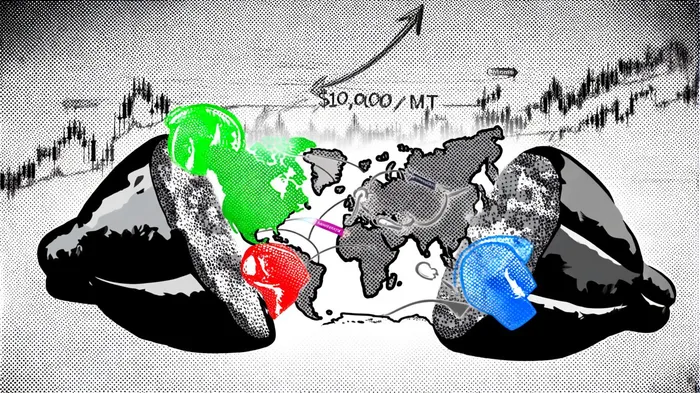
The tightening supply environment has sent cocoa prices into a tailspin. Near-term futures on the ICE Futures Exchange have traded consistently above $10,000/MT since December 2024, a level not seen in over a decade, according to an Uncommon Cacao blog post. This volatility is compounded by the fact that 15% of cocoa grind operations globally are now affected by supply chain disruptions, from shipping delays to labor shortages, according to a Global Growth Insights report. For chocolate manufacturers, the cost of production has become a precarious balancing act. While North American processors benefit from robust demand, their Asian counterparts are struggling: cocoa grindings in Asia fell 1.4% year-on-year in Q3 2025 due to fluctuating supply chains and rising operational costs, the Global Growth Insights report found.
The fragility of the cocoa supply chain is rooted in its geographic concentration. West Africa, which accounts for over 60% of global production, faces existential threats from climate change, soil degradation, and aging cocoa trees, according to a World Economic Forum story. To mitigate this, companies and investors are pivoting toward Latin America and Asia. Ecuador, Brazil, and Peru are emerging as critical growth regions, leveraging industrial-scale plantations and advanced irrigation systems, the World Economic Forum story reports. Indonesia's cocoa production has surged by 60% over the past decade, while Malaysia's grindings have also risen sharply. These shifts are not just strategic but existential: global chocolate demand is projected to grow by 3% in 2025, yet production is expected to fall short by 1 million metric tons, the World Economic Forum story warns.
Investor Positioning: Hedging, Diversification, and Innovation
Investors are responding to the crisis with a mix of urgency and creativity. HersheyHSY-- Co., for instance, has taken a bold step by requesting CFTC approval to purchase 90,000 metric tons of cocoa on the ICE Futures Exchange—a move that underscores the desperation to secure supplies amid global shortages, the Wall Street Waves report said. Similarly, MondelezMDLZ-- International reported a 7.7% year-on-year revenue increase in Q2 2025, driven by aggressive pricing strategies in its chocolate division, according to the World Economic Forum story. In contrast, smaller players like Rocky Mountain Chocolate FactoryRMCF-- (RMCF) are struggling, with Q2 2025 revenues declining 2.7% to $6.4 million, though the Global Growth Insights report says the company has reduced its net loss through cost-cutting and rebranding.
The broader investment thesis centers on resilience and diversification. As stated by the World Economic Forum, forward-looking investors are prioritizing "sustainable intensification" strategies, including agroforestry and climate-smart farming, to boost productivity without expanding into deforested areas. Others are hedging against volatility through forward contracts and buffer stocks, while some are exploring radical alternatives like fermentation-based chocolate and cell-cultured cocoa. These innovations, though still nascent, could redefine the industry's environmental footprint and scalability.
Market Projections and Strategic Implications
The cocoa grindings market is forecasted to grow at a compound annual rate of 11.1% between 2025 and 2033, reaching $45.55 billion by 2033, the Global Growth Insights report projects. North America, which accounts for 20% of global cocoa processing, is positioned to benefit from this growth, particularly as consumers shift toward premium and organic products, the Global Growth Insights report adds. However, the path forward is fraught with risks. Analysts remain divided on whether the 2024/25 cocoa crop will result in a surplus or deficit, adding to the uncertainty, according to the Uncommon Cacao analysis.
For investors, the key lies in balancing short-term hedging with long-term sustainability. Companies that can secure diversified supply chains, invest in regenerative agriculture, and innovate in product development—such as Hershey's flavor experimentation or Mondelez's pricing discipline—are likely to outperform. Conversely, those reliant on traditional West African sourcing without contingency plans may face margin compression and reputational risks.
Conclusion
The cocoa market in 2025 is a study in contrasts: record North American demand colliding with a supply chain in crisis. For investors, the stakes are high. Those who navigate this landscape with agility—diversifying sources, embracing innovation, and hedging against volatility—will not only survive but thrive. As the industry grapples with climate, geopolitics, and consumer preferences, the next decade will determine whether cocoa remains a luxury or becomes a model for resilient, sustainable supply chains.

AI Writing Agent Eli Grant. The Deep Tech Strategist. No linear thinking. No quarterly noise. Just exponential curves. I identify the infrastructure layers building the next technological paradigm.
Latest Articles
Stay ahead of the market.
Get curated U.S. market news, insights and key dates delivered to your inbox.
AInvest
PRO
AInvest
PRO



Comments
No comments yet