
Coca-Cola's Strategic Shift to Cane Sugar and Its Implications for Profitability and Market Position
 Aime Summary
In the ever-evolving beverage sector, Coca-Cola's decision to reformulate its U.S. flagship product to use cane sugar instead of high-fructose corn syrup (HFCS) marks a pivotal moment. This move, announced in July 2025, is not merely a response to shifting consumer preferences but a calculated gamble to align with broader cultural and political currents. As investors dissect the implications of this reformulation, three critical lenses emerge: product reformulation costs, demand resilience, and regional performance dynamics. Each of these factors will shape Coca-Cola's long-term profitability and its ability to maintain market leadership in a sector increasingly defined by health-conscious consumers.
The Cost of Reformulation: Balancing Innovation and Margins
Coca-Cola's pivot to cane sugar is a departure from its decades-long reliance on HFCS, a cheaper alternative that has defined the U.S. market. The company's new product, sweetened with U.S.-sourced cane sugar, is framed as a complement to its existing lineup rather than a replacement. However, the shift carries tangible costs. Global sugar prices have surged in recent years, compounded by supply chain volatility and U.S. tariffs on imports (50% on Brazil, 30% on Mexico). These tariffs introduce risks, as cane sugar is likely to be sourced from international markets, potentially inflating production costs.
The Corn Refiners Association has already warned that the reformulation could cost thousands of U.S. manufacturing jobs, as the corn refining industry faces displacement. For Coca-ColaKO--, this means navigating a delicate balance: maintaining profit margins while appealing to consumers who prioritize “natural” ingredients. The company's second-quarter 2025 earnings report—showing a 6% price increase offsetting a 1% volume decline—suggests that pricing power remains a key lever. Yet, with lower-income consumers disproportionately sensitive to price hikes, the long-term sustainability of this strategy remains uncertain.
Demand Resilience: Can Consumers Justify the Premium?
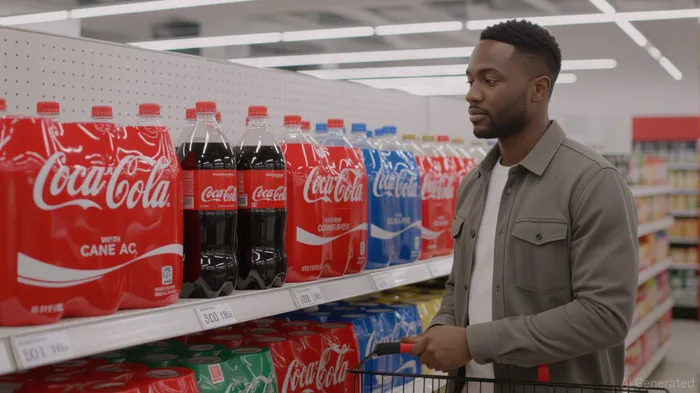
The success of cane sugar Coke hinges on its ability to capture a niche but growing segment of health-conscious consumers. While cane sugar and HFCS are metabolically similar, the perception of “naturalness” drives demand. Market research indicates that 80% of participants in blind taste tests prefer cane sugar's flavor, and 78% are willing to pay a 10–30% premium for “all-natural” products. This aligns with broader trends: the global natural sweeteners market is projected to grow at a 6.5% CAGR through 2030, driven by wellness-oriented consumers.
However, demand resilience is not universal. In North America, Coca-Cola reported a 1% decline in unit case volume in Q2 2025, partly due to economic pressures on lower-income households. The company's Zero Sugar variant, which saw 14% global volume growth, underscores a shift toward low- or no-sugar alternatives. Investors must weigh whether cane sugar Coke will appeal to a niche audience or risk cannibalizing existing products. The latter scenario could erode margins if the premium pricing fails to offset higher production costs.
Regional Performance Dynamics: A Mixed Picture
Coca-Cola's global footprint reveals stark regional disparities. In Latin America, revenue grew by 10.79% in 2024, driven by effective pricing strategies and demand for core brands. However, economic instability and currency fluctuations pose ongoing risks. In Asia Pacific, the company faces a dual challenge: China's slowing consumer demand partially offsets growth in India and Southeast Asia. The region's 1.67% revenue growth in 2024 highlights its strategic importance but also its volatility.
Europe, a mature market, reported modest 0.54% revenue growth in 2024, with geopolitical uncertainties and regulatory pressures tempering expansion. The region's 3% sales growth in Q1 2025 was buoyed by premium product offerings and cost efficiencies, but long-term growth remains constrained by inflation and shifting consumer preferences toward functional beverages.
Investor Implications: Navigating Risks and Opportunities
For investors, Coca-Cola's cane sugar reformulation represents both a strategic innovation and a financial test. The company's ability to manage supply chain costs, maintain pricing power, and diversify its product portfolio will determine its success. Key metrics to monitor include:
1. Margin stability: Can Coca-Cola absorb the higher sugar costs without sacrificing operating income? Historical data from 2022 to 2025 reveals that while the company has demonstrated short-term resilience—such as a 63% increase in operating income and 58% higher EPS in Q2 2025—its stock price has not consistently trended upward following earnings releases. This underscores the need to evaluate whether current margin improvements will translate into sustained shareholder value.
2. Volume trends: Will cane sugar Coke drive incremental sales, or will it compete with Zero Sugar and other variants?
3. Regional adaptability: How will emerging markets, such as India and Brazil, respond to the new product?
The company's Q2 2025 results—showing a 63% increase in operating income and 58% higher EPS—suggest short-term resilience. However, long-term confidence will depend on Coca-Cola's ability to innovate without compromising profitability. The introduction of prebiotic sodas and plant-based beverages signals a broader diversification strategy, but cane sugar Coke remains a high-stakes bet in a sector increasingly defined by health-conscious competition.
Conclusion: A Calculated Move in a Shifting Landscape
Coca-Cola's shift to cane sugar is emblematic of a broader industry trend: the tension between tradition and innovation. While the reformulation aligns with consumer demand for natural ingredients, it also exposes the company to supply chain risks, pricing pressures, and regional volatility. Investors should view this move as part of a larger narrative—Coca-Cola's attempt to remain relevant in a market where health and sustainability are paramountPARA--.
For now, the company's diversified portfolio and pricing agility provide a buffer against short-term headwinds. But as the beverage sector evolves, Coca-Cola's ability to balance cost, demand, and regional dynamics will be the ultimate test of its market position. In a world where every sip is scrutinized, the sweet spot lies in innovation that resonates without compromising profitability.

Delivering real-time insights and analysis on emerging financial trends and market movements.
Latest Articles
Stay ahead of the market.
Get curated U.S. market news, insights and key dates delivered to your inbox.




Comments
No comments yet