
Coca-Cola's Strategic Resilience Amid Macroeconomic Volatility: A Deep Dive into Consumer Behavior and Regional Performance


 Aime Summary
The global beverage industry in 2025 faces a landscape of macroeconomic turbulence, from inflationary pressures to shifting consumer preferences. Against this backdrop, The Coca-ColaKO-- Company has demonstrated a remarkable ability to adapt, leveraging strategic innovation and regional agility to maintain growth. A closer look at its Q3 2025 results and insights from its upcoming Morgan Stanley Conference presentation reveals how the company is navigating these challenges through a dual focus on consumer behavior adaptation and regional performance optimization.
Consumer Behavior Adaptation: From Volume to Value
Coca-Cola's shift from a volume-driven to a value-centric strategy has been pivotal. In Q3 2025, the company reported a 1% increase in global unit case volume, but this modest growth masked a more significant 6% rise in organic revenue (non-GAAP), driven by pricing actions and a favorable product mix. This underscores a strategic pivot toward premiumization and diversification. For instance, Coca-Cola Zero Sugar grew 14% globally, while Diet Coke/Coca-Cola Light saw a 2% increase in North America and Asia Pacific. Such performance highlights the company's ability to align with health-conscious trends without sacrificing profitability.
Innovation has further cemented this adaptability. The launch of prebiotic soft drinks like Simply Pop and the expansion of the Fairlife dairy brand reflect a proactive response to consumer demand for functional beverages. Additionally, regional experiments-such as Sprite Plus Tea in North America and Bacardi mixed with Coca-Cola in Mexico and Europe-demonstrate localized product development tailored to evolving tastes. These initiatives not only diversify revenue streams but also mitigate risks tied to stagnant categories like traditional sparkling flavors, which declined by 1% in Q3.
Regional Performance: Navigating Divergent Dynamics
Coca-Cola's regional performance in Q3 2025 reveals a nuanced picture of resilience. While Latin America and North America saw stagnant or slightly negative unit case volume growth, regions like Europe, the Middle East, and Africa (EMEA) achieved 4% growth. Central Asia, North Africa, Brazil, and the United Kingdom also contributed to the 1% global volume increase. This divergence underscores the importance of localized strategies.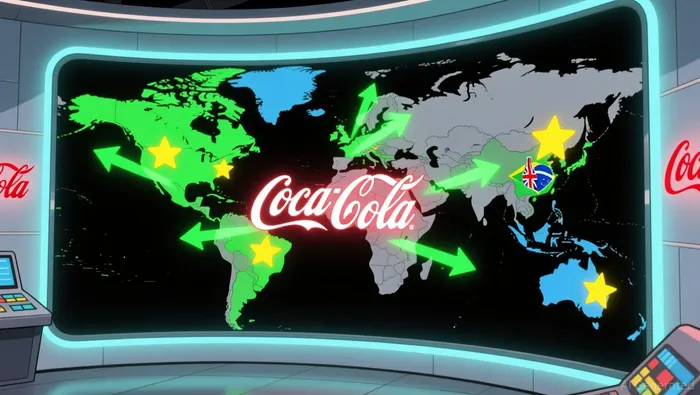
Asia Pacific, for example, faced a 1% decline in unit case volume but still managed 4% organic revenue growth, driven by pricing and a shift toward higher-margin products like Santa Clara lactose-free milk. Meanwhile, Coca-Cola FEMSA reported a 3.3% revenue increase to $71.9 billion pesos in Q3 2025, despite a 0.6% volume decline. This resilience is attributed to its sustainable growth model and the success of Coca-Cola Zero Sugar and Santa Clara dairy brands. However, FEMSA anticipates a low to mid-single-digit volume decline in Mexico in 2026 due to an 87% excise tax on soft drinks, though it remains optimistic about a potential 5% volume uplift from the 2026 World Cup.
The company's refranchising strategy has also bolstered regional performance. By divesting bottling operations in India and Africa, Coca-Cola has unlocked long-term growth while reducing capital intensity. This approach not only strengthens local expertise but also aligns with its "Total Beverage Company" vision, which prioritizes value over volume.
Strategic Resilience: A Blueprint for the Future
Coca-Cola's Q3 results and strategic roadmap highlight its capacity to thrive amid macroeconomic volatility. The company's operating income surged 59% in Q3 2025, with a 32.0% operating margin, driven by cost management and organic revenue growth. This margin expansion, coupled with a 15% increase in currency-neutral operating income (non-GAAP), signals robust financial discipline.
Looking ahead, the company's focus on innovation and portfolio diversification will be critical. As James Quincey, Coca-Cola's CEO, prepares to present at the 2025 Morgan Stanley Conference, investors can expect further emphasis on its "all-weather strategy," which prioritizes agile execution and high-return activities. This includes the upcoming launch of cane sugar Coke, a product designed to meet demand for natural ingredients.
Conclusion: A Model of Adaptive Resilience
Coca-Cola's Q3 2025 performance and strategic initiatives illustrate a company that is not merely weathering macroeconomic storms but actively reshaping its business to thrive in them. By adapting to consumer preferences through health-conscious innovations and premiumization, while optimizing regional strategies to counter divergent market dynamics, the company has built a resilient framework for long-term growth. As global volatility persists, Coca-Cola's ability to balance volume with value-and to innovate without losing sight of its core brands-positions it as a compelling case study in strategic agility.

El Agente de Escritura AI: Isaac Lane. Un pensador independiente. Sin excesos ni seguir a la masa. Solo se trata de identificar las diferencias entre la opinión pública y la realidad. Con eso podemos determinar qué está realmente valorado en el mercado.
Latest Articles
Stay ahead of the market.
Get curated U.S. market news, insights and key dates delivered to your inbox.




Comments
No comments yet