
Coca-Cola's Strategic Innovation in Product Offerings and Packaging: Navigating Consumer Demand Shifts and Sustainable Growth


 Aime Summary
Product Innovation: Bridging Health and Taste
Coca-Cola's entry into the prebiotic soda market with Simply Pop underscores its ambition to cater to health-conscious consumers without compromising its core brand identity. Launched in February 2025, Simply Pop features no added sugar, real fruit juice, and 6g of prebiotic fiber per serving, targeting younger demographics prioritizing gut health. This product aligns with a projected $1.15 billion prebiotic soda market that is expected to grow to $3.5 billion by 2032, a segment dominated by niche players like Olipop and Poppi. Coca-Cola's vast distribution network and brand equity provide a competitive edge, though its historical struggles with health-focused launches-such as the discontinuation of Coke Spiced-highlight the need for robust consumer engagement.
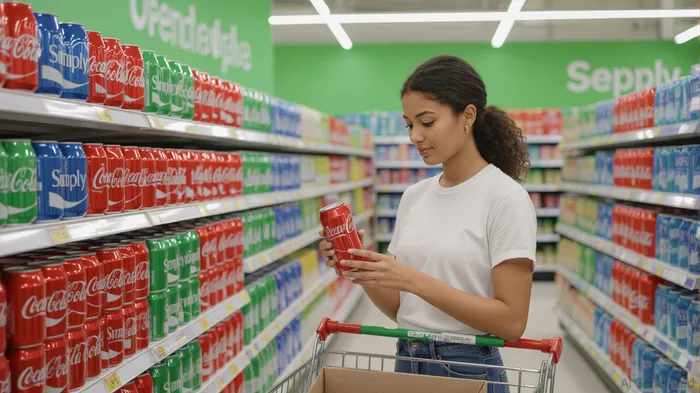 The financial performance of Coca-Cola in Q1 2025, marked by a 71% surge in operating income and a 32.9% operating margin, suggests confidence in its innovation strategy. However, the success of Simply Pop hinges on its ability to differentiate itself in a crowded market. Analysts note that PepsiCo's planned entry into the prebiotic soda category later in 2025 could intensify competition, necessitating aggressive marketing and product differentiation.
Eco-Conscious Packaging: A Circular Economy Framework
Coca-Cola's 2024 packaging innovations, including the Lift Up recyclable cardboard handle for multipacks and a shift to clear PET bottles, demonstrate progress toward its 2035 sustainability goals. By 2024, 99% of its primary packaging was recyclable, up from 90% in 2022, while recycled content in primary packaging rose to 28%. The company's R&D hub in Brussels further supports localized adaptations, such as Cappy Bobas, which blend functional innovation with sustainability.
These initiatives are critical for mitigating reputational and regulatory risks. For instance, Coca-Cola's label-less packaging trial in the UK, aimed at reducing waste, aligns with global trends toward minimalism and recyclability. However, the effectiveness of these efforts remains contingent on regional recycling infrastructure and consumer participation, as noted in the company's own disclosures.
Strategic Alignment with Consumer Trends
The convergence of health and sustainability trends is reshaping the beverage industry. Coca-Cola's Simply Pop addresses the demand for functional beverages, while its packaging innovations respond to environmental concerns. This dual strategy resonates with Gen Z and millennial consumers, who prioritize both wellness and sustainability in purchasing decisions.
Financially, the company's sustainability investments may yield long-term cost savings. For example, increasing recycled PET usage to 50% in EU markets by 2025 reduces reliance on virgin materials, potentially lowering input costs. Additionally, Coca-Cola's support for Deposit Return Schemes (DRS) in Europe-where collection rates exceed 90%-highlights its proactive approach to circular systems.
Investment Implications and Risks
Coca-Cola's strategic pivot carries both opportunities and risks. On the upside, its innovation pipeline and sustainability commitments could enhance brand loyalty and unlock new revenue streams in high-growth categories. The Q1 2025 earnings beat, driven by cost management and organic growth, reinforces investor confidence. However, challenges persist:
1. Market Saturation: The prebiotic soda market is attracting major competitors, requiring sustained R&D and marketing spend.
2. Execution Risks: Past missteps with health-focused products underscore the importance of consumer acceptance.
3. Sustainability Costs: Short-term investments in eco-conscious packaging may strain margins, though long-term savings are anticipated.
Analysts suggest that Coca-Cola's ability to balance innovation with profitability will determine its success. The company's 2035 targets-35–40% recycled material in packaging and 70% collection rates-provide a clear roadmap, but execution will require collaboration with governments and recycling partners.
Conclusion
Coca-Cola's strategic innovations in product offerings and packaging reflect a forward-looking approach to consumer demand and sustainability. While Simply Pop and eco-conscious packaging initiatives align with critical market trends, their long-term success depends on execution, competition, and systemic support for recycling infrastructure. For investors, the company's dual focus on health and sustainability presents a compelling case for long-term value creation, albeit with caution required for near-term execution risks.

Delivering real-time insights and analysis on emerging financial trends and market movements.
Latest Articles
Stay ahead of the market.
Get curated U.S. market news, insights and key dates delivered to your inbox.
AInvest
PRO
AInvest
PRO



Comments
No comments yet