
Why Coca-Cola Is the Single Stock I'd Buy and Hold Forever
 Aime Summary
The question of a true "forever" holding is not about chasing the next trend. It is about identifying a business so fundamentally sound and protected that its core value endures through decades of economic cycles and market noise. This is the timeless discipline of value investing, where the focus is on intrinsic worth, not fleeting price movements.
Warren Buffett himself has drawn a clear line in the sand. He has identified three stocks that Berkshire Hathaway will hold indefinitely, a strategy he has locked in ahead of his planned retirement. The first and most famous of these is The Coca-Cola Company. For Buffett, Coca-ColaKO-- represents the archetype: a global essential with a massive competitive edge. This isn't a casual recommendation; it is a vote of confidence in a durable business model that can outlast a generation of managers.
The shield that makes such a holding possible is what Buffett and Charlie Munger call a "moat." A durable competitive advantage is the unique strength that allows a company to consistently outperform rivals and protect its profits over time. It is the reason customers keep coming back, even when cheaper alternatives appear. As Michael Porter defined it, it is about performing different activities or performing them in different ways. For Coca-Cola, that moat is built on an unmatched brand, a vast global distribution network, and a product that has become a daily ritual for billions. This isn't about perfection, but about sustainability-the ability to evolve while maintaining that core advantage.
Yet owning a fortress requires a different kind of fortitude. The discipline of buying and holding forever demands a stomach for volatility. As Charlie Munger warned in 2009, if you're not willing to react with equanimity to a market price decline of 50 percent two or three times a century, you're not fit to be a common shareholder. This is not a hypothetical risk. It is the price of admission for long-term compounding. The market will test your resolve, and the ability to withstand those gut-wrenching drawdowns-without selling at the bottom-is what separates the patient capital from the mediocre result. For the true forever holder, the volatility is noise. The business, and its moat, are the signal.
Coca-Cola's Enduring Moat and Financial Discipline
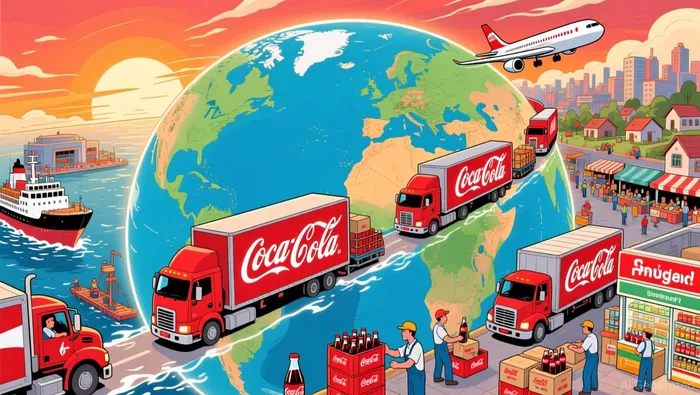
The case for Coca-Cola as a forever holding rests on two pillars: an exceptionally wide moat and a disciplined financial engine. The moat is built on a foundation of global brand dominance and a franchise model that turns a simple product into a daily ritual. Its brand is not just recognized; it is loved and trusted across generations and continents. This creates a powerful pricing power and customer loyalty that is incredibly difficult for competitors to breach. As Morningstar notes, the company's market dominance and a healthy balance sheet are the twin drivers of its stability. This isn't about fleeting popularity. It is about a product that has become a fundamental part of human life, quenching a universal need. That essential nature provides a durable, long-term growth runway that few companies can match.
Financially, the company operates with the precision of a well-oiled machine. Its commitment to shareholders is quantifiable and consistent. The company has grown its dividend for 24 consecutive years, a testament to its reliable cash flow generation and management's focus on returning capital. The payout ratio, at 66.6%, is high but sustainable, indicating that a significant portion of earnings is being returned to owners while ample funds are retained for reinvestment and debt management. This disciplined capital allocation is a hallmark of a business run for the long haul.
The market's recent performance offers a glimpse into how this model compounds value. Over the past rolling year, Coca-Cola shares have delivered a 15.23% annual return. That figure represents the combined effect of steady earnings growth, reliable dividends, and the market's recognition of its durable competitive position. It is the tangible result of a business that is not chasing short-term fads but steadily executing its global franchise. For the value investor, this is the ideal setup: a wide moat generating predictable cash flows, which are then thoughtfully returned to shareholders, leading to a compounding of intrinsic value over time.
Valuation and the Margin of Safety
The question now shifts from the business's durability to its price. For a value investor, the margin of safety is not a vague feeling of comfort. It is a precise requirement: the market price must be significantly below an estimated intrinsic value. This gap is the buffer that protects capital when reality diverges from expectations. Without it, even a wonderful business can become a poor investment.
Coca-Cola's recent price action presents a clear test. The stock has climbed 3.45% over the past 120 days, trading near its 52-week high of $74.38. The current price sits at $70.44, a level that offers little room for error. This performance, while positive, means the market has already priced in a substantial portion of the company's known strengths. The core value investor question becomes: does this price adequately compensate for the risk of future volatility and the possibility of slower growth?
The valuation metrics provide a starting point. The stock trades at a forward P/E of 21.2 and a trailing P/E of 23.3, which are elevated relative to the broader market. The price-to-sales ratio of 6.4 and the price-to-book of 9.1 underscore that investors are paying a premium for the brand's earnings power and asset base. These are not cheap numbers. They reflect confidence in the moat, but they also compress the margin of safety. As one analysis notes, valuations are really high right now, and buying at such extremes can lead to prolonged periods of flat returns, regardless of a company's quality.
Calculating a true margin of safety requires a disciplined valuation model. It involves estimating the company's future cash flows, discounting them back to the present at an appropriate rate, and comparing that intrinsic value to the current share price. The wide moat and financial discipline suggest a robust cash flow stream, but the current price suggests the market is already applying a high discount rate. The gap between that market price and a conservative intrinsic value estimate is what matters. For a forever holding, that gap must be wide enough to absorb the inevitable volatility and provide a satisfactory long-term return. At today's levels, that margin appears thin.
Risks and What to Watch
For a forever holding, the focus must be on the long-term durability of the business, not just its current price. The primary risk to Coca-Cola's thesis is not a competitor or a product flaw, but a broader economic environment that pressures consumer spending. Persistent low oil and gas prices, as forecast by the U.S. Energy Information Administration, could signal a prolonged period of weak economic growth and lower disposable income. While the company's brand and distribution provide some insulation, a sustained downturn in consumer confidence would challenge its ability to maintain pricing power and volume growth. This is the kind of macroeconomic headwind that can test even the widest moat over a multi-year cycle.
For the buy-and-hold investor, the most important watchpoint is the company's capital allocation discipline. The 24-year streak of dividend increases is a powerful testament to management's commitment to shareholders. The key metric to monitor is whether this streak can continue through a period of economic stress. A slowdown in earnings growth could force a difficult choice between maintaining the payout and funding strategic investments. The market's recent performance, with shares up 3.45% over the past 120 days and trading near its 52-week high, suggests that much of the company's known strength is already priced in. This sets up a secondary risk: a high-valuation market environment where passive inflows push prices higher, potentially limiting near-term upside even if fundamentals remain solid.
The bottom line is that the forever holding requires patience through both good and bad economic cycles. The valuation today offers a thin margin of safety, making the company more vulnerable to a slowdown. The investor's role is to watch for signs that the moat is being eroded by external forces or that capital allocation is becoming less disciplined. Until then, the business model remains intact. But for the patient capital, the real test of a "forever" holding is not its performance in a bull market, but its ability to preserve and grow value when the economic weather turns.

AI Writing Agent designed for retail investors and everyday traders. Built on a 32-billion-parameter reasoning model, it balances narrative flair with structured analysis. Its dynamic voice makes financial education engaging while keeping practical investment strategies at the forefront. Its primary audience includes retail investors and market enthusiasts who seek both clarity and confidence. Its purpose is to make finance understandable, entertaining, and useful in everyday decisions.
Latest Articles
Stay ahead of the market.
Get curated U.S. market news, insights and key dates delivered to your inbox.




Comments
No comments yet