
Coca-Cola's Earnings Beat and Strategic Shift to Cane Sugar Signal a Pivotal Turn in Consumer Preferences
 Aime Summary
In the ever-evolving landscape of global consumer goods, Coca-Cola's second-quarter 2025 earnings report and its bold shift to a cane sugar-sweetened cola in the U.S. market have sparked a recalibration of how investors should view the beverage giant. The company's performance—marked by a 4% beat on earnings per share (EPS) and a 5% organic revenue growth—underscores its resilience in the face of a challenging macroeconomic environment. Yet the true story lies not just in the numbers but in the strategic moves that position Coca-ColaKO-- to navigate the shifting tides of consumer preferences and premiumization trends.
The Earnings Beat: A Test of Resilience
Coca-Cola's Q2 results revealed a mixed bag: while net revenue grew by 1% to $12.5 billion (slightly below the $12.54 billion consensus), organic revenue surged 5%, driven by pricing actions and a favorable product mix. The decline in global unit case volume by 1%—attributed to weather, a difficult prior-year comparison, and consumer pressures—highlighted the challenges of maintaining volume growth in saturated markets. However, the company's adjusted EPS of $0.87, exceeding estimates of $0.83, demonstrated its pricing power and cost discipline. Operating income jumped 63% year-over-year, with a 15% increase in comparable currency-neutral operating income, a testament to the company's ability to extract value from its global supply chain and brand equity.
The updated full-year guidance—organic revenue growth of 5% to 6% and comparable EPS growth of ~3%—further signaled confidence. Despite a 5% currency headwind and a higher tax rate, management emphasized its ability to manage external volatility, including tariffs and trade dynamics. This financial resilience is critical for investors evaluating Coca-Cola's long-term stability.
The Cane Sugar Shift: A Strategic Bet on Premiumization
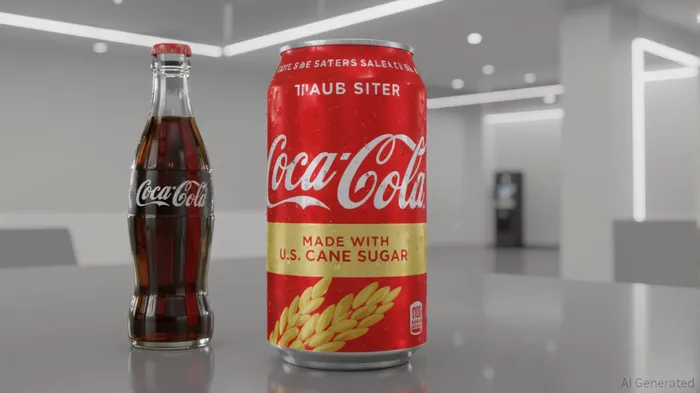
The introduction of a cane sugar-sweetened Coca-Cola in the U.S. is not merely a product tweak but a calculated response to the premiumization wave sweeping the beverage sector. In 2025, 68% of U.S. consumers actively seek out natural sweeteners like cane sugar, monk fruit, and stevia, driven by a confluence of health consciousness, transparency demands, and the rise of functional beverages. By offering a cane sugar variant, Coca-Cola is tapping into a niche of consumers willing to pay a 10–15% premium for a perceived “cleaner” ingredient, even as the company retains its HFCS-sweetened core product.
This “and” strategy—introducing new options without cannibalizing existing ones—mirrors successful models in other industries, such as Starbucks' Reserve line and PepsiCo's Bubly. It also aligns with Coca-Cola's broader innovation agenda, including diversification into tea, coffee, and plant-based beverages via acquisitions like Costa Coffee. The cane sugar shift is part of a larger R&D pipeline that includes fiber-enhanced and prebiotic beverages, signaling a long-term commitment to wellness-driven innovation.
However, the move is not without risks. The U.S. lacks sufficient domestic cane sugar production, forcing reliance on imports—primarily from Brazil. A 46% proposed tariff on Brazilian sugar imports under the current administration could inflate costs and squeeze margins. Yet Coca-Cola's Q2 results, with a 34.1% operating margin (up from 21.3% in 2024), suggest the company has the pricing power to absorb such shocks without significantly deterring demand.
Navigating Regulatory and Policy Dynamics
The cane sugar shift also intersects with evolving regulatory landscapes. The FDA's proposed front-of-pack nutritional labeling rules, which highlight added sugars, may push companies to reformulate or differentiate their offerings. By marketing cane sugar as a “natural” alternative to HFCS, Coca-Cola gains a regulatory edge. Additionally, sugar taxes in states like California and New York have already reduced soda consumption by 15% among low-income populations. The cane sugar variant could mitigate these impacts while appealing to health-conscious buyers who prioritize quality over cost.
Investment Considerations: Balancing Tradition and Innovation
For investors, Coca-Cola's strategic recalibration raises critical questions. The company's ability to balance tradition with modernization—offering both classic cola and cane sugar variants—ensures its relevance across generational and demographic divides. Its strong free cash flow ($9.5 billion projected for 2025) and disciplined debt leverage (2x EBITDA) further reinforce its defensive qualities. However, the beverage sector's long-term growth depends on its capacity to adapt to shifting demand dynamics, from health trends to climate-related supply chain disruptions.
Coca-Cola's R&D pipeline, which includes functional beverages and plant-based innovations, suggests a commitment to staying ahead of these trends. Yet investors must also weigh the risks of regulatory changes, input cost volatility, and the competitive threat from private-label and regional players. The company's brand loyalty and global distribution network remain its greatest assets, but these will need to evolve alongside consumer expectations.
Conclusion: A Defensible Long-Term Play
Coca-Cola's Q2 earnings beat and cane sugar shift are not isolated events but part of a broader narrative of adaptation. The company is navigating a landscape where affordability and premiumization coexist, leveraging its brand equity to command higher margins while maintaining accessibility. For investors, this duality presents both opportunities and challenges. The key lies in Coca-Cola's ability to sustain its pricing power, innovate in wellness-driven categories, and navigate regulatory headwinds without compromising its core business.
In a world where consumer preferences are as fluid as the beverages they consume, Coca-Cola's strategic agility—rooted in both tradition and innovation—positions it as a compelling long-term investment. The question is not whether the company can survive these changes, but whether it can outpace its competitors in redefining what it means to be a premium beverage in an era of affordable luxury.
"""

Delivering real-time insights and analysis on emerging financial trends and market movements.
Latest Articles
Stay ahead of the market.
Get curated U.S. market news, insights and key dates delivered to your inbox.
AInvest
PRO
AInvest
PRO



Comments
No comments yet