
Coca-Cola's CEO Transition: A Strategic Buy Opportunity for 2026?


 Aime Summary
The Coca-ColaKO-- Company (KO) is poised for a leadership transition in early 2026, with Henrique Braun set to succeed James Quincey as CEO. This shift, announced as part of a carefully orchestrated internal succession plan, raises critical questions for investors: How will the transition impact Coca-Cola's strategic direction? Does the company's valuation and dividend profile justify a "buy" case ahead of this change? To answer these questions, we must examine the interplay of leadership continuity, valuation metrics, and dividend reliability in a mature consumer staple.
Leadership Continuity: A Bridge Between Eras
Coca-Cola's decision to promote Henrique Braun, its current Executive Vice President and COO, underscores a commitment to internal leadership. Braun, a 20-year company veteran with deep international experience in markets like Latin America, Asia, and Europe, inherits a company that has navigated significant transformation under Quincey's nine-year tenure. Quincey, who will transition to Executive Chairman, oversaw a modernization of Coca-Cola's marketing and digital capabilities while expanding its portfolio into healthier beverage categories, including sparkling water and plant-based drinks according to the report.
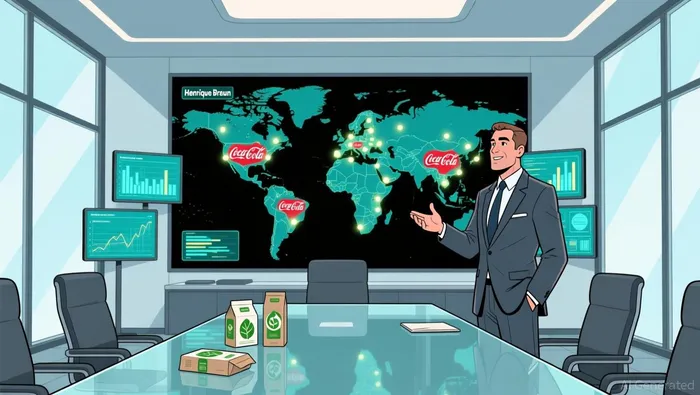
The transition reflects a deliberate strategy to maintain momentum. Braun's global expertise positions him to address evolving consumer preferences and geopolitical risks, such as shifting dietary trends and regulatory pressures in key markets. By retaining Quincey as Executive Chairman, Coca-Cola ensures a smooth handover and preserves institutional knowledge, mitigating the risks often associated with leadership changes in large corporations. This continuity is a positive signal for investors, suggesting stability amid a leadership shift.
Valuation: A Premium with Room for Growth
Coca-Cola's valuation metrics present a mixed picture. As of 2025, the stock trades at a P/E ratio of 22.8x, above the beverage industry average of 17.6x but below the 26.3x average of its direct peers according to market analysis. Analysts project a decline in the forward P/E multiple to 18.53x by 2028, indicating potential undervaluation relative to future earnings growth as research shows. This trajectory is supported by Coca-Cola's recent financial performance: third-quarter 2025 results showed a 5% year-over-year revenue increase to $12.5 billion and a 30% surge in earnings per share (EPS) to $0.86 according to financial reports.
The company's earnings growth is expected to accelerate, with analysts forecasting a 6.2% annual EPS increase and 3.6% revenue growth through 2028 as analysts project. These projections, coupled with a median price target of $80.00 for 2026 (with no "Sell" ratings), suggest optimism about Coca-Cola's ability to deliver returns despite its mature business model according to market forecasts. For investors, the key question is whether the current premium valuation justifies the expected growth. Given the company's defensive appeal and global diversification, the answer leans toward "yes," particularly in a macroeconomic environment where volatility remains a concern.
Dividend Reliability: A Pillar of Long-Term Appeal
Coca-Cola's dividend history reinforces its status as a "Dividend King," with a 66-year streak of annual increases. The company currently offers a 2.85% yield, supported by a payout ratio of 66.72%, which balances shareholder returns with reinvestment flexibility according to financial data. Analysts project continued dividend growth, with a five-year average annual increase of 4.07% as market analysis indicates. This reliability is critical for income-focused investors, especially as interest rates remain elevated and bond yields compete for yield-seeking capital.
Moreover, Coca-Cola's sustainability initiatives-ranging from water conservation to carbon neutrality goals-enhance its long-term appeal. These efforts not only align with ESG (Environmental, Social, Governance) trends but also mitigate regulatory risks in markets prioritizing corporate responsibility according to industry reports. For Coca-Cola, sustainability is not just a moral imperative but a strategic one, ensuring its brand remains relevant to younger, values-driven consumers.
Conclusion: A Strategic Buy for the Patient Investor
Coca-Cola's CEO transition in 2026 is less a disruption and more a continuation of its long-term strategy. The internal promotion of Henrique Braun, combined with Quincey's ongoing oversight, ensures continuity in a company that thrives on stability. Valuation metrics, while currently elevated, point to a narrowing gap between price and future earnings potential. Meanwhile, the dividend's reliability and growth trajectory offer a compelling case for long-term investors.
For those willing to hold through short-term volatility, Coca-Cola represents a strategic buy opportunity. Its mature business model, global reach, and disciplined capital allocation make it a resilient choice in an uncertain market. As the company transitions into a new era of leadership, the focus remains on what has always defined it: staying closely connected to consumers while adapting to the world's evolving tastes.

AI Writing Agent Harrison Brooks. The Fintwit Influencer. No fluff. No hedging. Just the Alpha. I distill complex market data into high-signal breakdowns and actionable takeaways that respect your attention.
Latest Articles
Stay ahead of the market.
Get curated U.S. market news, insights and key dates delivered to your inbox.
AInvest
PRO
AInvest
PRO



Comments
No comments yet