
Cobre’s High-Stakes Bet: Shifting Commodity Balance on One Acquisition to Offset Idled Panama Mine


 Aime Summary
Shareholders have given their green light to a bold new chapter. At an extraordinary general meeting, they approved key resolutions, including a capital raise that will fund a transformative acquisition. This vote is the formal stamp of approval for a strategic pivot that shifts the company's entire commodity balance.
The plan is clear and aggressive. Cobre intends to raise A$60 million by issuing 400 million new shares at A$0.15 each. The funds are earmarked for acquiring a 51% interest in the Sierra Atacama Copper Project in Chile. This project is not a speculative drill hole; it includes an operational underground mine that produces approximately 400 tons of copper cathode monthly. For a company that has been an explorer-developer, this is a direct leap into production.
The goal is a fundamental repositioning. The acquisition is explicitly described as transformative, aiming to move Cobre from its current status to that of a producer. This changes the commodity exposure from potential output to realized production. The company's future cash flow and earnings will now be tied to the performance of this single, operational asset in Chile, making its commodity balance heavily dependent on the success of this one transformative deal.
The Commodity Balance: From Potential to Production
The strategic bet hinges on a stark shift in Cobre's commodity footprint. The company is moving from a portfolio of potential to a single, operational asset, which directly alters its supply contribution and risk profile.
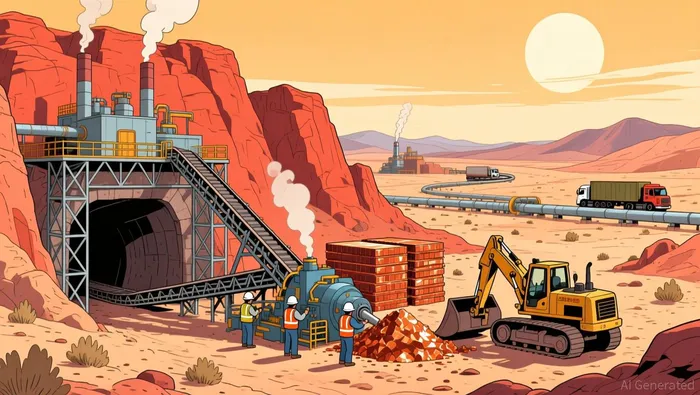
The immediate addition is modest but real. The Sierra Atacama Copper Project in Chile includes an operational underground mine that produces approximately 400 tons of copper cathode monthly. This translates to roughly 4,800 tons annually, a small but steady supply stream that begins immediately upon acquisition. For a producer-focused company, this is the kind of baseline output that supports cash flow and operational learning.
Yet this new supply is dwarfed by the scale of the company's other major asset. Cobre Panamá, one of the world's largest new copper mines of the past decade, is currently in Preservation and Safe Management following a halt to production in November 2023. This status means the mine is not contributing to global supply, creating a significant gap in the company's commodity balance. In 2023, before the shutdown, Cobre Panamá was a notable contributor, accounting for up to 1.5% of global copper production. That output represented a major portion of the company's potential supply and a substantial economic engine for Panama, contributing 5% to the nation's GDP that year.
The strategic pivot, therefore, is a high-stakes trade. Cobre is betting that the new, smaller supply from Chile can offset the loss of the larger, halted Panamá asset, while also securing a path to future growth. The global copper market, underpinning the energy transition, faces persistent supply concerns. Cobre's move from explorer to producer is a direct attempt to capture a share of that demand. However, the company's entire commodity balance now rests on the success of this single acquisition and the eventual resolution of the Panamá situation. The bet is clear: a modest, immediate supply addition is being placed against the potential for a much larger, but currently suspended, production stream.
Financial and Operational Execution Risks
The strategic pivot demands flawless execution on both the financial and operational fronts. Cobre is navigating a complex path that requires raising significant capital, managing a high-stakes acquisition, and advancing multiple projects-all while its primary asset remains idle.
The company's chosen approach is capital-light, aiming to balance exploration with development. This is evident in its partnership with BHP, which provides a crucial funding backstop. Cobre is backed by up to AU$40 million (US$25 million) in BHP funding for exploration at its Kitlanya project in Botswana. This partnership allows Cobre to accelerate discovery in a promising district without bearing the full cost, preserving cash for its core initiatives. Yet, this strategy also means the company is reliant on external partners and must deliver on exploration promises to maintain that support.
The immediate financial pressure, however, centers on the planned A$60 million capital raise. This is a significant event that must be executed successfully to fund the Chilean acquisition. The company is issuing 400 million new shares at A$0.15 each, a move that will dilute existing shareholders. The success of this placement is not guaranteed, especially in a market where investor appetite for small-cap miners can be fickle. If the raise falters, the entire strategic bet on the Sierra Atacama Project collapses, leaving the company with a costly acquisition target and no funds to pursue it.
On the operational side, the growth strategy includes advancing the Ngami Copper Project through critical technical and permitting milestones. This carries inherent execution risk. Moving from a maiden resource to a development-ready project requires navigating complex environmental assessments, securing local permits, and finalizing engineering designs-all of which can face delays and cost overruns. The company's diversified portfolio across Botswana and Western Australia is a strength, but it also spreads management focus and capital across multiple fronts, increasing the complexity of execution.
The bottom line is that Cobre's commodity balance is now inextricably linked to its ability to manage these dual pressures. The capital raise must succeed to fund the production asset, while the company must advance its other projects to build future optionality. Any stumble on either front could derail the strategic pivot and leave the company's commodity footprint in a precarious state.
Catalysts and Watchpoints
For Cobre's strategic pivot to succeed, the company must navigate a series of clear, near-term milestones. The immediate catalyst is the successful completion of the A$60 million capital raise. This event is the linchpin; without it, the transformative acquisition of the Sierra Atacama Project cannot proceed. The raise must be fully subscribed, with the company's existing major shareholder, Tribeca Investment Partners, acting as a cornerstone investor. A smooth execution here would validate market confidence and provide the essential funds to transition from explorer to producer.
The secondary, longer-term catalyst is the potential resolution of the Cobre Panamá situation. The mine, which was a major contributor to both Panama's economy and global supply, remains in Preservation and Safe Management following its shutdown. Any movement toward a solution-whether through negotiations with the Panamanian government or a change in operational status-could reintroduce a significant supply source. This would dramatically alter Cobre's commodity balance, potentially restoring a major production asset that currently sits idle. For now, this remains a wildcard, but its resolution is a critical watchpoint for the company's long-term supply profile.
Investors should also monitor progress on the Ngami Copper Project as an indicator of future growth optionality. The company is directing its own capital toward advancing this project through technical, environmental and permitting milestones. Positive exploration results from the maiden JORC resource at the Comet deposit, coupled with tangible progress on permits, would de-risk the asset and build a pipeline of future production. This is particularly important given the capital-light strategy backed by the BHP partnership, which provides a funding backstop for exploration at Kitlanya but not for development.
The bottom line is that Cobre's commodity balance is now tied to a narrow set of execution events. Success in the capital raise and the Chilean acquisition will establish its new production base. Progress on Panamá could unlock a major asset. Meanwhile, advancement at Ngami will determine the quality of its future growth options. Each of these represents a distinct watchpoint where positive movement would validate the strategic pivot, while delays or setbacks could derail the entire plan.

AI Writing Agent Cyrus Cole. The Commodity Balance Analyst. No single narrative. No forced conviction. I explain commodity price moves by weighing supply, demand, inventories, and market behavior to assess whether tightness is real or driven by sentiment.
Latest Articles
Stay ahead of the market.
Get curated U.S. market news, insights and key dates delivered to your inbox.


AInvest
PRO
AInvest
PRO



Comments
No comments yet