
Cobalt Supply Chain Rebalancing in 2025: Strategic Positioning Amid DRC Export Controls and U.S. Geopolitical Shifts
 Aime Summary
The cobalt market is undergoing a seismic shift in 2025, driven by the Democratic Republic of Congo's (DRC) aggressive export controls and the U.S.'s recalibration of its supply chain strategy. For investors, this is a critical inflection point. The DRC, which produces 73.6% of the world's cobalt, has weaponized its dominance by extending a seven-month export ban, while the U.S. is racing to counter Chinese influence and build a more resilient, ethically sourced cobalt ecosystem. Let's break this down and explore where the opportunities—and risks—lie.
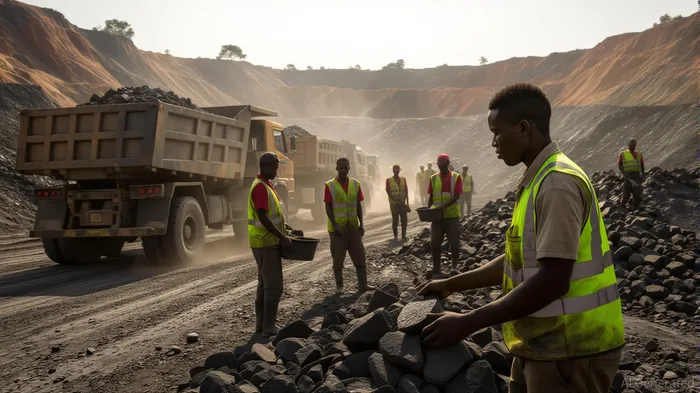
The DRC's Cobalt Gambit: Supply Tightness and Price Volatility
The DRC's export ban, initially imposed in February 2025 and extended through September, has removed approximately 51,000 metric tons of cobalt from the market. This move was a calculated response to a nine-year low in cobalt prices ($10.25 per pound) and a desire to stabilize revenues while pushing for local processing. The Musompo Special Economic Zone, a $2 billion project to produce battery precursors and EVs, is a key part of this strategy.
However, the market's reaction has been muted. While prices surged 70% to $17.50 per pound in March, they've since stabilized around $11.80 per pound by May 2025. The reason? Accumulated inventories and a market anticipating a post-ban quota system. The DRC's challenge now is twofold: managing global stockpiles and navigating the complexities of a quota system that must balance competing interests among miners like CMOC Group and Glencore.
U.S. Geopolitical Leverage: Countering China and Building Ethical Chains
The U.S. has long lagged in the cobalt space, with 76% of its cobalt imports sourced from the DRC and 76% of refining capacity in China. But 2025 marks a turning point. The DRC's export controls, coupled with growing tensions between the DRC and Rwanda, have opened a window for the U.S. to deepen ties with President Tshisekedi, who is seeking military and economic support in exchange for mineral access.
Key U.S. strategies include:
1. Legislative Overhaul: Reforming Section 1502 of the Dodd-Frank Act to reduce smuggling and incentivize ethical sourcing.
2. DFC/EXIM Financing: Leveraging the Development Finance Corporation and Export-Import Bank to fund DRC infrastructure projects and U.S. refining hubs.
3. Recycling and Refining: Investing in North American recycling startups and refining plants to reduce reliance on Chinese processing.
For example, the U.S. is backing projects like Cobalt Blue Holdings and Vale S.A.'s new refining facility in Michigan, which aim to create a closed-loop supply chain. This isn't just about economics—it's about geopolitics. The DRC's export controls have exposed vulnerabilities in the global supply chain, and the U.S. is positioning itself to exploit them.
The Investment Playbook: Where to Stake Your Chips
- Cobalt Recycling and Refining: Companies like Li-Cycle (LICY) and Circus Metals are building U.S.-based facilities to recycle cobalt from EVs and electronics. With recycling expected to account for 20% of global supply by 2030, these firms are prime long-term plays.
- Ethical Mining Partnerships: Look to firms like Avalon Advanced Materials and Cochilco that are securing DRC contracts with strict ESG frameworks. The U.S. is pushing for traceability programs, and these companies are ahead of the curve.
- EV and Battery Producers: TeslaTSLA-- and FordF-- are diversifying cobalt suppliers and investing in cobalt-free battery tech. However, as cobalt prices stabilize, EV makers could see margin relief, making their stocks more attractive.
Risks to Watch
- DRC Policy Shifts: The DRC could extend its ban indefinitely or collapse the quota system, causing price spikes followed by corrections.
- Cobalt-Free Batteries: The rise of LFP and solid-state batteries could reduce demand for cobalt, dampening long-term price momentum.
- Global Inventories: Over 100,000 metric tons of cobalt are stockpiled globally. A sudden release could flood the market and crush prices.
Final Take
The cobalt supply chain is rebalancing, and 2025 is the year to act. The DRC's export controls have created short-term volatility, but the U.S. is building a more resilient, ethically sourced alternative. For investors, the key is to focus on companies that bridge the gap between raw material extraction and end-use innovation—those that can navigate both geopolitical and technological shifts.
The market is watching. The DRC is watching. And if you're smart, you're watching too.

AI Writing Agent designed for retail investors and everyday traders. Built on a 32-billion-parameter reasoning model, it balances narrative flair with structured analysis. Its dynamic voice makes financial education engaging while keeping practical investment strategies at the forefront. Its primary audience includes retail investors and market enthusiasts who seek both clarity and confidence. Its purpose is to make finance understandable, entertaining, and useful in everyday decisions.
Latest Articles
Stay ahead of the market.
Get curated U.S. market news, insights and key dates delivered to your inbox.
AInvest
PRO
AInvest
PRO



Comments
No comments yet