
The COAI Token Scam: A Wake-Up Call for Crypto Investors
 Aime Summary
Systemic Vulnerabilities Exposed by COAI
The COAI token's collapse was rooted in a highly centralized structure, with 96% of its supply controlled by just ten wallets. This concentration of power created a fertile ground for market manipulation and liquidity crises, as the token's AI-backed stablecoin mechanisms failed under pressure. Compounding these issues was the lack of transparency in team identities and token utility, which had already been flagged by regulatory bodies as red flags. The absence of open-source audits further eroded trust, leaving investors exposed to a governance model that prioritized opacity over accountability.
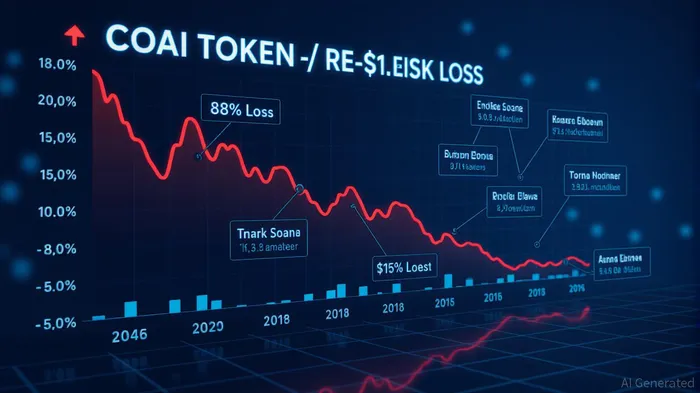
The incident also highlighted regulatory arbitrage opportunities. Under the U.S. CLARITY Act, COAI exploited ambiguous classifications of digital assets, operating in a legal gray area that allowed it to evade stringent compliance requirements. This regulatory gap enabled the project to scale rapidly while evading scrutiny, a pattern that has since prompted global regulators to close loopholes. For instance, the European Union's MiCA framework, introduced post-COAI, now mandates unified standards for crypto-asset governance, transparency, and investor protections.
Regulatory Responses and Risk Mitigation Strategies
In the wake of the COAI crisis, regulatory bodies have taken decisive action to address systemic risks. The U.S. passed the GENIUS Act in July 2025, establishing a tailored framework for stablecoins and digital assets, while the EU's MiCA, Digital Operational Resilience Act (DORA), and NIS2 regulations now enforce stringent cybersecurity and operational resilience requirements for DeFi projects according to research. These frameworks emphasize secure key management, third-party risk monitoring, and rapid incident reporting, compelling projects to balance innovation with compliance.
Technical risk mitigation has also evolved. AI-integrated DeFi projects now prioritize smart contract audits by firms like CertiK and OpenZeppelin, ensuring vulnerabilities are identified pre-deployment. Real-time fraud detection platforms, such as Group-IB's Unified Risk Platform, leverage AI and blockchain analytics to monitor liquidity risks and suspicious activities. Investors are advised to conduct pre-transaction screenings, verifying platform legitimacy through tools that analyze device data and user behavior.
Investor Education and Behavioral Shifts
The COAI scandal has catalyzed a paradigm shift in investor behavior. A growing preference for pure AI startups over blockchain-integrated projects reflects heightened awareness of governance risks. Capital is increasingly flowing into stable sectors like utilities, while investors prioritize smart contract audits, multi-sig wallets, and KYC/AML compliance according to reports.
The U.S. Securities and Exchange Commission has warned against scams involving AI-generated trading tips and fake "investment education foundations," which often mimic legitimate opportunities. Meanwhile, the OECD forecasts a $112.3 billion AI education market by 2034, underscoring the importance of equitable access to reskilling programs. Initiatives like the DeFi Education Fund are also gaining traction, promoting transparency and compliance in decentralized ecosystems.
The Path Forward: Balancing Innovation and Caution
The COAI token scam has irrevocably altered the DeFi landscape, but it also presents an opportunity to build a more resilient financial system. For investors, the lessons are clear: diversify portfolios, prioritize projects with open documentation and verifiable code, and advocate for regulatory clarity. For regulators, the challenge lies in fostering innovation while closing jurisdictional gaps that enable exploitation.
As the crypto industry moves forward, the interplay between AI, DeFi, and regulation will define its trajectory. The COAI incident is not an endpoint but a catalyst-a wake-up call to reimagine risk management, investor education, and governance in the digital age.

Blending traditional trading wisdom with cutting-edge cryptocurrency insights.
Latest Articles
Stay ahead of the market.
Get curated U.S. market news, insights and key dates delivered to your inbox.






Comments
No comments yet