
COAI Token Scam: A Wake-Up Call for Crypto Investors


 Aime Summary
The COAI Collapse: A Case Study in Systemic Risk
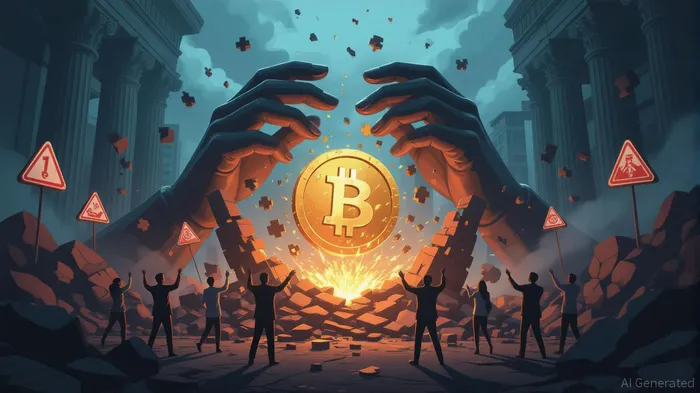
The COAI token scam, centered on its algorithmic stablecoins xUSDXUSD-- and deUSD, revealed how centralized governance and opaque liquidity models can lead to catastrophic failures. According to Bitget's report, the project's governance structure was dominated by ten wallets controlling 87.9% of tokens, enabling panic selling and manipulation during market stress. When the stablecoins lost their dollar peg amid a liquidity crisis, the lack of full reserve backing exacerbated the collapse, wiping out billions in investor value.
This crisis was not an isolated event but a symptom of broader issues in DeFi. The U.S. GENIUS Act, introduced in 2025 to strengthen crypto oversight, inadvertently worsened liquidity challenges for smaller projects like COAI by raising compliance costs and creating regulatory uncertainty. Meanwhile, the EU's MiCA framework, while more comprehensive, has yet to address cross-border enforcement gaps.
Regulatory Responses: Progress and Persistent Gaps
Post-COAI, regulators have accelerated efforts to close loopholes. The SEC and CFTC have clashed over the classification of stablecoins, leaving projects in a legal gray area. For instance, COAI exploited conflicting definitions of "security" versus "commodity" to avoid full compliance with securities laws.
Globally, Southeast Asia has emerged as a hotspot for crypto fraud, with criminal networks in Myanmar and Cambodia defrauding nearly $10 billion annually. The extradition of Chinese businessman She Zhijiang for operating a fraudulent AI-based DeFi scheme in Myanmar highlights the challenges of cross-border enforcement. In response, the U.S. Department of Justice launched the "Scam Center Strike Force" to target such operations, but jurisdictional hurdles persist.
Due Diligence Best Practices for Crypto Investors
The COAI scandal offers a stark reminder of the importance of reputational and regulatory due diligence. As outlined by Intelligo.ai, institutional investors must vet the identities, credentials, and track records of project teams, flagging anonymous or inexperienced leadership as red flags. For example, COAI's leadership failures and lack of transparent governance were early warning signs ignored by many investors.
Regulatory compliance is equally critical. Investors should verify whether projects adhere to U.S. securities laws, hold necessary licenses (e.g., FinCEN MSB registrations), and disclose auditable treasury reports. The absence of legal opinions or no-action letters from regulators like the SEC should raise alarms.
Transparency in tokenomics is another key area. Projects with unclear distribution models, unverifiable reserves, or centralized control mechanisms-like COAI's 87.9% token concentration-pose systemic risks. Investors are increasingly demanding instant audits and open governance practices, shifting toward projects with decentralized, community-driven models.
The Path Forward: Global Cooperation and Investor Vigilance
While frameworks like MiCA and the proposed CLARITY Act aim to clarify AI token definitions, fragmented regulations remain a barrier to trust. Experts emphasize the need for unified global standards, particularly for stablecoins and algorithmic protocols, to prevent future crises.
For individual and institutional investors, the COAI collapse is a wake-up call. As DeFi evolves, due diligence must extend beyond financial metrics to include governance scrutiny, regulatory alignment, and community sentiment. Tools like the SEC's EDGAR Database and FINRA BrokerCheck can help uncover hidden risks, while media monitoring provides early warnings about emerging controversies.
In the end, the crypto market's resilience will depend on its ability to learn from failures like COAI. For now, investors must navigate this volatile landscape with caution, prioritizing transparency and compliance over speculative hype.

Blending traditional trading wisdom with cutting-edge cryptocurrency insights.
Latest Articles
Stay ahead of the market.
Get curated U.S. market news, insights and key dates delivered to your inbox.


AInvest
PRO
AInvest
PRO



Comments
No comments yet