
The COAI Token Scam: A Wake-Up Call for Crypto Investors


 Aime Summary
The collapse of the COAI token in November 2025 sent shockwaves through the decentralized finance (DeFi) ecosystem, exposing systemic vulnerabilities in emerging cryptocurrency markets. As investors lost billions to a scam that exploited regulatory ambiguity and weak governance, the incident underscored a critical question: How can markets balance innovation with investor protection in an industry defined by decentralization and cross-border complexity?
Regulatory Gaps and the COAI Scam
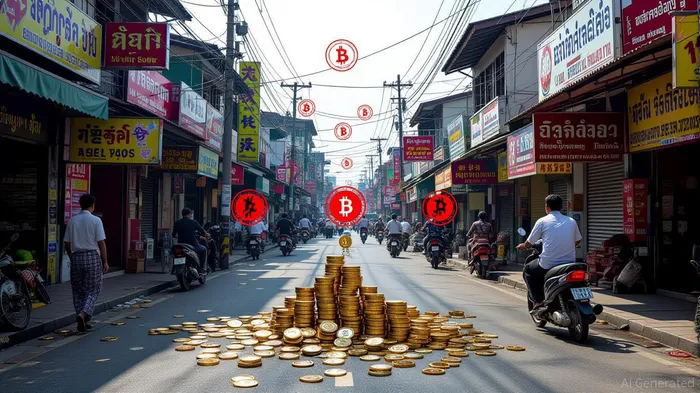
The COAI Token Scam thrived in a legal gray zone. According to a report by Bitget, the collapse was fueled by "leadership failures, unclear regulations, and industry-wide panic," exacerbated by the ambiguously worded CLARITY Act in the U.S., which failed to define AI tokens clearly. This regulatory vacuum allowed fraudulent operators to masquerade as AI-driven DeFi platforms, preying on investors in markets where oversight was nonexistent. Southeast Asia, in particular, became a hotspot for such schemes, with criminal networks defrauding nearly $10 billion annually by leveraging jurisdictional loopholes according to Bitget's analysis.
The case of She Zhijiang, a Chinese-born scam operator extradited to China in 2025, exemplifies the transnational nature of these crimes. His operations in Myanmar's Shwe Kokko region-a hub for internet fraud and drug trafficking-highlighted how weak governance and lax enforcement enabled large-scale crypto scams. Despite efforts like the U.S. Department of Justice's "Scam Center Strike Force," which has seized over $401 million in cryptocurrency from such schemes, jurisdictional challenges persist.
Investor Protection: A Fragmented Landscape
Emerging markets have struggled to implement cohesive investor safeguards. The COAI collapse revealed a stark disconnect between technological advancements and regulatory frameworks. For instance, the U.S. SEC and CFTC maintain conflicting classifications of stablecoins-securities versus commodities-creating confusion for market participants. Meanwhile, the IRS's new DeFi rules, which critics argue undermine privacy, have sparked legal debates, further eroding trust.
In response, some jurisdictions have taken incremental steps. Hong Kong's SFC expanded its 2023 licensing regime to include staking services, imposing strict asset custody and disclosure requirements. Similarly, Singapore's MAS finalized a stablecoin regulatory framework in 2025, mandating full reserve backing for pegged cryptocurrencies. These measures, however, remain localized and insufficient to address the globalized nature of crypto fraud.
The Path Forward: Global Coordination and Clarity
The COAI Token Scam has become a catalyst for rethinking regulatory approaches. According to a 2025 analysis, developing economies must adopt unified regulations to close legal loopholes, while advanced markets need to clarify definitions for AI tokens and stablecoins to reduce confusion. International collaboration is equally critical. The U.S. and China's joint efforts to seize $13.4 billion in bitcoinBTC-- from Cambodian tycoons demonstrate the potential of cross-border enforcement. Yet, as long as infrastructure like internet service providers and social media platforms remain untouched by regulation, scam networks will continue to operate with impunity according to Bitget's findings.
For investors, the lesson is clear: Diversification and due diligence are no longer enough. The COAI collapse has exposed the fragility of DeFi ecosystems in markets where governance lags innovation. As platforms like ZEUSNFTX attempt to rebuild trust through scalable blockchain solutions, the onus remains on regulators to create a framework that prioritizes transparency without stifling innovation according to Bitget's analysis.

Blending traditional trading wisdom with cutting-edge cryptocurrency insights.
Latest Articles
Stay ahead of the market.
Get curated U.S. market news, insights and key dates delivered to your inbox.






Comments
No comments yet