
The COAI Token Scam and Risks in Emerging Crypto Ecosystems


 Aime Summary
A Proliferation of Scams: 2025's High-Profile Frauds
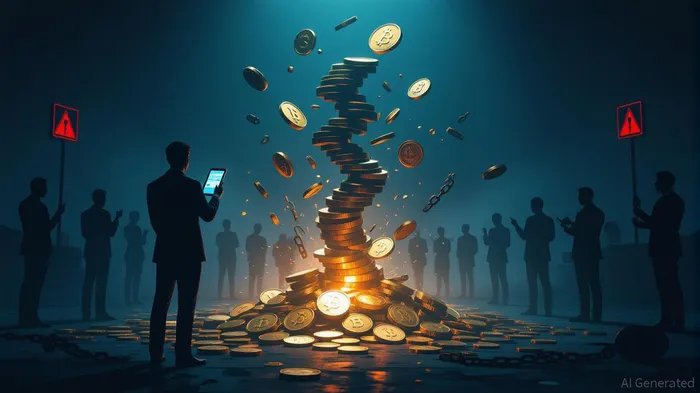
The COAI token fraud is part of a troubling trend of high-profile scams in 2025, each exploiting regulatory gaps and investor naivety. The Solana-based M3M3 memecoinMEME--, for instance, saw insiders manipulate its price using 150 wallets to hoard 95% of the supply, resulting in $69 million in losses. Similarly, the Kokomo Finance rug pull saw developers abandon the project after switching to malicious code, stealing $5.5 million. Meanwhile, AI-generated deepfake videos impersonating figures like Elon Musk have been used to promote fraudulent crypto giveaways, netting scammers $5 million between 2024 and 2025. These tactics highlight the sophistication of modern crypto fraud, which increasingly leverages social engineering and technological loopholes.
Regulatory Gaps and the Need for Global Coordination
The COAI token's collapse and the Bybit hack-where North Korean hackers stole $1.5 billion in Ethereum-exposed critical weaknesses in regulatory frameworks. The Bybit breach, attributed to the Lazarus Group, exploited vulnerabilities in third-party software like Safe Wallet, revealing how even trusted tools can be compromised. Regulatory bodies like the U.S. SEC and OFAC have since intensified scrutiny of crypto mixers and anonymity tools, but global coordination remains fragmented. The Financial Action Task Force and Financial Stability Board (FSB) have warned of inconsistent standards across jurisdictions, creating safe havens for illicit actors. For example, the U.S. and EU's conflicting crypto frameworks have added confusion for market participants.
In response, the U.S. introduced reforms under the CLARITY Act in 2025, including clearer compliance pathways for crypto custodians and commodity-backed trusts. However, these measures are reactive rather than proactive. Experts argue that robust due diligence-such as AI-driven audits, multi-signature wallets, and Know Your Customer (KYC) compliance-is essential to mitigate risks. The COAI token's algorithmic flaws and the Balancer DeFi exploit, which cost $116 million, further emphasize the need for rigorous smart contract security.
Investor Education: A Critical Safeguard
The Bybit hack and COAI token collapse have intensified calls for investor education. Post-Bybit, industry leaders stress the importance of self-custody solutions, real-time monitoring, and third-party vendor vetting. For instance, the hack demonstrated how even multisignature wallets and cold storage can be compromised without operational safeguards. Regulatory bodies are also pushing for transparency in tokenomics and governance structures, as seen in the SEC's 2025 reforms.
Investors must adopt a proactive approach, scrutinizing token supply distribution, algorithmic mechanisms, and governance models. The COAI token's extreme supply concentration and opaque algorithms should serve as a cautionary tale. Similarly, the rise of "pig butchering" scams-where fraudsters build trust before directing victims to fake platforms-underscores the need for vigilance.
Conclusion: Balancing Innovation with Protection
The COAI token scam and 2025's broader crypto fraud landscape highlight a critical juncture for the industry. While innovation in DeFi and tokenomics continues to attract capital, the risks of market manipulation, algorithmic instability, and regulatory arbitrage remain acute. Institutional safeguards, such as enhanced cybersecurity protocols and cross-jurisdictional regulatory coordination, are indispensable. Equally vital is investor education, empowering individuals to navigate the complexities of decentralized ecosystems.
As the U.S. aims to position itself as the "crypto capital of the world," the lessons from COAI and Bybit demand a balanced approach: fostering innovation while prioritizing transparency, due diligence, and systemic resilience. The future of crypto depends on it.

Combina la sabiduría tradicional en el comercio con las perspectivas más avanzadas sobre las criptomonedas.
Latest Articles
Stay ahead of the market.
Get curated U.S. market news, insights and key dates delivered to your inbox.






Comments
No comments yet