
The COAI Token Scam and Its Implications for Crypto Security


 Aime Summary
A Systemic Shock to DeFi's Core
The xUSD collapse was not an isolated incident but a cascading failure. Mismanagement by an external fund manager-entrusted with user deposits-triggered a depegging crisis across interconnected stablecoins like deUSD and USDX. Ethena's Staked USDeUSDe--, a major player in the space, saw $400 million in outflows within a month, reducing its supply by 41%, according to Coinotag. This turmoil exposed a critical flaw: DeFi protocols that outsource risk management to third parties without robust oversight mechanisms are inherently unstable.
The COAI Token Scam, if it followed a similar playbook, likely exploited such gaps. By leveraging complex, poorly audited smart contracts or inflating yield claims, bad actors could have drained liquidity pools or manipulated governance votes. The aftermath of xUSD demonstrates how quickly trust erodes when transparency is lacking-a lesson that must inform future compliance strategies, as noted by Coinotag.
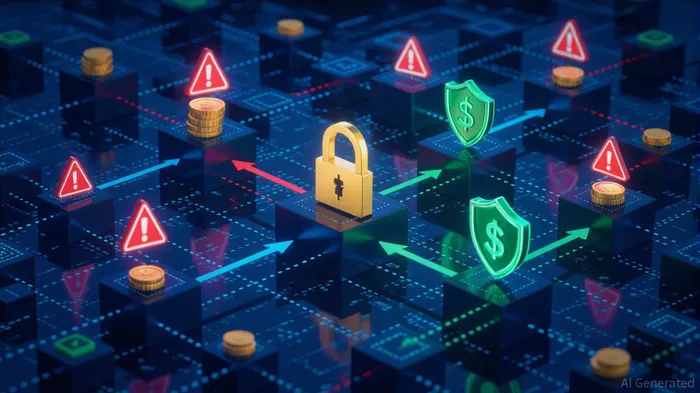
Regulatory Responses: From Crisis to Compliance
The xUSD collapse has accelerated regulatory scrutiny, particularly in jurisdictions like the U.S. and China, where policymakers are now prioritizing investor safeguards. According to a report by Blockonomi, the incident has spurred calls for stricter audit requirements, mandatory bug bounty programs, and real-time liquidity monitoring for stablecoins, as detailed in Blockonomi. Projects like Mutuum Finance (MUTM), which recently confirmed a Q4 2025 V1 launch, exemplify this shift. By emphasizing CertiK audits and transparent smart contract practices, MUTM aims to rebuild trust through proactive compliance, as reported by GlobeNewswire.
Regulators are also targeting governance models. The collapse revealed that protocols relying on external fund managers-often with minimal accountability-pose systemic risks. As Stani Kulechov of AaveAAVE-- noted in a recent analysis, "DeFi must evolve from experimental governance to structured oversight. Investor confidence hinges on knowing that protocols can withstand redemption shocks without sacrificing decentralization," as reported by Coinotag.
Investor Protection: A New Baseline for Token Projects
The xUSD crisis has forced DeFi projects to adopt a new baseline for security. Platforms like RentStac (RNS) are now marketing themselves as "security-first," leveraging third-party audits and community-driven governance to mitigate risks, as reported by Cryptopolitan. These measures are not just defensive-they are becoming competitive advantages in a market where trust is currency.
However, compliance cannot be an afterthought. The $120 million Balancer exploit and the xUSD debacle highlight the cost of reactive security. As Coinotag observed, "Protocols must embed risk management into their DNA, not retrofit it after a breach," as reported by Coinotag. This includes stress-testing liquidity models, diversifying collateral types, and avoiding over-reliance on delta-hedging or cross-collateralized pools, which proved disastrous under redemption pressure, as noted by GlobeNewswire.
The Path Forward: Balancing Innovation and Accountability
The COAI Token Scam, whether real or hypothetical, serves as a cautionary tale. DeFi's promise-financial inclusion and innovation-cannot thrive without a foundation of trust. Regulators and developers must collaborate to establish frameworks that enforce transparency without stifling experimentation. This includes:
- Mandatory smart contract audits by accredited firms.
- Real-time liquidity dashboards for stablecoins and lending platforms.
- Incentivized bug bounty programs to crowdsource security testing.
As the industry matures, projects that prioritize these measures-like Mutuum Finance and RentStac-will likely dominate. For investors, due diligence must now extend beyond tokenomics to governance structures and compliance rigor.

Blending traditional trading wisdom with cutting-edge cryptocurrency insights.
Latest Articles
Stay ahead of the market.
Get curated U.S. market news, insights and key dates delivered to your inbox.






Comments
No comments yet