
COAI Token Scam Fallout and Investor Protections in Crypto: Navigating Regulatory Readiness and Risk Mitigation


 Aime Summary
The COAI Token's Fraudulent Structure and Systemic Risks
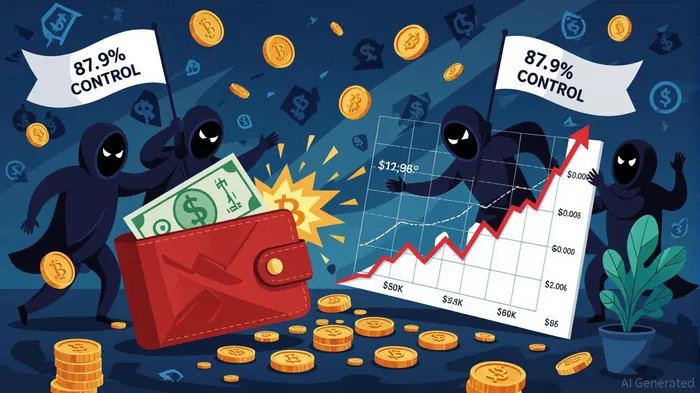
The COAI token's downfall was rooted in its reliance on algorithmic stablecoins-xUSD and deUSD-that lost their dollar peg during a liquidity crisis, triggering panic selling by a small group of wallets controlling 87.9% of the supply. This centralized control, masked by the token's decentralized branding, highlighted a fundamental contradiction in DeFi: the illusion of decentralization often conceals centralized risks. The token's structure also exploited weak governance in regions like Southeast Asia, where organized crime groups leveraged jurisdictional loopholes to orchestrate large-scale fraud.
Compounding these issues was the regulatory ambiguity created by the CLARITY Act, which failed to clarify the legal status of AI-based crypto projects, enabling fraudsters to operate in a gray area. The collapse of COAI's algorithmic stablecoins further exposed the fragility of DeFi protocols, where technical flaws and liquidity crunches can cascade into systemic failures.
Regulatory Readiness: A Mixed Landscape of Progress and Gaps
In response to the COAI incident and broader crypto risks, U.S. regulators have taken steps to modernize oversight. The Securities and Exchange Commission (SEC) issued no-action letters in September 2025, streamlining crypto custody and token distribution under decentralized physical infrastructure networks (DePIN) while approving generic listing standards for spot crypto ETFs. These moves aim to foster innovation while addressing investor protections. However, the SEC's enforcement actions have been inconsistent, with many cases from the previous administration dismissed under current leadership, signaling a shift toward a more innovation-friendly approach.
The Commodity Futures Trading Commission (CFTC) has also contributed to regulatory clarity, rescinding advisories that previously restricted crypto activities and promoting peer-to-peer trading of digital assets. Yet, the fragmented oversight between the SEC and CFTC-where crypto assets are classified differently-remains a challenge. For instance, the SEC's focus on securities laws clashes with the CFTC's commodity-based framework, creating confusion for market participants.
Internationally, the EU's Markets in Crypto-Assets (MiCA) regulation has emerged as a benchmark for comprehensive oversight, but its implementation faces hurdles in harmonizing with U.S. policies. Meanwhile, cross-border collaborations, such as the U.S.-China operation that recovered $13.4 billion in stolen BitcoinBTC--, demonstrate the potential of global enforcement. However, such efforts remain the exception rather than the norm.
Investor Protections: From Pre-Transaction Checks to Technological Safeguards
Experts emphasize that retail investors must adopt a multi-layered defense against crypto scams. Pre-transaction checks, such as verifying platform legitimacy and using blockchain analytics to flag suspicious wallets, are critical for mitigating risk according to experts. Innovations like Group-IB's Unified Risk Platform offer real-time fraud detection by integrating device intelligence and user behavior analysis, while tools like KnowScam's Scan & Score app help users identify red flags in communications.
Technological solutions are also expanding. NordVPN's call protection feature, now available in the UK and Canada, provides early warnings of potential scam calls, reducing susceptibility to social engineering attacks. Additionally, Google's Enhanced Phone Number Verification (ePNV) in India aims to replace SMS-based OTPs, blocking over 115 million attempts to install sideloaded apps linked to financial fraud.
The Path Forward: Balancing Innovation and Oversight
The COAI token's collapse serves as a cautionary tale for regulators and investors alike. While the U.S. has made strides in modernizing crypto frameworks-such as the SEC's Project Crypto initiative-gaps persist in enforcement and cross-agency coordination according to regulatory trackers. For retail investors, the key lies in combining technological tools with heightened awareness of red flags, such as unrealistic returns or opaque token structures.
Ultimately, the post-COAI landscape demands a balanced approach: fostering innovation while ensuring that regulatory frameworks evolve swiftly enough to address emerging risks. As the crypto market matures, the lessons from COAI will likely shape a more resilient ecosystem-one where investor protections are not an afterthought but a foundational pillar.

Blending traditional trading wisdom with cutting-edge cryptocurrency insights.
Latest Articles
Stay ahead of the market.
Get curated U.S. market news, insights and key dates delivered to your inbox.


AInvest
PRO
AInvest
PRO



Comments
No comments yet