
COAI Token Scam Fallout and Its Implications for Crypto Investors


 Aime Summary
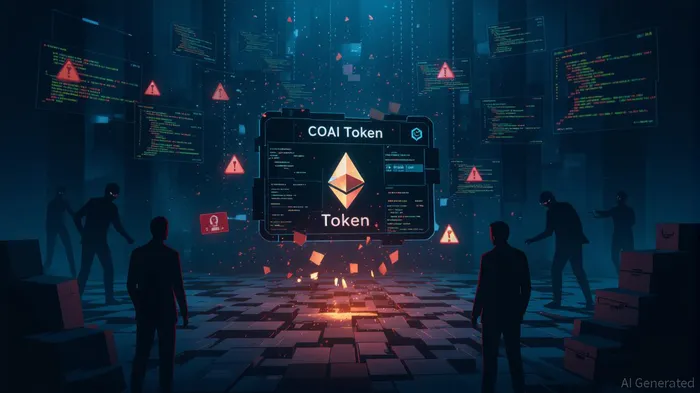
The COAI Token Scam: A Case Study in DeFi Exploitation
The COAI token scam leveraged a combination of social engineering and technical vulnerabilities to siphon funds from investors. According to a Coinotag report, the scam operated by offering fraudulent investment opportunities, with proceeds laundered through BitcoinBTC-- transactions. This mirrors broader trends in crypto fraud, where scammers exploit the pseudonymous nature of digital assets to obscure the trail of illicit funds.
The scam's success was amplified by weaknesses in DeFi platforms, which often lack the centralized oversight required to detect and prevent such activities. For instance, the BalancerBAL-- DeFi exploit in 2025-where hackers drained $116 million from liquidity pools-highlighted how even audited protocols can be compromised by sophisticated attacks on smart contracts, as detailed in a Coinotag report. These incidents reveal a critical gap in DeFi's security infrastructure, where rapid innovation often outpaces risk mitigation measures.
Regulatory Responses: Progress and Persistent Gaps
Regulators have taken decisive steps to address crypto-related fraud. In the UK, the seizure of 60,000 Bitcoins-valued at £4.8 billion-from a Chinese investment scam marked a historic milestone in cryptocurrency enforcement, according to a Coinotag report. Similarly, Argentina's courts imposed an indefinite "exchange ban" on assets linked to the LIBRA memecoinMEME-- scam, freezing funds tied to a $100-120 million fraud, as reported by BitcoinSistemi. These actions demonstrate the growing capacity of authorities to trace and recover illicit crypto assets, particularly through blockchain analytics and cross-border cooperation.
However, regulatory efforts remain fragmented. The U.S. Treasury's recent breach, where attackers exploited third-party vulnerabilities to access unclassified documents, as detailed in a WISeKey report, underscores the systemic risks posed by inadequate cybersecurity protocols. While initiatives like the EU's Digital Operational Resilience Act (DORA) and the U.S. GENIUS Act aim to integrate KYC requirements into DeFi smart contracts, as noted in a Coinotag report, critics argue these measures risk stifling innovation. The tension between regulatory oversight and decentralized principles remains unresolved, leaving investors exposed to evolving threats.
Investor Safeguards: Navigating a High-Risk Landscape
For investors, the COAI token scam and similar incidents highlight the importance of due diligence. Platforms like Binance have introduced HODLer Airdrops to distribute tokens such as MomentumMMT-- (MMT), but these programs also incentivize participation in high-risk projects, as reported by CryptoNinjas. Experts warn that early-stage DeFi tokens, often labeled with "Seed Tags" to denote speculative potential, require rigorous scrutiny.
Investors should prioritize platforms with transparent governance and real-time risk assessment tools. RedStone's Credora platform, for example, offers dynamic credit ratings to mitigate defaults in volatile markets, as noted in a Coinotag report. Additionally, diversifying exposure across regulated and decentralized assets can help balance innovation with risk management.
The Road Ahead: Balancing Innovation and Security
The COAI token scam serves as a catalyst for rethinking DeFi's future. While the sector's permissionless nature fosters innovation, it also creates opportunities for exploitation. As noted by the EthereumETH-- Protocol Advocacy Alliance (EPAA), the industry must adopt a "zero-trust" cybersecurity model, integrating advanced encryption and continuous threat modeling, as noted in a Coinotag report.
Regulators, meanwhile, face the challenge of harmonizing global standards without stifling growth. The Malaysian government's push for Meta to obtain a local license and adhere to stricter ad policies offers a blueprint for holding platforms accountable. Such measures could be extended to DeFi, ensuring that transparency and user protection keep pace with technological advancements.
Conclusion
The COAI token scam is a sobering reminder of the risks inherent in crypto markets. For investors, the path forward lies in adopting a cautious, informed approach-leveraging real-time analytics, diversifying portfolios, and advocating for stronger regulatory frameworks. As DeFi continues to evolve, the balance between innovation and security will define the sector's resilience in the years to come.

La combinación de la sabiduría tradicional en el comercio con las perspectivas más avanzadas relacionadas con las criptomonedas.
Latest Articles
Stay ahead of the market.
Get curated U.S. market news, insights and key dates delivered to your inbox.






Comments
No comments yet