
COAI Token Scam Fallout and Crypto Regulatory Risks: A Volatile Market Under Scrutiny


 Aime Summary
The COAI Token: A Case Study in Volatility and Regulatory Ambiguity
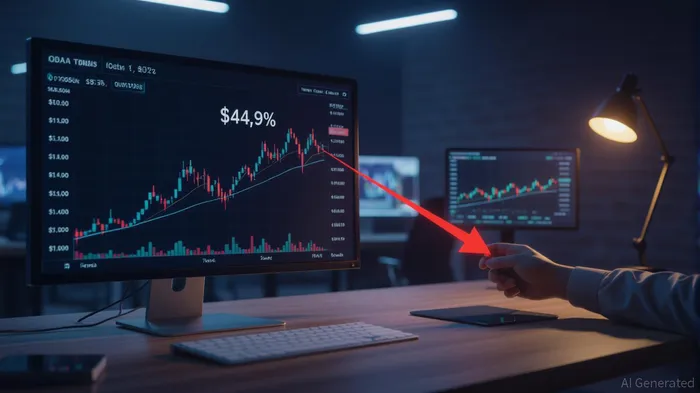
The COAI token's trajectory in late 2025 exemplifies the fragility of speculative crypto assets. Between September and October 2025, its price surged from $0.13 to an all-time high of $44.9-a 13,500% increase-only to collapse by 90% by October 20, 2025, amid reports of synchronized on-chain trading and allegations of market manipulation, according to Stealthex.io. This volatility was exacerbated by the lack of clear regulatory oversight. While no official penalties have been levied against the COAI token itself, the broader regulatory environment-particularly in India-has cast a shadow over its legitimacy.
In December 2024, the Cellular Operators Association of India (COAI) and the Telecom Regulatory Authority of India (TRAI) mandated a blockchain-based traceability system to combat spam SMSes, according to an Economic Times report. Though unrelated to the COAI token, this initiative has reinforced public skepticism about blockchain projects associated with the COAI name, blurring lines between regulatory innovation and scrutiny.
Regulatory Scrutiny and Investor Sentiment: A Symbiotic Downturn
The COAI token's collapse mirrors broader patterns observed in the crypto market. Regulatory actions-whether direct or indirect-trigger cascading effects on investor psychology. For instance, in March 2025, a spike in U.S. inflation expectations and a drop in consumer confidence led to a 3.5% decline in BitcoinBTC-- and a 2.8% drop in EthereumETH-- within 24 hours. Trading volumes surged by 25% and 20%, respectively, as panic selling intensified, according to a Blockchain News report. The Fear and Greed Index plummeted from 55 to 42 in the same period, underscoring the market's sensitivity to macroeconomic and regulatory signals, according to the same Blockchain News report.
The COAI token's case amplifies this dynamic. By October 2025, its price had become a barometer for risk appetite in speculative AI-driven tokens. A 26.29% 24-hour drop in early November 2025-despite the broader crypto market falling just 0.42%-highlighted how concentrated ownership (87.9% held by top 10 wallets) and regulatory ambiguity can amplify sell-offs, according to a CoinMarketCap analysis. Investors, conditioned by years of regulatory whiplash, are now hyper-aware that even unproven allegations of manipulation can trigger liquidity crises.
Broader Implications for Altcoin Valuations
The COAI token's volatility is not an isolated incident. Historical data from 2020–2025 reveals that regulatory actions account for 30–40% of short-term price swings in altcoins. For example, the March 2025 regulatory-driven selloff saw altcoins like SingularityNET (AGIX) and Fetch.AI (FET) lose 15–20% of their value as investors rotated into perceived "safe havens" like Binance Chain memeMEME-- coins, according to the Blockchain News report.
Moreover, the COAI token's collapse has exposed structural weaknesses in the altcoin market. Projects with opaque governance, centralized ownership, or unproven use cases are now under heightened scrutiny. A report by Bitget notes that COAI's price crash "served as a wake-up call for retail investors, who are increasingly demanding transparency and regulatory alignment," according to a Bitget article.
Navigating the New Normal: Strategies for Risk Mitigation
For investors, the COAI token's fallout underscores the need for a dual approach:
1. Short-Term Hedging: Diversifying across asset classes and using derivatives to hedge against regulatory-driven volatility.
2. Long-Term Due Diligence: Prioritizing projects with clear regulatory compliance frameworks and decentralized governance structures.
Regulators, meanwhile, face a balancing act. While the Telecom Regulatory Authority of India's spam-mitigation efforts are laudable, they highlight the need for clearer guidelines on tokenized assets. As Stealthex.io notes, "The absence of a unified regulatory framework leaves the door open for bad actors to exploit jurisdictional gray areas," according to the Stealthex.io report.
Conclusion
The COAI token scam and its aftermath are a microcosm of the crypto market's ongoing struggle with regulatory risk. As investor sentiment shifts from speculative euphoria to cautious pragmatism, the sector's future will hinge on its ability to align innovation with accountability. For now, the message is clear: in a market where headlines can move prices by 30% in a day, regulatory clarity is not just a compliance issue-it's a survival imperative.

Blending traditional trading wisdom with cutting-edge cryptocurrency insights.
Latest Articles
Stay ahead of the market.
Get curated U.S. market news, insights and key dates delivered to your inbox.






Comments
No comments yet