
COAI Token Scam Fallout and Crypto Due Diligence: Investor Protection in a Volatile Market


 Aime Summary
The COAI Token Scandal: A Timeline of Collapse
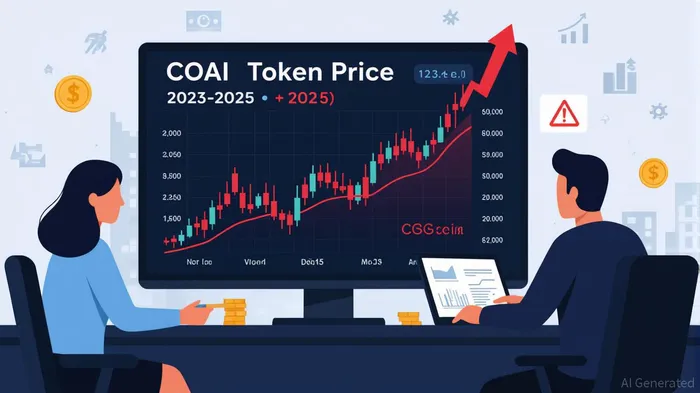
ChainOpera AI's COAI Token, marketed as an AI-driven insurance solution, quickly drew skepticism despite its meteoric rise. Analysts flagged the project as a "full on scam in motion," citing a lack of verifiable product development and a "made-up AI story," per the BeInCrypto analysis. Compounding concerns was the token's extreme centralization: 87.9% of COAI tokens were controlled by just ten wallets, raising red flags about potential manipulation, per the BeInCrypto analysis.
By late 2025, the token's value plummeted by 96%, eroding investor confidence and exposing vulnerabilities in the crypto insurance sector. This collapse was triggered by the implosion of yield-generating stablecoins like xUSDXUSD-- and deUSD, which amplified panic and highlighted the fragility of interconnected crypto assets, as detailed in a Bitget report. Regulatory pressures, including the U.S. GENIUS Act and the Financial Stability Board's (FSB) cross-border oversight framework, further destabilized the market by increasing compliance costs and creating uncertainty, according to the Bitget report.
Investor Impact and Systemic Risks
The COAI Token's collapse had far-reaching consequences. Investors who had poured capital into the project faced catastrophic losses, with many reporting total depletion of their holdings. The token's extreme centralization-96% held by top 10 wallets-intensified fears of coordinated sell-offs, exacerbating the price drop, per the Bitget report.
This episode also revealed broader systemic risks. As stablecoin failures and regulatory crackdowns converged, the crypto insurance sector's credibility was severely damaged. For instance, CoinShares reported a second consecutive week of outflows in major crypto ETPs, with BitcoinBTC-- and EtherETH-- inflows declining sharply, signaling a shift toward caution among institutional and retail investors, according to a CoinTelegraph article.
Strengthening Investor Protection: Lessons from the COAI Fallout
The COAI scandal underscores the critical need for rigorous due diligence and regulatory safeguards. Key lessons include:
Scrutinize Project Fundamentals: Investors must verify a project's technological innovation, team credibility, and real-world use cases. COAI's lack of tangible product development and reliance on speculative narratives exemplify the dangers of due diligence neglect, per the BeInCrypto analysis.
Diversify and Hedge Risks: Altcoins like SolanaSOL-- (SOL) and XRPXRP-- demonstrated resilience during the COAI crisis, suggesting that diversification into projects with strong community support and clear utility can mitigate losses, as noted in the CoinTelegraph article.
Demand Regulatory Clarity: The tokenization of stocks and other financial assets, while promising, raises investor protection concerns. Regulators must adapt frameworks to address cross-border risks and ensure transparency in tokenized markets, as highlighted in a Reuters report.
Avoid Pump-and-Dump Schemes: Centralized token distributions, as seen with COAI, are red flags. Investors should prioritize projects with decentralized ownership structures and transparent tokenomics.
Conclusion: A Call for Vigilance
The COAI Token scandal is a cautionary tale for the crypto industry. While innovation remains a driving force, the absence of accountability and transparency can lead to devastating outcomes. As the market evolves, investors must adopt a proactive approach to due diligence, and regulators must close loopholes that enable fraudulent schemes. In a volatile landscape, vigilance is not just a strategy-it is a necessity.

Mezclando la sabiduría tradicional en el comercio con las perspectivas de vanguardia relacionadas con las criptomonedas.
Latest Articles
Stay ahead of the market.
Get curated U.S. market news, insights and key dates delivered to your inbox.


AInvest
PRO
AInvest
PRO



Comments
No comments yet