
COAI's Sudden Price Collapse: Causes and Investment Implications


 Aime Summary
Market Sentiment: The Stablecoin Contagion
The immediate catalyst for COAI's decline was the collapse of yield-based stablecoins like xUSDXUSD-- and deUSD, which triggered a cascading panic across DeFi protocols. When Ethena's USDeUSDe-- faced a $700 million redemption run within seven days, it exposed the fragility of complex yield models under liquidity stress, as reported by Coinfomania. This contagion eroded trust in crypto insurance products, as investors questioned whether COAI's offerings could protect assets in a system where even "stable" tokens were prone to hyperinflation and redemptions.
The psychological impact was profound. As one analyst noted, "The xUSD/deUSD implosion wasn't just a technical failure-it was a narrative shift. Investors began viewing crypto insurance as a solution to a problem that no longer existed," Coinfomania reported. This sentiment was amplified by the fact that COAI's token supply is 96% controlled by top 10 wallets, creating a perception of centralization and vulnerability to large-scale selling, Yahoo Finance noted.
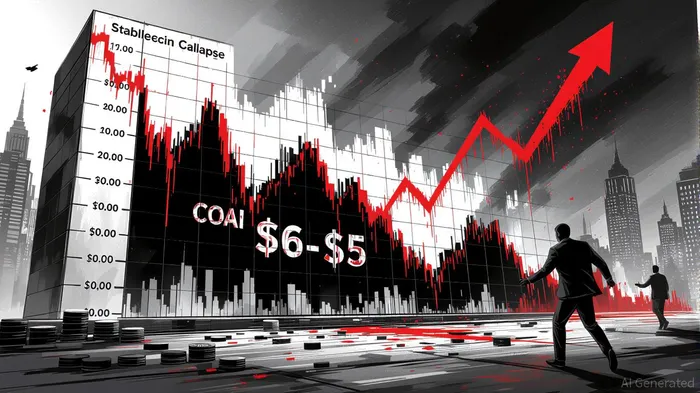
Regulatory Headwinds: The GENIUS Act and Global Overhaul
Regulatory actions in 2025 further exacerbated COAI's woes. The U.S. passed the Guiding and Establishing National Innovation for U.S. Stablecoins Act (GENIUS Act), mandating that payment stablecoins be fully backed by high-quality reserves and undergo monthly audits, as noted by Woodruff & Sawyer. While this law aimed to stabilize the sector, it inadvertently increased compliance costs for crypto insurers, who now face stricter requirements to cover risks like cyberattacks and operational failures, Relmin noted.
Globally, the Financial Stability Board (FSB) introduced a framework for cross-jurisdictional oversight, adding layers of complexity for firms like COAI that operate in multiple markets, FSB reported. In Pakistan, the Virtual Assets Ordinance of July 2025 created a licensing regime that forced smaller players to either adapt or exit, further consolidating the market, LiveBitcoinNews reported. These regulatory shifts, while well-intentioned, created a "perfect storm" of uncertainty, deterring institutional investors and accelerating COAI's price drop.
Investment Implications: A Sector in Transition
For investors, COAI's collapse underscores three critical lessons:
1. Regulatory Clarity ≠ Stability: While frameworks like the GENIUS Act aim to legitimize crypto insurance, they also raise operational costs and reduce margins. Public companies with robust risk management programs may thrive, but smaller firms like COAI-whose token economics are already fragile-face existential risks, as Woodruff & Sawyer noted.
2. Sentiment Trumps Fundamentals: The crypto insurance sector remains in its infancy, with only 10.8% of global consumers holding policies in 2024, Yahoo Finance reported. COAI's price volatility highlights how market sentiment, driven by high-profile failures like xUSD, can override technical strengths or regulatory compliance.
3. Concentration Risks Matter: COAI's token distribution-80% locked until 2026-creates a false sense of security. If large holders decide to sell post-2026, the market could face another liquidity crisis, Phemex noted.
Conclusion: Navigating the New Normal
COAI's collapse is a microcosm of the broader crypto insurance sector's challenges. While regulatory clarity is essential for long-term growth, the 2025 crisis revealed that markets are still unprepared for the speed and scale of DeFi's systemic risks. For investors, the path forward lies in prioritizing projects with transparent governance, diversified token economics, and alignment with global regulatory trends.
As the sector evolves, the question remains: Will crypto insurance emerge as a cornerstone of digital finance-or become another casualty of the 2025 crisis? The answer will depend on how quickly firms like COAI can adapt to a world where trust is no longer assumed, but earned.

Combinando la sabiduría tradicional en el comercio con las perspectivas más avanzadas sobre criptomonedas.
Latest Articles
Stay ahead of the market.
Get curated U.S. market news, insights and key dates delivered to your inbox.






Comments
No comments yet