
COAI's Sharp Price Drop and the Timeless Lessons for Long-Term Investors


 Aime Summary
The Anatomy of COAI's Collapse
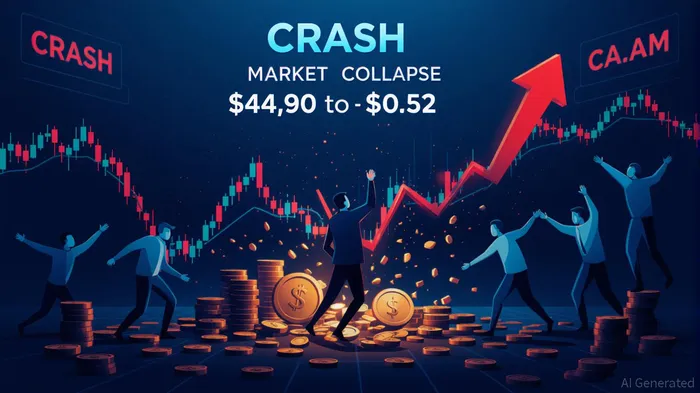
COAI's decline was not an isolated event but a symptom of broader shifts in the crypto ecosystem. A sector-wide migration from AI tokens to memeMEME-- coins left COAI exposed to liquidity shocks. Structural weaknesses in its tokenomics further exacerbated the crisis: 60 wallets engaged in coordinated trading, suggesting manipulation, while the top 10 holders controlled 88% of the supply, creating a fragile equilibrium prone to panic selling. Regulatory pressures, including the U.S. GENIUS Act and the FSB's cross-border oversight framework, added to the uncertainty.
 The collapse of algorithmic stablecoins like xUSDXUSD-- and deUSD also eroded trust in DeFi platforms, compounding COAI's woes. These factors highlight a critical lesson for investors: volatility is not just a function of market cycles but of governance, liquidity, and regulatory risk.
Timeless Principles in a Volatile Market
Value investing, as articulated by Benjamin Graham, emphasizes margin of safety-the practice of buying assets at a price significantly below their intrinsic value. In COAI's case, intrinsic value is elusive due to the absence of cash flows or tangible assets. However, investors can apply analogous frameworks by evaluating a token's utility, adoption, and structural resilience. For example, COAI's partial recovery in October 2025, fueled by BNBBNB-- Chain's expansion and derivatives trading, hinted at latent demand. Yet, without a clear path to sustainable utility, such gains proved fleeting.
Human behavior further complicates the equation. Studies show crypto traders check prices an average of 14.5 times daily, amplifying emotional responses during downturns. The 2023–2025 period saw self-reinforcing cycles of speculation and panic, driven by overconfidence and loss aversion. These behavioral biases create mispricings that value investors can exploit-if they avoid the herd. For instance, the Bybit flash crash in March 2025, triggered by a $1.2 billion liquidation cascade, caused a 23% drop in BitcoinBTC-- within 40 minutes. Such events underscore the need for disciplined, data-driven decision-making.
Navigating Post-Crash Opportunities
Post-crash environments often present generational opportunities, as seen in Bitcoin's 2023 rebound. Bitwise's Matt Hougan argued that the 29% drop in Bitcoin from its peak created a "once-in-a-lifetime entry point" for long-term investors. Similarly, COAI's collapse could be a buying opportunity-if its fundamentals align with intrinsic value. However, this requires rigorous analysis. For example, COAI's token supply centralization and governance challenges must be weighed against its potential to adapt to regulatory frameworks.
Margin of safety remains paramount. In traditional markets, this might mean buying a stock at a 50% discount to its intrinsic value. In crypto, it could involve assessing a token's utility, network effects, and resistance to manipulation. COAI's 88% year-to-date decline in its index suggests extreme pessimism, but whether this reflects intrinsic value depends on its ability to address structural flaws.
The Role of Market Cycles and Patience
Market cycles are inevitable, but their impact varies based on investor behavior. The Wall Street Cheat Sheet identifies emotional stages from disbelief to euphoria, offering a roadmap for spotting turning points. For COAI, the transition from euphoria (October 2025) to despair (December 2025) mirrors these patterns. Long-term investors must resist the urge to time the market and instead focus on durable value.
Case studies from the 2022 TerraUSD collapse illustrate this. Investors who applied value principles-such as evaluating a project's governance and technological robustness-were better positioned to recover. Similarly, COAI's future hinges on its ability to rebuild trust through transparency and utility according to research.
Conclusion
COAI's collapse is a cautionary tale, but it also highlights the enduring relevance of timeless investing principles. For long-term investors, the key lies in distinguishing between panic-driven volatility and structural undervaluation. By applying margin of safety, analyzing intrinsic value through utility and governance, and understanding behavioral cycles, investors can navigate the crypto landscape with discipline. As history shows, the most profound opportunities arise when markets forget the fundamentals-and COAI's case is no exception.

Mezclando la sabiduría tradicional en el comercio con las perspectivas más avanzadas sobre las criptomonedas.
Latest Articles
Stay ahead of the market.
Get curated U.S. market news, insights and key dates delivered to your inbox.






Comments
No comments yet