
COAI's Sharp Decline and the Hidden Governance Risks in Mid-Cap Tech ETFs


 Aime Summary
The recent 31% plunge in ChainOpera AI (COAI) over 24 hours has sent shockwaves through the crypto market, exposing vulnerabilities that extend far beyond the token itself. While COAI's collapse is often attributed to speculative capital fleeing to larger AI tokens like BittensorTAO-- (TAO) and VirtualVIRTUAL-- Protocol (VIRTUAL), the broader implications for mid-cap tech ETFs remain underexplored. This analysis connects COAI's volatility to systemic governance risks in ETF structures, particularly concentration and liquidity management, and highlights why investors must scrutinize these factors more closely.
COAI's Freefall: A Case Study in Market Sentiment and Capital Rotation
According to a report by AmbCrypto, COAI's sharp decline follows an 1,848% surge in October 2025, driven by speculative retail demand, as noted in the AmbCrypto report. However, the token's bearish turn reflects a broader shift in investor sentiment. Market Prophit data reveals that retail investors have turned overwhelmingly bearish on COAI, while institutional sentiment remains neutral, as noted in the AmbCrypto report. This divergence underscores the fragility of tokens reliant on retail-driven momentumMMT--.
The lack of institutional support is further evidenced by COAI's muted trading volume, which rose only 5% during the selloff, as noted in the AmbCrypto report. This suggests minimal participation from large players, leaving the token vulnerable to rapid price swings. Such dynamics are not unique to COAI but are symptomatic of a market where retail speculation often outpaces institutional safeguards-a trend that mid-cap tech ETFs must navigate carefully.
Mid-Cap Tech ETFs: A Double-Edged Sword in 2025
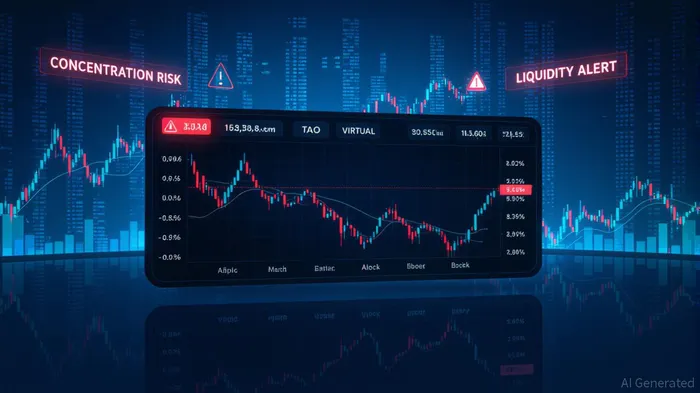
The 2025 ETFs in Focus Study highlights a critical challenge for mid-cap tech ETFs: balancing exposure to high-growth assets with governance risks, as noted in the SSGA study. These funds often face a paradox-investors seek innovation but are exposed to concentration risks when a single volatile asset (like COAI) dominates the portfolio. For instance, if an ETF allocates a disproportionate share to mid-cap AI tokens, a sudden selloff in one component could destabilize the entire fund.
Liquidity management further complicates the picture. Vettafi's analysis notes that mid-cap tech ETFs tracking less liquid indices face higher bid-ask spreads and lower average daily volume (ADV), making them susceptible to price dislocations, as noted in the Vettafi analysis. COAI's decline, while not directly tied to any ETF holdings, serves as a cautionary tale. If an ETF holds similar volatile tokens, a sudden drop could trigger redemption pressures or force asset managers to sell holdings at fire-sale prices.
The Ripple Effect: Governance Risks in a Fragmented Market
The broader crypto market's recent turbulence-$1.7 billion in outflows from BitcoinBTC-- and EthereumETH-- ETFs-exacerbates these risks, as noted in the Cointelegraph report. While whale accumulation has cushioned some price declines, mid-cap tech ETFs lack such safety nets. The redistribution of supply toward capitalized entities (e.g., whales hoarding BTC) leaves smaller tokens and ETFs more exposed to liquidity crunches.
Regulatory frameworks like the SEC's Rule 22e-4, which mandates Liquidity Risk Management Programs (LRMPs), aim to mitigate these issues, as noted in the Vettafi analysis. However, enforcement remains inconsistent, particularly for niche ETFs. Investors must ask: Are fund managers stress-testing portfolios against tail risks like COAI's collapse? Are they using limit orders to avoid slippage during volatile periods?
Implications for Investors: Vigilance in a High-Risk Environment
For investors, the lesson is clear: mid-cap tech ETFs require rigorous due diligence. Real-time monitoring of concentration levels and liquidity metrics is essential. For example, an ETF with a top-10 holdings weight exceeding 30% may be overexposed to a single sector's volatility. Similarly, secondary market liquidity metrics-like bid-ask spreads-should be scrutinized to avoid ETFs with hidden illiquidity.
COAI's collapse may not directly impact most mid-cap tech ETFs, but it acts as a stress test for governance frameworks. As the market evolves, the ability of ETFs to manage concentration and liquidity risks will determine their resilience in the face of the next speculative selloff.

Blending traditional trading wisdom with cutting-edge cryptocurrency insights.
Latest Articles
Stay ahead of the market.
Get curated U.S. market news, insights and key dates delivered to your inbox.






Comments
No comments yet